


Hassle free, 2-Year Warranty
Fast, Free Shipping on Orders $35+
Lifetime Technical Support
30-Day Money Back Guarantee
Plugable Mini DisplayPort to DVI Adapter (Passive)
$18.95 USD
SKU: MDPM-DVIFAmazon Rating : (18 Reviews)
Features
- Mini DP to DVI— Converts mini DisplayPort (Thunderbolt 2 or mDP) output on your Apple laptop or PC to a DVI output to enable connection to a DVI monitor
- Supported Resolutions— Supports DVI displays up to 1920x1200 at 60Hz refresh rate
- Simple Installation— No installation software or drivers required; just plug and play
- Compatibility— Passive adapter is compatible with Thunderbolt 2 or Dual-Mode Mini DisplayPort (DP++) output ports only. Not a bidirectional adapter. Please note that the host system's graphics processor and the connected DVI display need to support the desired resolution
- 2-Year Coverage, Lifetime Support— Every Plugable product, including this mini DisplayPort (Thunderbolt 2) to DVI adapter, is covered against defects for 2 years and comes with lifetime support. If you ever have questions, contact our North American-based team - even before purchase
For volume orders or business inquiries contact sales@plugable.com





Plugable's Mini DisplayPort to DVI passive adapter (MDPM-DVIF) allows you to connect from a Thunderbolt 2 or Mini Dual-Mode DisplayPort (DP++) output on your laptop, desktop, or tablet to virtually any DVI-enabled display.
Passive adapters rely on the DisplayPort output of the host system to provide the necessary signaling to support a DVI display.
The adapter supports resolutions up to 1920x1200 @ 60Hz refresh rate.
Are you wondering if your DisplayPort output supports DP++? These ports are often noted with a DP++ symbol next to the port itself. If you may be unsure if your DisplayPort port is DP++ capable, please check with your system manufacturer.
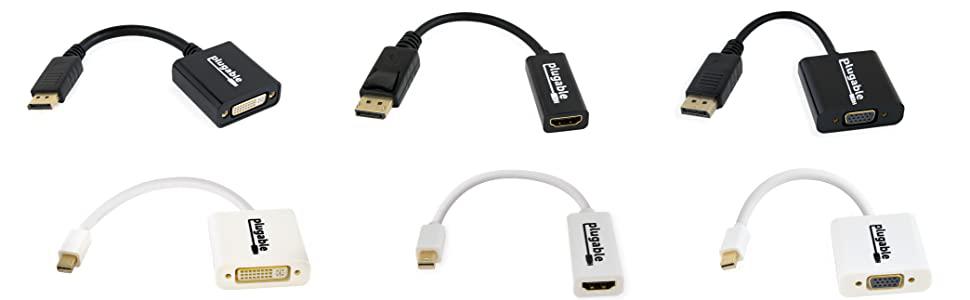
Compatibility
- Compatible with Thunderbolt/Thunderbolt 2 Macs, or laptops that have Dual-Mode Mini DisplayPort output ports (DP++) to add a DVI-capable monitor, TV, or projector.
- Compliant with VESA Dual-Mode DisplayPort 1.1.
Applications
- Connect a DVI-equipped monitor to a Dual-Mode Mini DisplayPort (DP++) or Thunderbolt 2 output from your computer.
- Portable for traveling professionals to connect to other DVI displays.
Incompatible Setups
- This adapter is not bidirectional and will not convert video in the other direction
- Only works from a mini DisplayPort output to DVI input
- Not compatible with Microsoft Surface Docking Stations
- Does not support AMD Eyefinity or NVIDIA Surround
- Cannot be converted to a dual-link DVI (DVI-I) output
In the Bag
- Plugable Mini DisplayPort (Thunderbolt 2) to DVI Passive Adapter.
Please note that a DVI cable is not included.
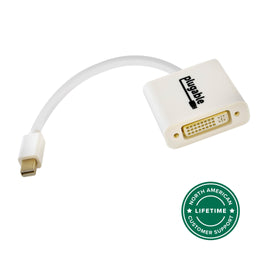 |
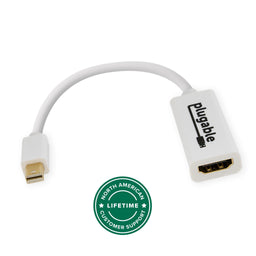 |
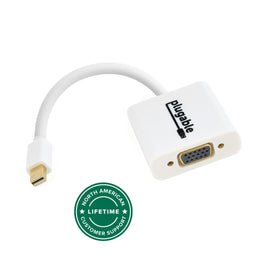 |
|
|---|---|---|---|
Output |
DVI |
HDMI |
VGA |
Supports Resolutions Up To |
1920x1200 |
4K (3840x2160) |
1920x1200 |
Refresh Rate |
60Hz |
60Hz (limited to 30Hz at 4K) |
60Hz |
Converts Audio |
No |
Yes |
No |
Filter Help Articles and Frequent Questions by Category
Choose one or more filters within each category to narrow down the articles. Each selection will result in only displaying articles that include all of your choices.
Articles
Well how about that, it looks like we don't have any articles matching your filters! Try removing one of your choices or clear the filters to show all articles.
You can always contact support if you need help too!
What’s the Difference Between an Active and Passive DisplayPort Adapter?
DisplayPort and Mini DisplayPort come in two versions—"Dual Mode" DisplayPort (DP++), which allows the port to actually switch its electrical signaling to a different format, and "Single Mode" or "pure" DisplayPort (DP), which is intended for DisplayPort and Mini DisplayPort monitors without any conversion. Passive adapters rely on this DP++ functionality to switch electrical signaling and produce the correct output, meaning they only work with DP++ ports. Active adapters contain extra components to convert the signal themselves, allowing them to work flexibly with either a pure DisplayPort output or a DP++ port.
Why Active and Passive Adapters Function Differently
DisplayPort to HDMI, DVI, or VGA conversion is deceptively complex because the standards use different electrical signaling. Because passive adapters lack internal conversion components, they rely entirely on the DP++ port to produce the appropriate output signal, whereas active adapters perform the necessary signal conversion on their own.
Applicable To
DPM-DVIF, DPM-HDMIF, DPM-VGAF, MDM-DVIF, MDPM-HDMIF, MDPM-VGAF, DP-HDMI, MDP-HDMI
My Docking Station/Adapter Works Well With My Windows Laptop, but When I Close the Lid the Displays and Laptop Turn Off or Sleep. How Do I Fix This?
Windows defaults to putting the computer to sleep when the lid is closed, even if there are external displays and devices connected, we can change this setting to enable closing the lid while using a docking station.
Recommended Setup
To ensure the computer can reliably function with the lid closed there are some requirements and recommendations:
- The system should be powered: This can be from a USB Type-C Docking Station with host charging, or by connecting the laptop's original power source.
- There should be at least one external display connected, this can be through a docking station, or directly to the computer.
- There should be a keyboard and mouse connected, either through a docking station, USB Hub, or directly to the computer.
Windows 11 24H2 and Newer
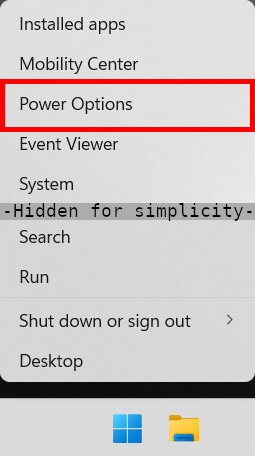
- Right-click on the Start menu and select Power Options from the context menu
- Expand the Lid, power & sleep button controls sub-section
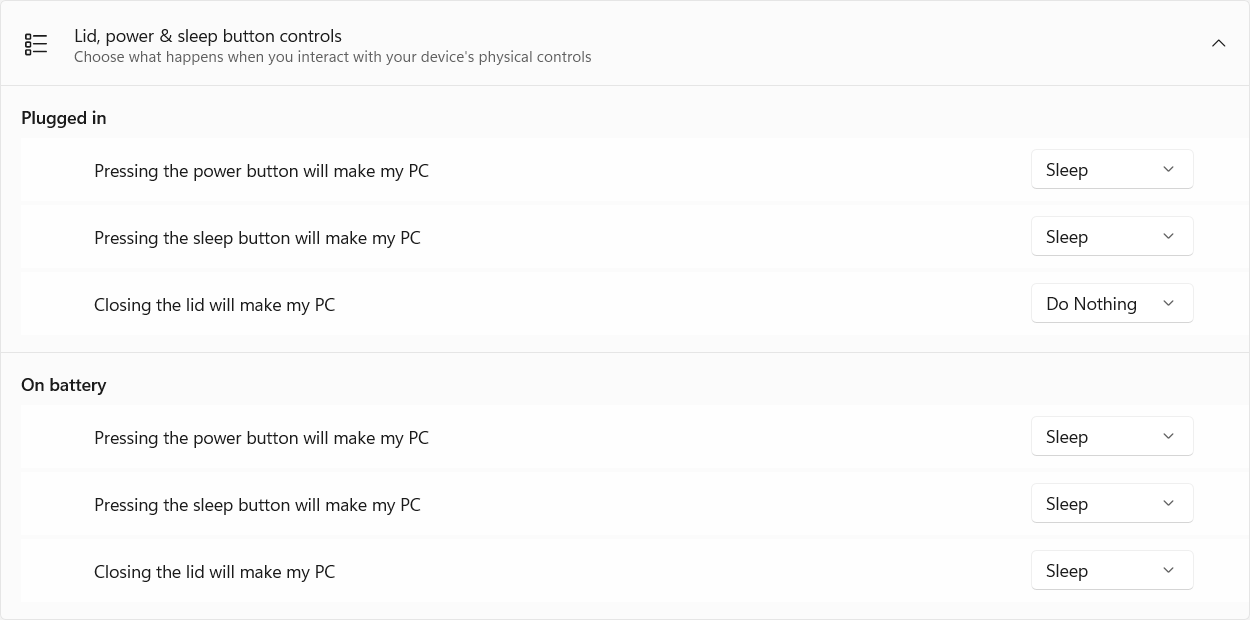
- Under Plugged in select Do Nothing from the Closing the lid will make my PC context menu
Windows 11 23H2 and Earlier
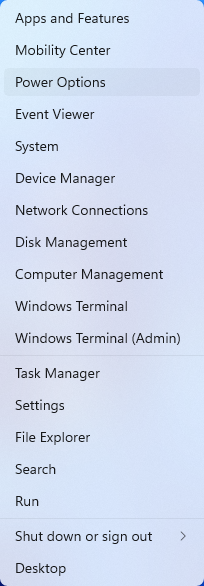
- Right-click on the Start menu and select Power Options from the context menu
- In the upper left corner of the settings window, in the search box, type "lid" then select Change what closing the lid does from the search results
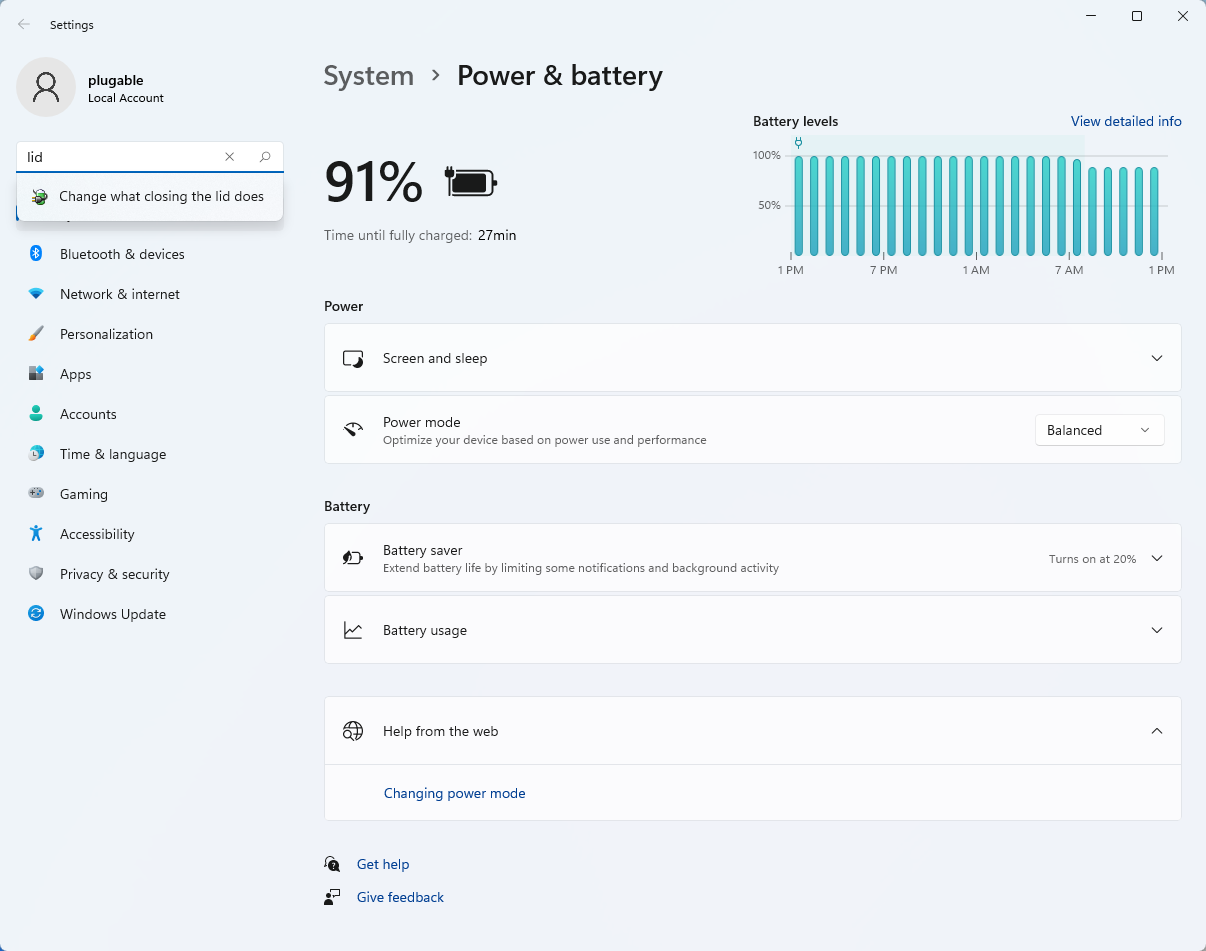
- Make sure the setting for When I close the lid under the Plugged In column is set to Do Nothing
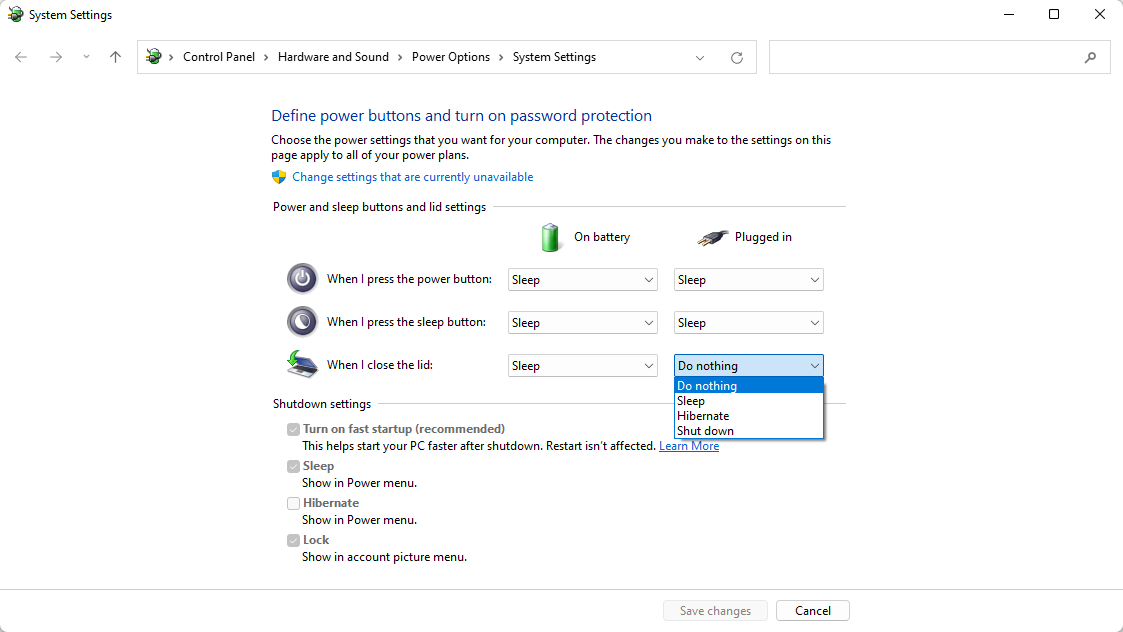
- Click the Save Changes button to apply the new settings.
Windows 10
- Start by right-clicking on the Start button and select Power Options from the menu.
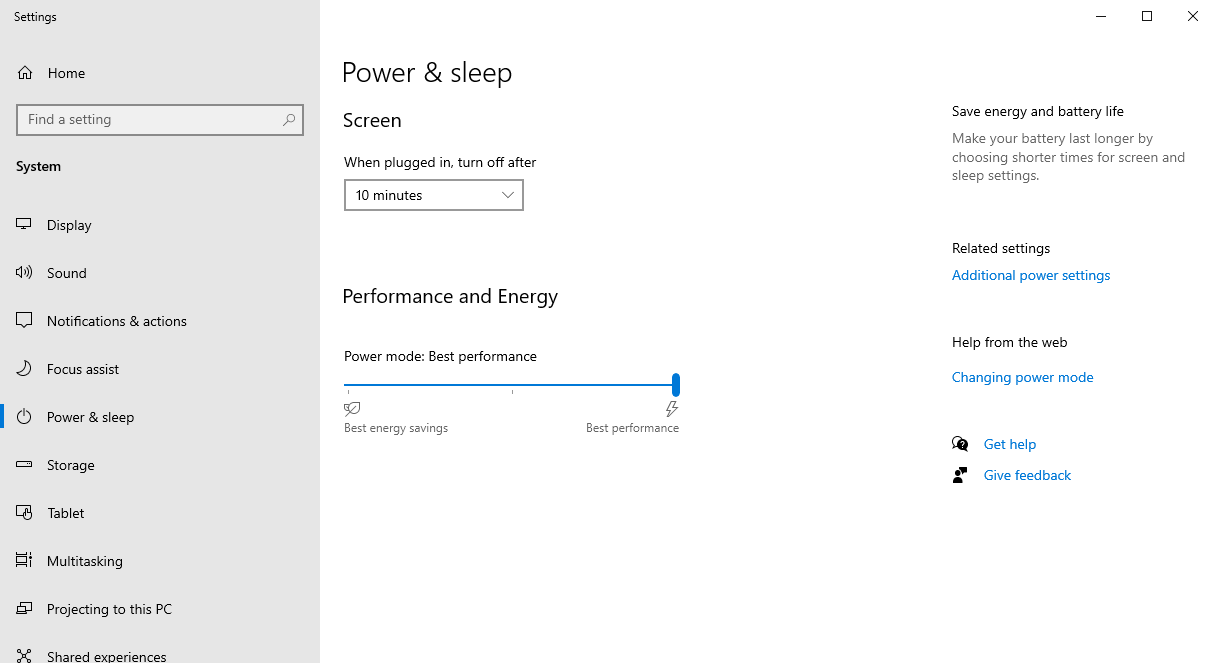
- From the right side of the Power Options settings page, select the blue link for Additional power settings
- From the choices present on the left-hand side of the Power Options window, please click on Choose what closing the lid does
- Make sure the setting for When I close the lid under the Plugged In column is set to Do Nothing
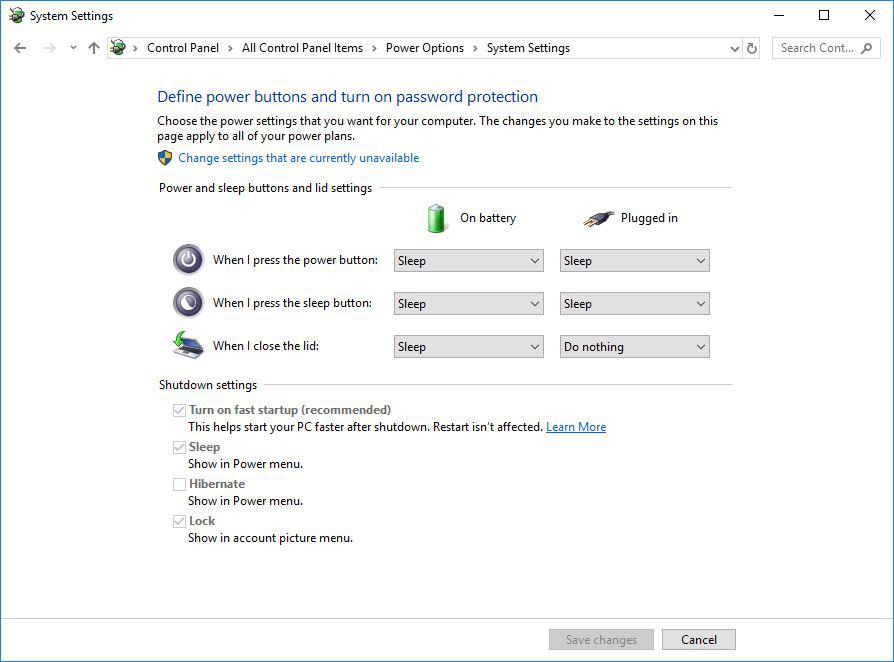
- Click the Save Changes button and restart the system (making sure that the laptop's power adapter is also connected) and test the behavior again.
Closing the lid should no longer put the computer into sleep mode when an external display and power source is connected, instead one of the external displays should now become the Primary display with the desktop icons instead of the laptop's built-in display.
When to open the lid?
The laptop lid may still need to be opened when performing any of the following:
- To power on the computer from a fully powered off state
- To log into the computer if logged out or if the computer is restarted with the lid closed
- To wake the computer from a deep sleep state (hibernation, or Windows hybrid sleep states)
If you have any questions please feel free to contact us at support@plugable.com and we'll be happy to help!
How to Configure/Adjust Multiple Monitors Using a Windows System
We have a produced a series of videos that introduce the general concepts of multi-monitor setups in Windows, how to change the way things behave, as well as how to solve common problems. Direct links to some of the videos our customers have found useful are:
Introduction to Multiple Displays in Windows --> LINK
Common Multi-Monitor Problem - Spatial Orientation --> LINK
Multi-Monitor Problem - Spatial Orientation Part Two --> LINK
How to make a Display the 'Main' Display in Windows 10 --> LINK
How to make a Display the 'Main' Display in Windows 11 --> LINK
Introduction to Display Scaling in Windows --> LINK
Quickly change display settings with the Windows+P Shortcut --> LINK
Troubleshooting A Disconnected Display with the UD-3900 --> LINK
How to Set Different Backgrounds on Multiple Monitors in Windows 10 --> LINK
Keyboard Shortcuts for Moving Applications on a Multiple Monitor Windows Setup --> LINK
How to Change Your Display's Refresh Rate in Windows --> LINK
How to Fix a “Phantom Display” on Windows --> LINK
How To: Set the Display Refresh Rate in Windows 11
Summary
Many modern displays support refresh rates higher than 60Hz. In some cases, the desired refresh rate may need to be selected manually in Windows 11. The resolutions and refresh rates available depend on the capabilities of the display, computer, graphics hardware, docking station or adapter, and the connection between them.
Applicable To
Windows 11 computers using built-in or external displays, including displays connected through compatible Plugable docking stations, video adapters, and cables.
Setting the Display Refresh Rate in Windows 11
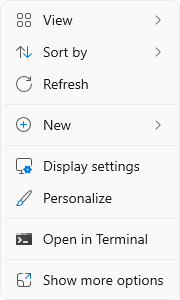
1. Right-click on the desktop and select Display Settings from the drop-down menu
2. Scroll down to the Related settings subsection and select Advanced display

3. At the top of the Advanced display window, select the display you want to configure from the drop-down menu.

4. From the Choose a refresh rate drop-down menu select the desired refresh rate
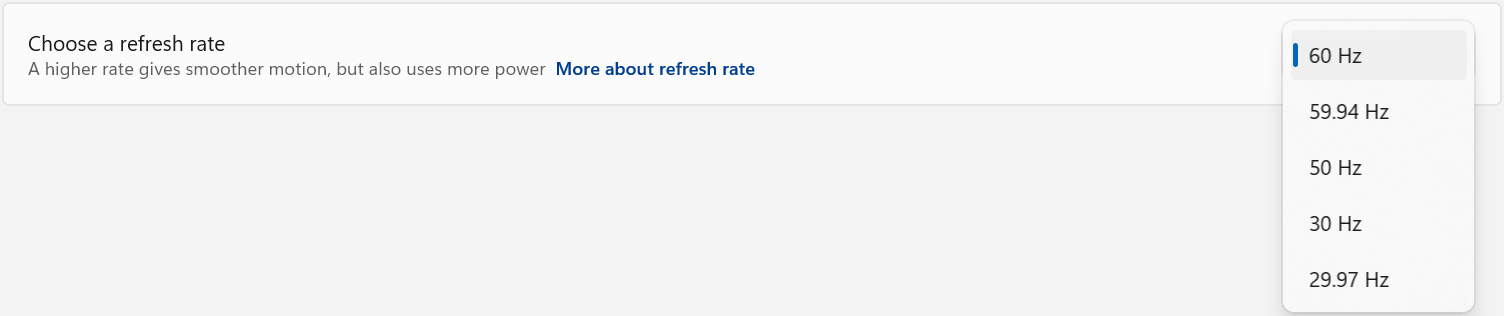
If the Desired Refresh Rate Is Not Listed
If the desired refresh rate is not available, confirm that the display, computer or graphics hardware, docking station or adapter, and video cable all support the desired resolution and refresh rate combination.
Some devices may support a higher refresh rate only at a lower display resolution. Check the specifications for each component in the display connection to confirm the supported resolution and refresh rate combinations.
Refresh Rate Limitations
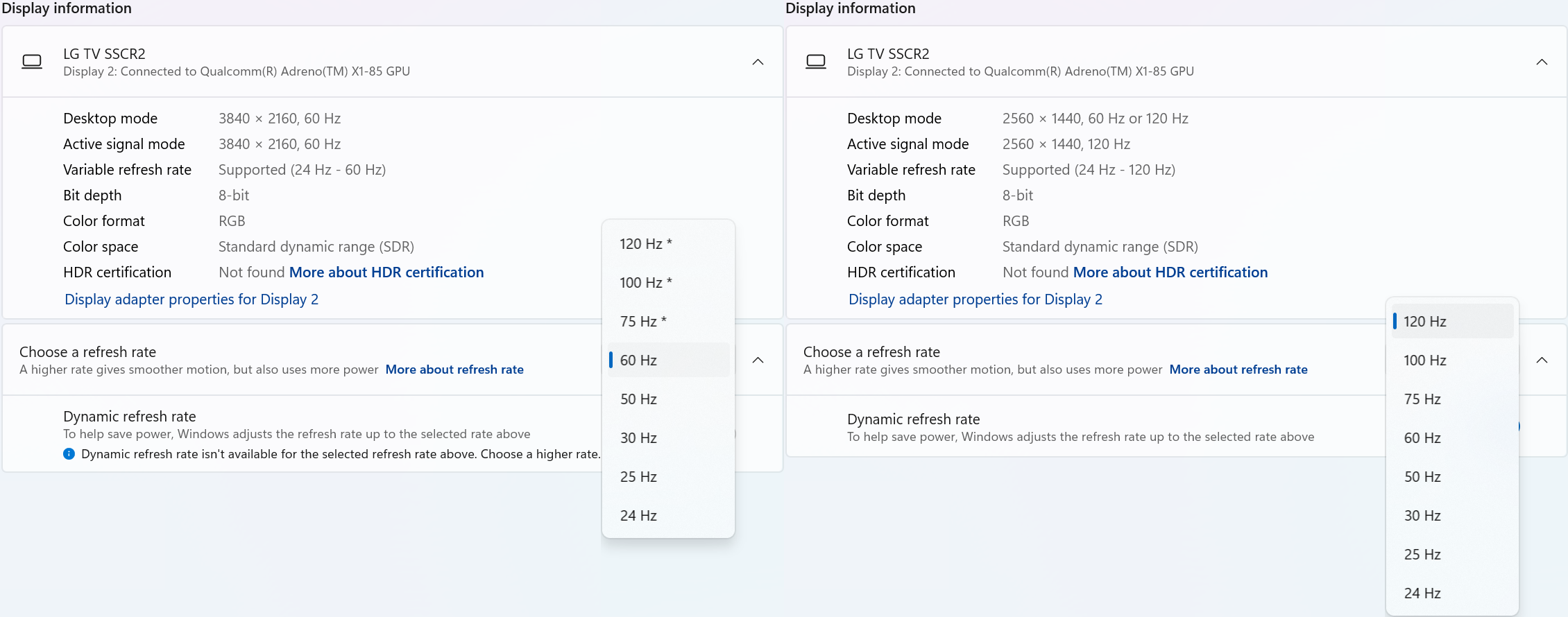
Windows 11 may display an asterisk (*) next to certain refresh rates in Settings > System > Display > Advanced display. The asterisk indicates that the selected refresh rate is not supported at the display's current resolution. Selecting one of these refresh rates will cause Windows to change the display resolution in order to achieve the selected refresh rate.
In the example below, the display supports 3840 × 2160 (4K UHD) at 60Hz and 2560 × 1440 (1440p) at 120Hz through the connected hardware. After selecting “120 Hz*”, Windows changes the display resolution from 3840 × 2160 to 2560 × 1440 so that the higher refresh rate can be used. Because the display is now operating at a lower resolution, the image may appear less sharp than when using the display's native 4K resolution. After selecting a lower refresh rate, Windows may retain the reduced display resolution. If the original resolution is not restored automatically, return to Settings > System > Display and manually select the desired resolution.
Dynamic Refresh Rate
Windows 11 also supports Dynamic Refresh Rate (DRR) on compatible hardware. When enabled, Windows can automatically adjust the display refresh rate based on what you are doing to provide smoother motion when needed while helping reduce power consumption at other times.
DRR requires a display that supports Variable Refresh Rate (VRR) and a refresh rate of at least 120Hz. If supported by the computer and display, DRR can be enabled or disabled under Settings > System > Display > Advanced display.
Need Assistance?
If the desired refresh rate is still unavailable after following the steps above, please contact Plugable Support at support@plugable.com.
When contacting support, please include:
- The Plugable product model
- Your computer model
- Your display model
- The resolution and refresh rate you are trying to use
- How the display is connected to the Plugable product
- The output from Plugable's diagnostic tool, PlugDebug
Understanding Uni-Directional vs. Bi-Directional Video Cables
When connecting a laptop/dock to a monitor, the right direction matters. Many “converter” cables only work one way. If the cable's intended direction doesn't match your source (video output) and display (video input), you'll get no signal. Even if the connectors fit.
Key terms
Lets start by defining some terms so that we are all on the same page.
- Source (Output): Laptop, dock, GPU port sending video
- Display (Input): Monitor/TV/projector receiving video
- Uni-directional: Works only one way (e.g., DP to HDMI)
- Bi-directional: Works both ways (common with HDMI to/from DVI, DP to/from mDP)
- Active adapter/cable: Has electronics to convert formats/directions (e.g., DisplayPort to HDMI)
- Passive adapter/cable: No electronics; relies on the source to convert video signals (e.g., Dual-Mode DisplayPort/DP++ to HDMI)
What typically works and what doesn't
| Scenario | Directionality | Requirement | Notes |
|---|---|---|---|
| DisplayPort (DP) source to HDMI display | Often uni-directional (DP to HDMI) | Passive may work with DP++; otherwise use an active DP to HDMI | Many docks/GPUs support DP++, but some do not so please check specification |
| HDMI source to DisplayPort display | Uni-directional (HDMI to DP) | Active HDMI to DP adapter | A DP to HDMI cable won't work in reverse |
| USB-C (DP Alt Mode) source to HDMI/DP display | Uni-directional | Alt-Mode USB-C to video cable/adapter | Not reversible (you can't feed HDMI into USB-C) |
| Thunderbolt source to DP or HDMI displays | Uni-directional | Thunderbolt/USB-C video adapter | Behaves like USB-C Alt Mode for displays |
| HDMI to/from DVI | Bi-directional (passive) up to 1080P | Simple adapter/cable | Same TMDS signaling |
| DP to/from Mini-DP | Bi-directional (passive) | Simple cable | Same protocol |
| Digital to/from VGA (analog) | Direction varies | Active converter | Digital/analog conversion required |
Rule of thumb: For DP to/from HDMI, assume DP to HDMI unless the product explicitly says HDMI to DP (Active).
Docking stations: quick notes
- USB-C & Thunderbolt docks: DisplayPort or HDMI native outputs are available on many models, DP++ is not supported.
- DisplayLink controlled DisplayPort outputs generally support DP++ and passive adapters.
- DP MST daisy-chaining requires DisplayPort MST compatible displays connected via DisplayPort cables - DisplayPort to HDMI adapters are not recommended.
Resolution, refresh, and features
- Available resolution/refresh (e.g., 4K60) depends on source + cable/adapter + display
- Features like HDR, HDCP, and VRR may require specific active adapters and sufficient bandwidth
- For long cable runs, signal redrivers may be required. Active adapters may have reduced cable length, for example DisplayPort sources provide about 50 percent of the power of a HDMI source. DisplayPort signals are more efficient than HDMI and require less power for the same cable length. When converting to HDMI the overall cable length will be less than a native HDMI source.
Shopping checklist (esp. on Amazon)
- Check the pictures: Listings often show Source to Display with icons/arrows (match this to your setup)
- Read the title/bullets: Look for explicit direction (“DP to HDMI,” “HDMI to DP (Active)”)
- Scan specs: “Active” vs. “Passive,” DP++, supported resolutions, and any power needs
Quick examples
- Dock (DP out) to Monitor (HDMI in): DP to HDMI cable/adapter; use active if DP++ isn't supported or for higher reliability
- Laptop (HDMI out) to Monitor (DP in): Active HDMI to DP adapter required
- USB-C laptop (Alt Mode) to HDMI monitor: USB-C to HDMI cable/adapter; not reversible
FAQs
Why doesn't my "DP to HDMI" cable work from an HDMI laptop to a DP monitor?
Mot likely it is a uni-directional (DP to HDMI) cable. Most adapter cables (DisplayPort Plug to HDMI Plug) are passive uni-directional cables, while most adapters (DisplayPort Plug to HDMI Socket) are uni-directional active or passive adapters.
My desktop video cards has one HDMI and three DisplayPort outputs. To enable four HDMI displays do I need passive or active adatpers?
Most graphics cards can support a native HDMI and single Passive DisplayPort to HDMI display, in the graphics card itself there are normally two DisplayPort to HDMI adapter chipset, one dedicatd to the HDMI port, the second available for a single passive adpater. For enabling four HDMI displays we recommend either three active, or two active and one passive adapters/adapter cables.
Why aren't most DisplayPort (source) adapters bi-directional?
DisplayPort data is transmitted in discrete data packets, this makes DisplayPort the most flexible video standard (for example tunneling in Thunderbolt, or converting to other display types). However converting from a non-packet based video stream to packets requires more comptational power, many early HDMI to DisplayPort (uni-directional) adapters required a separate 5V power source - often USB. While some modern adapters can utilize the HDMI or DisplayPort source power, these often have limited (6ft/2m) cable lengths.
If you have any questions please feel free to contact us at support@plugable.com and we'll be happy to help!
Update Graphics Drivers in Windows
Up to date graphics drivers are necessary for ensuring the best performance of your computer's built-in display, as well as the capability and compatibility with external displays and docking stations.
Windows has a built-in system update service: Windows Update, however this may not provide up to date drivers or timely updates. We often see systems with out of date drivers, in some cases systems may not receive updated graphics drivers for months or even years, leaving the computer with drivers incompatible with the installed version of Windows 11.
However, we can manually update the graphics drivers to ensure the best possible performance, reliability, and compatibility.
The first step is to identify the graphics hardware, then downloading, and installing the latest drivers.
Identifying Graphics Controller
For notebooks and many desktop computers, the primary graphics controller is embedded in the processor, both AMD and Intel provide graphics driver updates based on the processor model, as well as for discrete graphics controllers. Our first step is to identify up the processor or graphics hardware model details:
- Right-click on the Start Menu and select Settings from the pop-up menu
- From the left column select System and from the bottom of the right side select About
- From the top of the about page the processor details will be on the right side, and duplicated lower down on the page.

- In this example the processor is a 12th Gen Intel(R) Core(TM) i7-1260P, we'll keep that detail for the next step.
If your computer has two graphics controllers (it may show "Multiple GPUs Installed" under Graphics Card) then we can get the graphics card model details from the Windows System Information Utility.
- Open the Start menu and search for "msinfo32"
- Select the first result
- From the left-column expand the Components section, then select Display

- In this example the Intel Iris(R) Xe Graphics is enabled by the processor, while the Intel(R) Arc(TM) Pro B60 Graphics is a discrete graphics controller.
Downloading the Drivers
Intel Graphics
- In a web browser navigate to the Intel Driver Download Page
- In the "Search Drivers & Software" field, search for the Intel graphics card model or CPU model, "Arc Pro B60" in this example

- Select the appropriate "Intel Arc Pro Graphics - Windows" or similar entry from the search results, for modern hardware Intel will normally have at least one release per month, the list should return recent results within the last month
- Select the Download button to save the installer to your Downloads folder or selected location
AMD Graphics
AMD provides an Auto-Detect utility, this works relatively well and can be used to update the system available from the AMD Drivers and Support page.
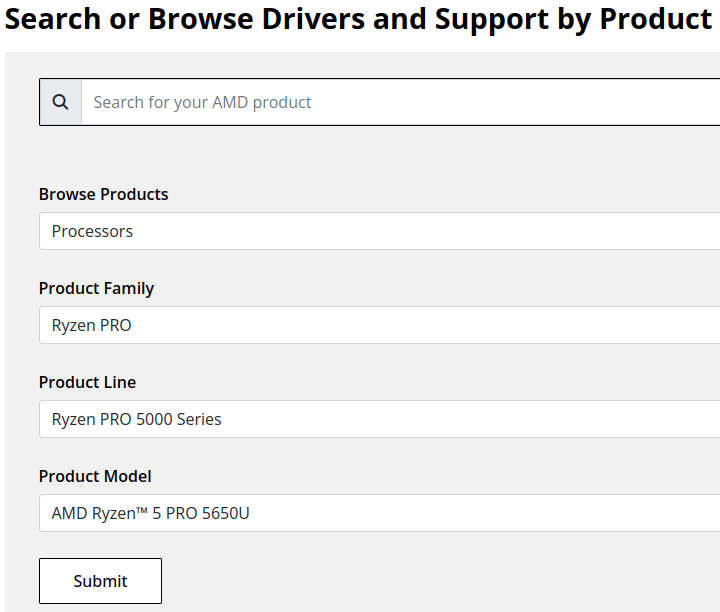
This page also provides a search and browse option for finding drivers and specific compatibility details, we'll look up the drivers for an AMD Ryzen Pro 5650U processor with Radeon Graphics:
- Navigate to AMD Drivers and Support page
- From the Browse section, fill out the processor details and click the Submit button
- Expand the "Windows 11 - 64-Bit Edition" section and select the Download button for the latest graphics drivers
NVIDIA Graphics
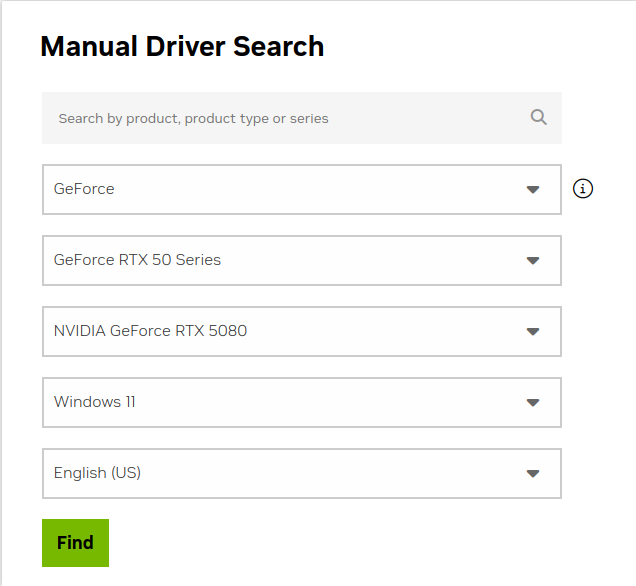
Like AMD, NVIDIA provides an automatic installation utility, as well as a Manual Driver Search on the NVIDIA Drivers support page. We will look up the drivers for an NVIDIA RTX 5080 graphics card.
- Navigate to NVIDIA Drivers support page
- Fill out the Manual Driver Search drop-downs and select the "Find" button when complete
- From the search results, select the "View" button for the GeForce Game Ready Driver or NVIDIA Studio Driver (if you need the studio driver features)
- Select the green Download button for the latest graphics drivers
Installing the Graphics Drivers
For the most part this is relatively simple, we recommend disconnecting any external docking stations or devices that are not necessary for the driver installation, and for notebook computers connecting the system's original power supply.
Double-click on the downloaded driver installation executable and follow the on screen steps.
For more in-depth details on Intel, AMD, and NVIDIA's driver installation processes check out our step-by-step guides here:
- Intel Driver Installation In Detail
- AMD Driver Installation In Detail
- NVIDIA Driver Installation In Detail
If you have any questions or would like a recommendation, feel free to reach out to our support at support@plugable.com
How-To: Install the latest Intel Graphics Drivers
For a step-by-step guide to identify your graphics hardware and download the appropriate drivers, check out our KB article here
Download the drivers for your GPU or Processor Graphics
- In a web browser navigate to the Intel Driver Download Page
- In the Search Drivers & Software field, search for the Intel graphics card model or CPU model, "Arc Pro B60" in this example
- Select the appropriate Intel Arc Pro Graphics - Windows or similar entry from the search results, for modern hardware Intel will normally have at least one release per month, the list should return recent results within the last month
- Select the Download button to save the installer to your Downloads folder or selected location
Install the Intel Graphics Driver
To update the Intel Graphics Drivers to the latest version from Intel's website:
- Save and close any open applications
- Navigate to the downloaded graphics driver, then right-click on the saved driver installation file and select Run as administrator to start the installation process
- Allow the Intel driver installation through the User account control window, the drivers will be extracted
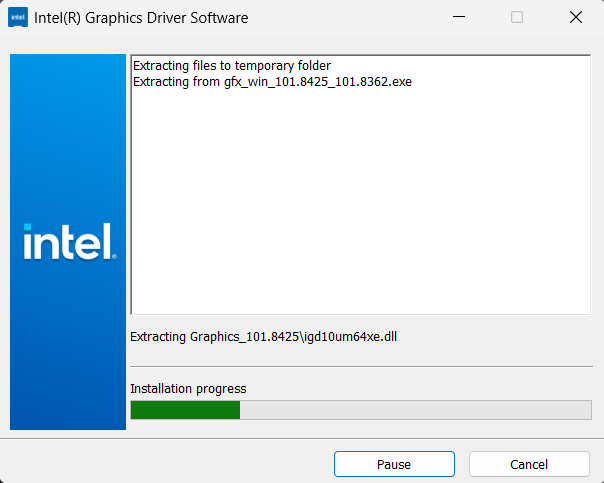
- When the extraction is complete select the Begin installation button

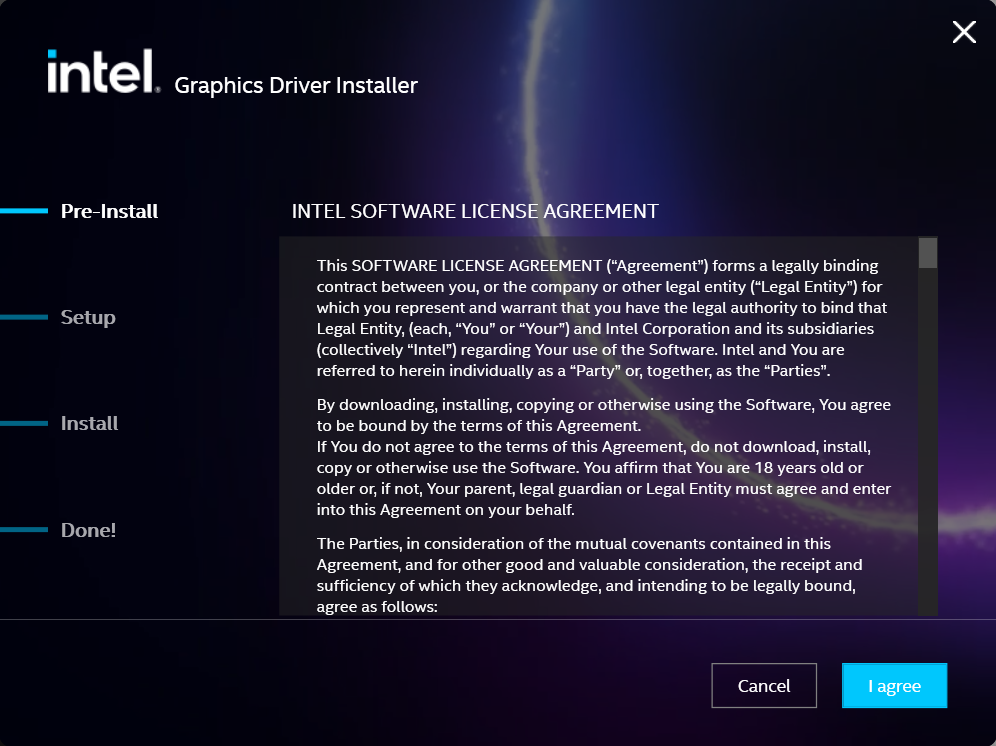
- Agree to the Intel Software License Agreement by selecting the I agree button
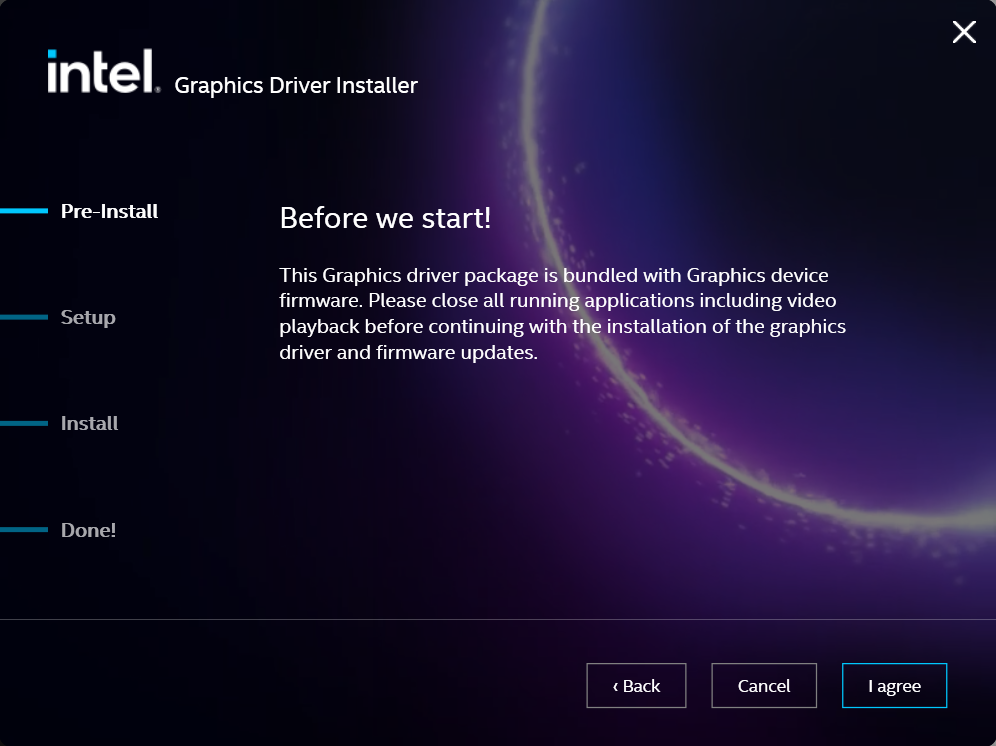
- Ensure all applications are saved and closed before selecting the I agree button
- For most installations, we recommend not selecting the Execute a clean installation checkbox. This option will remove previous driver versions and can lead to Windows Update reverting to an even older graphics driver. Select the Start button to proceed
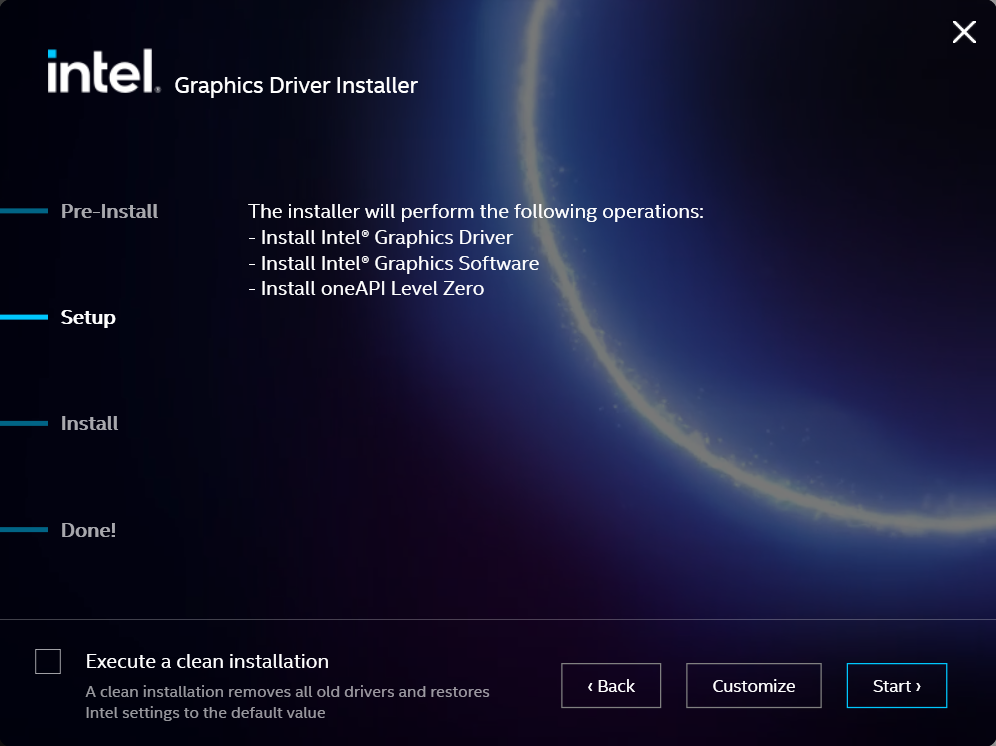
- The installation process will proceed, but can take some time to complete
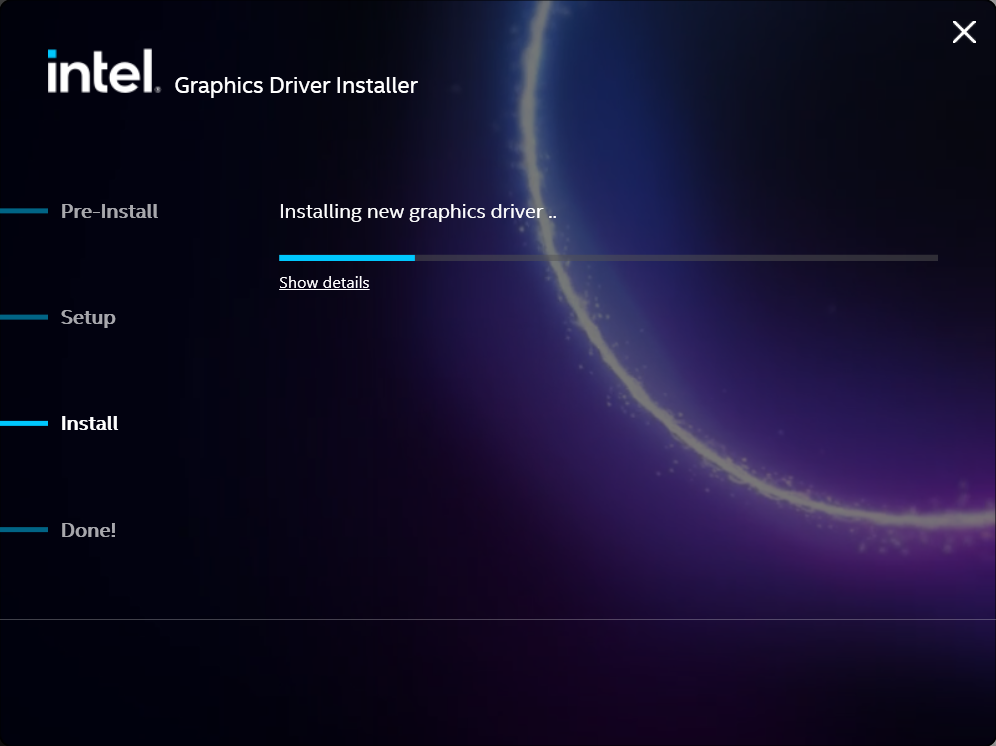
- When the installation has completed, deselect the Launch Intel Graphics Software checkbox - we don't need that right now, select the Reboot Now button to restart the computer applying the new graphics drivers
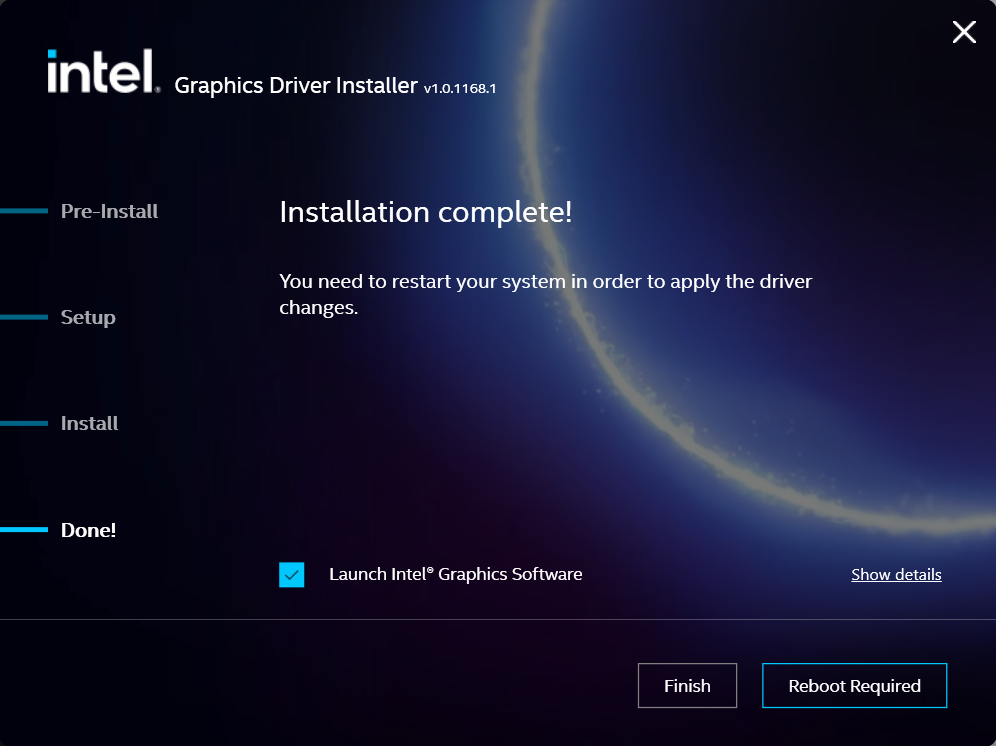
Windows should now detect the Intel Graphics Controller in the Device Manager and show the latest drivers.
If you have any questions or would like a recommendation, feel free to reach out to our support at support@plugable.com
How-To: Install the latest AMD Graphics Drivers
For a step-by-step guide to identify your graphics hardware and download the appropriate drivers, check out our KB article here
Download the drivers for your GPU or Processor Graphics
- In a web browser navigate to the AMD Drivers and Support page
- In the Search for your AMD product field, type in the model name, for example “RX 5600XT” for the AMD Radeon RX 5600 XT graphics controller, or a processor model like "AI 9 365", then select the best fitting result and select the Search button - note: Searching for a processor the "™" is required, so I recommend searching for the text after that symbol.
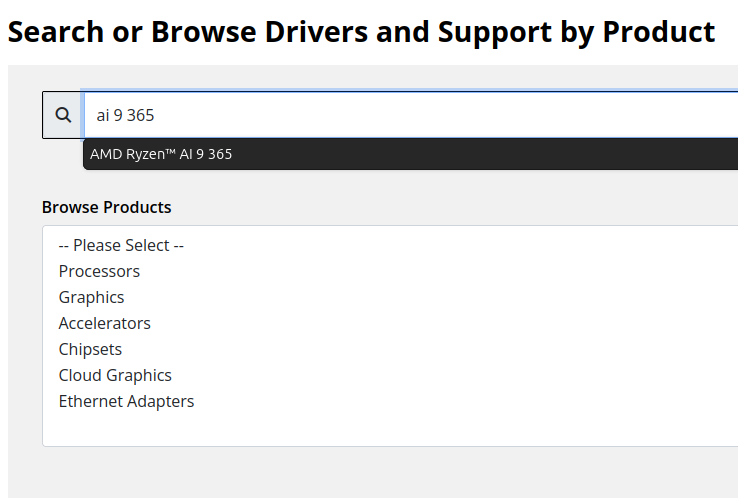
- On the results page, expand the section for Windows 11 64-bit then select the Download button for the latest AMD Software: Adrenalin Edition drivers, AMD may not provide a direct download for all hardware, in that case use the Auto-Detect and Install option
- Save the installer to your Downloads folder or selected location
Install the AMD Graphics Driver
To update the AMD Graphics Drivers to the latest version from AMD’s website:
- Save and close any open applications
- Navigate to the downloaded graphics driver, then right-click on the saved driver installation file and select Run as administrator to start the installation process
- Allow the Intel driver installation through the User account control window, the drivers will be extracted
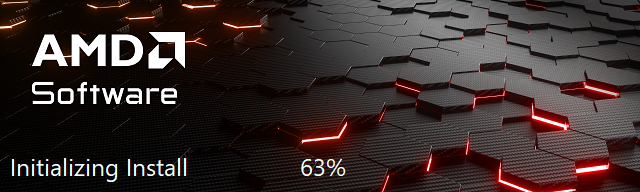
- For most users the express installation is fine, ensure all applications are saved and closed selecting the Accept & Express Install button. If you have been having issues with older graphics drivers causing crashes or errors the Factory Reset (Optional) checkbox may be selected, but it isn’t necessary for most installations.

- The installation will proceed, the displays may flicker or flash off/on while the drivers are installing.
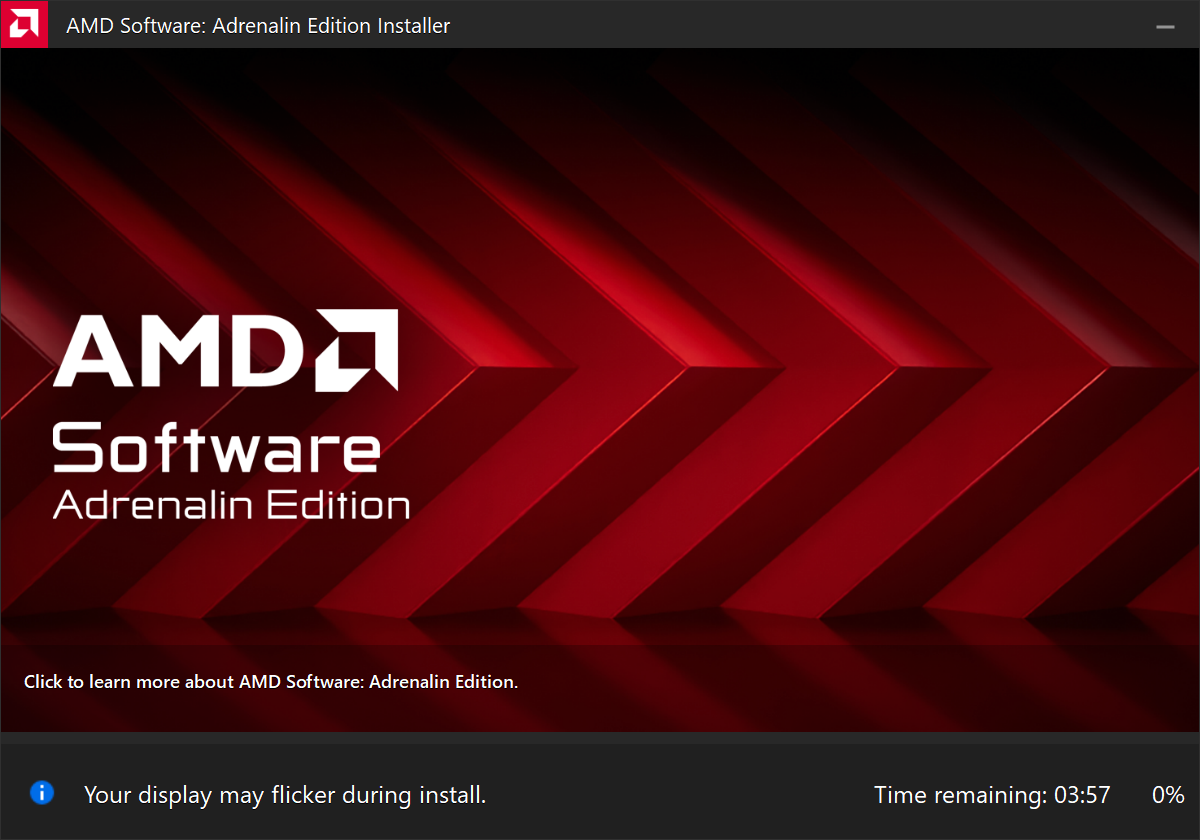
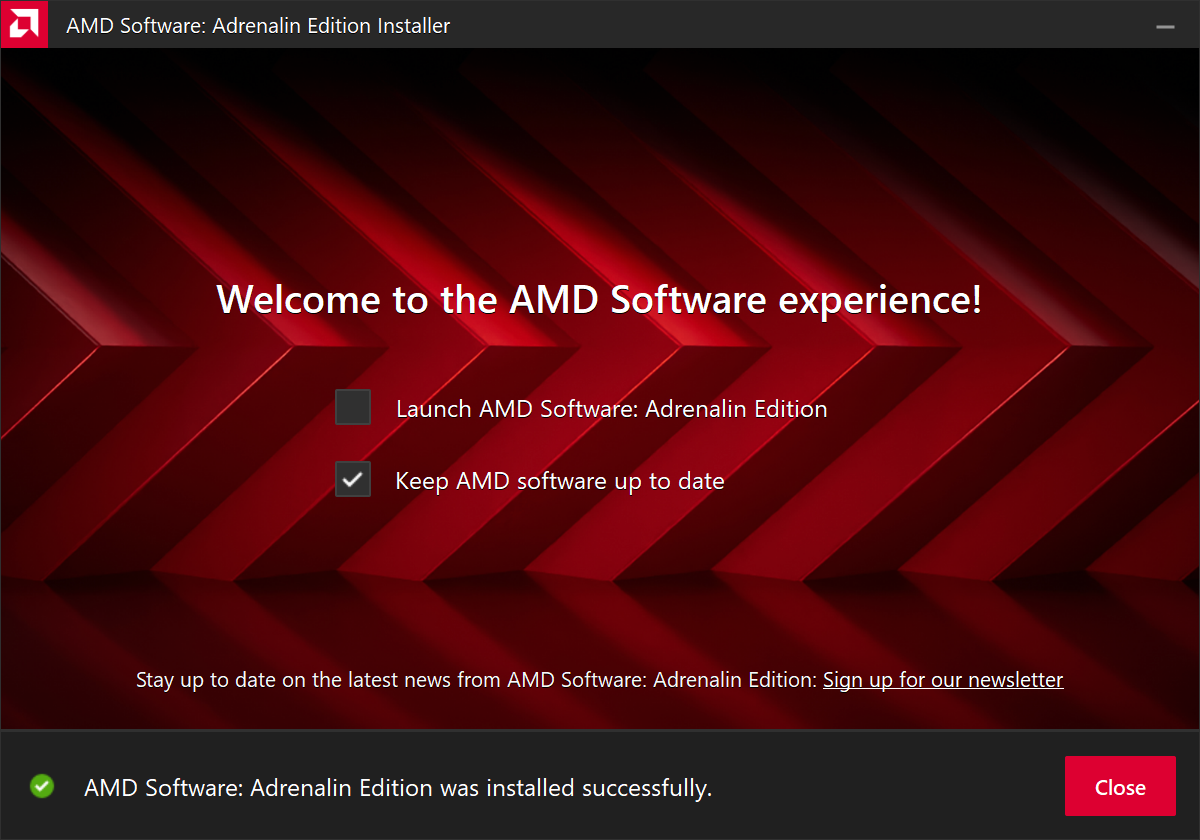
- When complete you will be prompted to Launch AMD Software: Adrenalin Edition and Keep AMD software up to date, you can uncheck the Launch AMD Software option
- Restart the computer to ensure the latest drivers are loaded from boot Start Menu > Power Icon > Restart
Windows should now detect the Intel Graphics Controller in the Device Manager and show the latest drivers.
If you have any questions or would like a recommendation, feel free to reach out to our support at support@plugable.com
How-To: Install the latest NVIDIA Graphics Drivers
For a step-by-step guide to identify your graphics hardware and download the appropriate drivers, check out our KB article here
Download the drivers for your GPU
Check your invoice for the specific model of NVIDIA graphics card, for this example we will use the RTX 5080 (the manufacturer is not relevant).
- In a web browser navigate to the NVIDIA Driver Download Page
- In the Manual Driver Search field, search for the NVIDIA graphics card model, "RTX 5080" in this example
- Select the GeForce RTX 50 Series | NVIDIA GeForce RTX 5080 | Windows 11 entry from the list
- Left-click the Find button
- Select either View buttons from the GeForce Game Ready Driver or NVIDIA Studio Driver
- Select the Download button to save the installer to your Downloads folder or selected location
Install the NVIDIA Graphics Driver
To update the NVIDIA Graphics Drivers to the latest version from NVIDIA's website:
- Save and close any open applications
- Navigate to the downloaded graphics driver, then right-click on the saved driver installation file and select Run as administrator to start the installation process
- Allow the NVIDIA driver installation through the User account control window
- Click OK to extract the NVIDIA Display Driver package contents
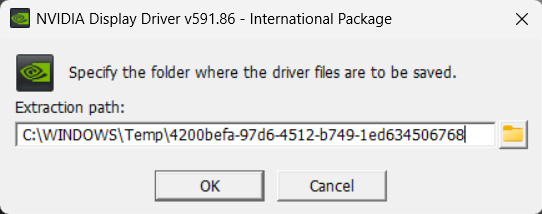
- At the System Check step, select either the NVIDIA Graphics Driver with NVIDIA App or the NVIDIA Graphics Driver alone, the NVIDIA App is gaming oriented and unnecessary for most users. Select AGREE AND CONTINUE
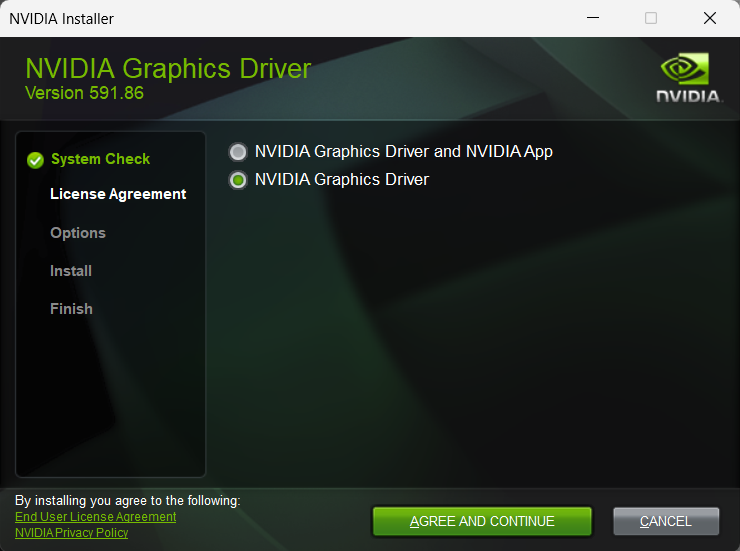
- At the License Agreement step, select the Express (Recommended) radio button then select NEXT to continue

- The installation will take some time to complete
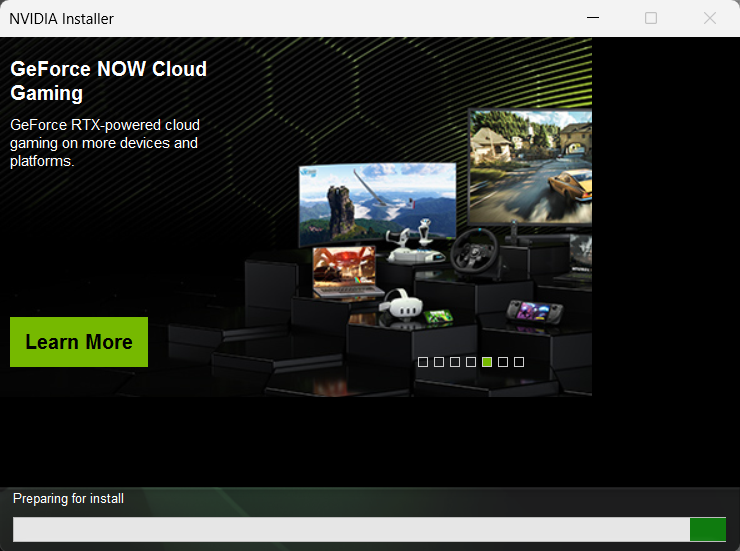
- When complete please restart the computer Start > Power > Restart
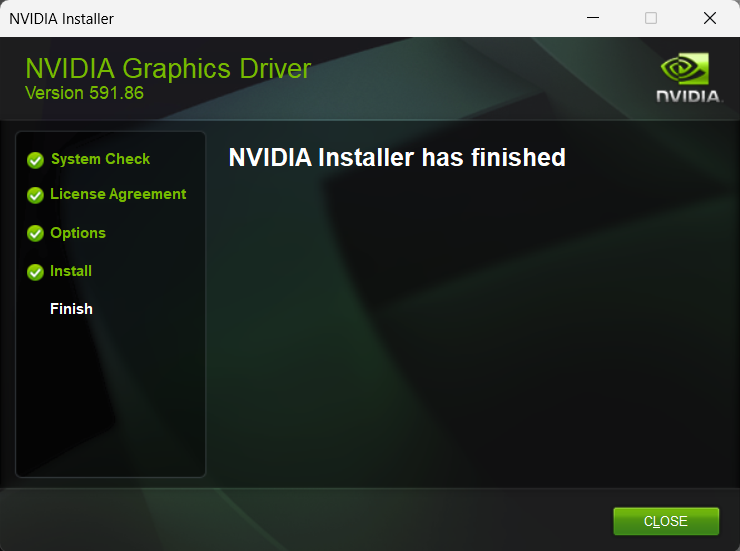
Windows should now detect the NVIDIA Graphics Controller in the Device Manager and show the latest drivers.
If you have any questions or would like a recommendation, feel free to reach out to our support at support@plugable.com


