


Hassle free, 2-Year Warranty
Fast, Free Shipping on Orders $35+
Lifetime Technical Support
30-Day Money Back Guarantee
Plugable USB-C Dual Monitor Docking Station, Certified Works with Chromebook, 60W Charging
$165.99 USD
SKU: UD-MSTHDCAmazon Rating : (84 Reviews)
Features
- Certified Chromebook Docking Station— Designed for reliable, high-performance use in business and education settings, this Works With Chromebook Certified 12-port docking station supports dual 4K 60Hz displays via 2x HDMI or 2x DisplayPort ports —perfect for classrooms, labs, and teacher workstations. Ideal for standardized Chromebook deployments across school districts or enterprise environments.
- Dual 4K— Windows and Chromebook docking station dual monitor is supported through 2x HDMI and 2x DisplayPort connections. Users can standardize on one or use a mix of either HDMI or DP to add two screens, each with up to 4K 60Hz resolution
- 60W Charging— Charging dock provides 60W charging to host laptop so you can leave your power cord in your travel bag. And, because this dock is certified to work with Chromebook, you can rest assured the dock will intelligently manage power requirements
- Compatibility— Laptop docking station is compatible with ChromeOS and Windows 10 and newer. Supports secure, Google-managed firmware updates in ChromeOS. DP 1.4 host is required for Dual 4K 60Hz
- 2-Year Coverage, Lifetime Support— Every Plugable product, including this docking station, is covered against defects for 2 years and comes with lifetime support. If you ever have questions, contact our North American-based team - even before purchase
For volume orders or business inquiries contact sales@plugable.com
Free 3-Day Continental U.S. Shipping When Buying Direct!


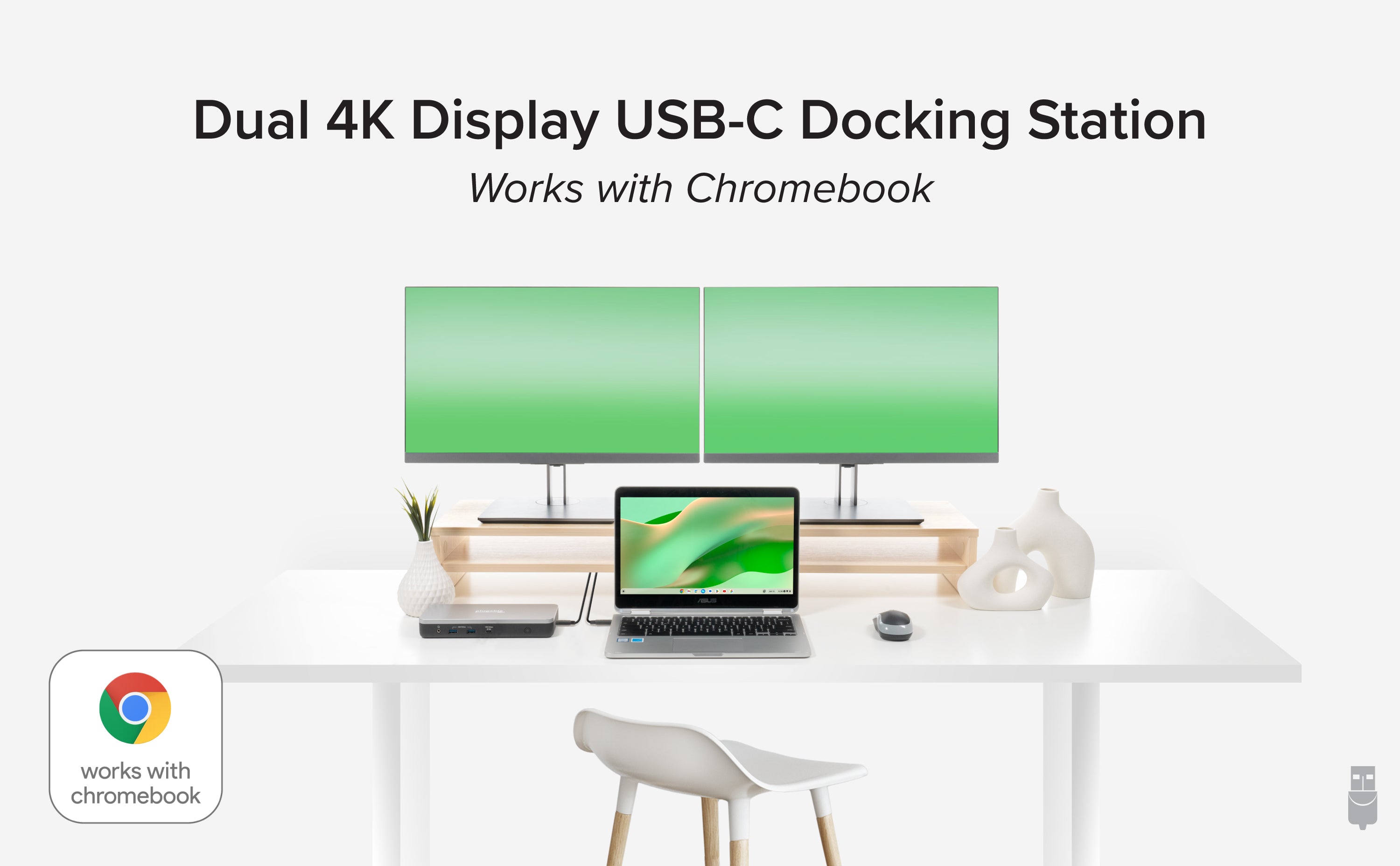
Strong security, simplicity, and cost efficiency has made the Chromebook a popular choice for students, teachers, and government employees. When you connect that to a docking station with two HDMI ports and two DisplayPort ports (standardize on one or a mix of both) for extending two displays and up to 4K 60Hz resolution, 60W host charging, gigabit Ethernet, combination audio port, 4x USB 5Gbps ports, 2x USB 10Gbps ports, and 1x USB-C 10Gbps port, you go from laptop to productivity powerhouse.

Works With Chromebook
There is more to “Works With Chromebook” than just a compatibility statement. It’s actually a pretty tough badge to acquire. That’s because
laptop docking stations that carry the badge are validated to ensure they will “work seamlessly with current and future ChromeOS devices.”
It comes with other features, too, like automatic secure firmware updates while the USB-C dock is connected to a Chromebook laptop. Perfect for ensuring employees always have the latest compatibility improvements and features.
Dual 4K
It doesn’t matter if you are on a Chromebook or a Windows laptop, this laptop docking station is all about choice.
Offering two ports each, HDMI and DisplayPort, so users can standardize on one, or use a mix of both to extend to up to two screens. And no matter how you connect your displays, all video ports are capable of up to 4K 60Hz.
And with 60W charging, this USB-C docking station will power your productive endeavors.
Laptop docking station dual monitor resolution is dependent on host. DP 1.4 host is required for Dual 4K 60Hz. DP1.2 hosts will see resolutions up to 4K 30Hz.

Compatibility
Many organizations and households have mixed device fleets that span platforms, so while this docking station has been designed for ChromeOS, it’s also compatible with Windows devices.
This Plugable docking station provides full functionality to Windows 11 and Windows 10, systems with Thunderbolt 3 or 4, USB4, and USB-C.
The dock can also be used on Macs, however due to lack of MST functionality in macOS, the USB C dock only allows for one additional extended display. The second display will be mirrored.
This product works with devices capable of running the latest version of ChromeOS and has been certified to meet Google's compatibility standards. Google is not responsible for the operation of this product or its compliance with safety requirements. Chromebook and the Works With Chromebook badge are trademarks of Google LLC.
 |
 |
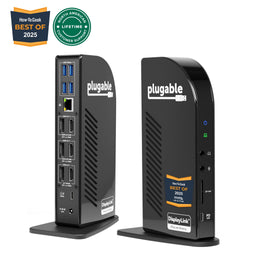 |
 |
|
|---|---|---|---|---|
Works With Chromebook Certified |
||||
# of Displays |
2 |
2 |
3 |
2 |
Video Ports |
2x HDMI 2.0, 2x DisplayPort 1.4 |
2x HDMI 2.0, 2x DisplayPort 1.2 |
3x HDMI 2.0, 2x DisplayPort 1.2 |
2x HDMI |
Max Resolutions Supported |
2x 4K 60Hz |
2x 4K 60Hz |
3x 4K 60Hz |
2x 4K 60Hz |
# of USB Type-A Ports |
6 |
6 |
5 |
3 |
Laptop Charging |
60W |
No |
100W (96W Certified) |
No |
Laptop Connection |
USB-C, USB4, Thunderbolt 4 / 3 |
USB 3.0 and USB-C |
USB-C, USB4, Thunderbolt 4 / 3 |
USB-C, USB4, Thunderbolt 4 / 3 |
Filter Help Articles and Frequent Questions by Category
Choose one or more filters within each category to narrow down the articles. Each selection will result in only displaying articles that include all of your choices.
Articles
Well how about that, it looks like we don't have any articles matching your filters! Try removing one of your choices or clear the filters to show all articles.
You can always contact support if you need help too!
Is My Laptop Compatible With Plugable Multi-Stream Transport (MST) Products?
For multiple independent displays using Multi-Stream Transport (MST), your computer must support DisplayPort video and MST through its USB-C, USB4, or Thunderbolt connection. Windows and ChromeOS support MST, while macOS does not support MST for multiple independent extended displays.
How Do I Check Whether My Laptop Is Compatible With MST?
Start by checking your computer's operating system and USB-C video capabilities.
| Platform | MST Support | Expected Behavior |
|---|---|---|
| Windows 10 / 11 | Supported | Multiple independent extended displays on compatible hardware |
| ChromeOS | Supported | Multiple independent extended displays on compatible hardware |
| macOS | Not supported | MST-connected displays cannot operate as multiple independent extended displays |
Your computer must provide DisplayPort video through the port connected to the Plugable product. A USB-C port that supports only USB data or charging cannot provide video to an MST dock, hub, or adapter.
Look for one of the following capabilities in your computer's specifications:
- USB-C with DisplayPort
- USB-C with DisplayPort Alt Mode
- USB4
- Thunderbolt 3
- Thunderbolt 4
- Thunderbolt 5
USB4 and Thunderbolt ports support DisplayPort video, but the number of displays, maximum resolution, and refresh rate still depend on the computer's graphics hardware and DisplayPort capabilities.
If your computer's specifications don't clearly identify its DisplayPort capabilities or MST support, contact the manufacturer to confirm.
How Does My Computer's Display Limit Affect MST Compatibility?
MST allows a single DisplayPort connection to carry multiple display streams, but it does not increase the maximum number of displays supported by your computer's graphics hardware.
For example, a Plugable product may support three external monitors while the connected computer supports only three displays in total. If the laptop's built-in display counts toward that limit, only two external displays may be available.
In some cases, closing the laptop lid and disabling the internal display may make another external display available. Display limits vary by processor, graphics hardware, operating system, and computer manufacturer.
How Does DisplayPort Bandwidth Affect MST Display Resolution?
MST divides the DisplayPort bandwidth available from the computer among the connected displays. Higher resolutions and refresh rates require more bandwidth.
| Host Display Capability | General MST Capability |
|---|---|
| No DisplayPort video over USB-C | No video output |
| DisplayPort 1.2 | Commonly supports dual 1080p 60Hz configurations |
| DisplayPort 1.4 | Supports higher resolutions and refresh rates depending on available bandwidth |
| DisplayPort 1.4 with DSC | Supports higher-bandwidth multi-display configurations on compatible products |
| DisplayPort 2.1 | Provides additional display bandwidth on compatible systems and products |
Display Stream Compression, or DSC, allows higher-resolution display signals to use less DisplayPort bandwidth. Whether DSC is required depends on the Plugable product, connected displays, and desired resolution and refresh rate.
Always refer to the specifications for your specific Plugable product to confirm its supported display configurations.
Which Plugable Products Use MST?
The following available Plugable products use DisplayPort Multi-Stream Transport as part of their display functionality.
| Model | Maximum External Displays | MST Use |
|---|---|---|
| UD-MSTH2 | 2 | Two displays through MST |
| UD-MSTH3 | 3 | Up to three displays through MST |
| UD-MSTHDC | 2 | Two displays through MST |
| USBC-MSTH2 | 2 | Two HDMI displays through MST |
| USBC-MSTH3 | 3 | Up to three HDMI displays through MST |
| USBC-11IN1E | 2 | Two HDMI displays through MST |
| UD-3900C4 | 4 | Hybrid design with two MST displays and two DisplayLink displays |
| TBT4-UDZ | Up to 4 | Uses built-in MST to support multiple displays on compatible Windows systems |
The UD-3900C4 is a hybrid docking station. HDMI 1 and HDMI 2 use DisplayLink technology, while HDMI 3 and HDMI 4 rely on the computer's native DisplayPort Alt Mode and MST capabilities.
The TBT4-UDZ uses MST differently depending on the host platform. Compatible Windows Thunderbolt 4 and USB4 systems can use MST to support up to four extended displays. Mac display support differs because macOS does not support DisplayPort MST, so refer to the TBT4-UDZ product specifications for Mac display configurations.
What Are My Options if I Use macOS?
macOS does not support DisplayPort MST for multiple independent extended displays from a single MST connection.
This doesn't mean every Plugable product with MST is unusable with a Mac. Some products, such as hybrid or Thunderbolt docking stations, may use other display technologies or separate native display connections.
If you need multiple independent extended displays on a Mac, consider a Plugable DisplayLink docking station or a compatible Thunderbolt docking station. Always check the specific product's Mac compatibility and your Mac model's native external display capabilities before choosing a solution.
Applicable To
- UD-MSTH2, UD-MSTH3, UD-MSTHDC, USBC-MSTH2, USBC-MSTH3, USBC-11IN1E, UD-3900C4, TBT4-UDZ
How can I tell if my laptop is compatible with the UD-MSTHDC?
For full functionality, the UD-MSTHDC requires that the host computer have at least one of the following ports:
- Thunderbolt 4 or 3 port
- USB Type-C ports with Alt Mode (DP) and Power Delivery (PD) support
And that the host computer be running ChromeOS (a Chromebook) or Windows. The UD-MSTHDC is NOT compatible with Mac computers running macOS.
Additionally, the host computer needs to have a processor that supports DP 1.4 (such as Intel 11th gen CPUs or newer) to fully support all external display resolutions and refresh rates, as noted below:
- DP 1.4 hosts support up to two 4K 60Hz external displays
- DP 1.2 hosts support up to two 1080p 60Hz external displays
To determine which processor your laptop has, you can go to Settings -> About ChromeOS -> Diagnostics, and note the first two numbers in the Intel CPU's name (i.e. 11xxx or 12xxx means 11th and 12th generation respectively.
What does the power button on the UD-MSTHDC do?
The UD-MSTHDC's power button controls power to the docking station itself, and will not turn on or off the connected host.
The button will be on by default, and can be used to manually turn the dock off, and then back on if needed.
DisplayPort Multi-Stream Transport (DP MST) Explained
What is DisplayPort Multi-Stream Transport (DP MST)?
DisplayPort Multi-Stream Transport (also known as DP MST) is a function of the DisplayPort protocol introduced with version 1.2 of the DisplayPort specification. DP MST allows multiple uncompressed video streams to be delivered over a single DisplayPort connection via a process known as multiplexing. DP MST can be used over several different types of video connections, such as DisplayPort, Mini-DisplayPort, Thunderbolt 3 or 4, and USB-C ports that support DisplayPort Alt-Mode video output.
There are two methods by which DP MST can implemented. A 'daisy-chain' connection where you can link multiple monitors together or an 'hub' configuration that can split one DisplayPort cable into multiple video outputs.
For DP MST to work in a daisy-chain or MST Hub configuration, monitors must support either DisplayPort 1.2 version or higher or Thunderbolt, provide a video 'output' port on the monitor, and have DP MST mode enabled. Note that HDMI is not supported.
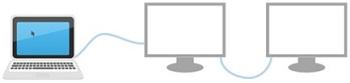
Daisy-chain example
In many cases, a monitor will not have a video 'out' option; this is where an MST Hub will become necessary to break out the video signal to each monitor individually.
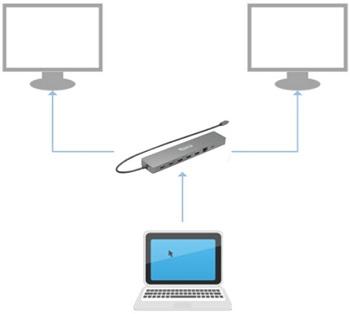
Plugable's USBC-11IN1E shown in this MST Hub example
Will I need additional software to use DP MST?
DP MST does not require any additional software and will make use of the host computer's graphics processing unit (GPU) in order to bring high-resolution, uncompressed video that is beneficial in a variety of applications such as graphics design and video editing. Resolutions will vary depending on the specifications of the GPU. DisplayPort 1.4 GPUs will support higher resolutions and refresh rates than DisplayPort 1.2, for example.
It is recommended to use the most up-to-date GPU drivers from your laptop or GPU manufacturer to ensure the best overall performance.
Which operating systems support DP MST?
MST is supported by Windows 11, 10, Windows 8/8.1, Windows 7, and Chrome OS.
MST is currently not supported by macOS.
Plugable devices that implement DP MST
Plugable makes several hubs and docking stations that make use of DP MST that can help boost productivity by providing external monitor support, and other capabilities such as USB, Ethernet, and even audio. Examples of Plugable products which use DP MST are:
Some of our Thunderbolt supported products include:
How to identify your Chromebook Model and ChromeOS Version
Plugable supports computers running ChromeOS (such as Chromebook laptops or Chromebox desktops) with several of our Plugable products. There are many different models of ChromeOS devices available, and several of these models have similar names despite them having different features or specifications.
Should things not work as expected while using a supported Plugable product in conjunction with a supported ChromeOS device, the most important piece of information Plugable needs in order to help troubleshoot the issue is the ChromeOS device’s model information.
Easiest way to determine your ChromeOS device's model information
1. Power on the ChromeOS device and log in
2. Press the following three keys on the ChromeOS device’s keyboard at the same time:
A. The ‘CTRL’ key
B. The ‘Search’ key, also known as the ‘Launcher’ key
Depending on the specific model ChromeOS device you are using, the labeling on this key will look like a magnifying glass or a small solid circle, and this key is typically located near the left ‘Shift’ key on the keyboard.
If you are using a Windows keyboard in conjunction with your ChromeOS device, the ‘Windows’ key (which looks like the Microsoft logo) will function as the ‘Search’ or the ‘Launcher’ key
C. The ‘Esc’ key
3.. After pressing the combination of keys listed above, a ChromeOS diagnostics window will appear.
At the top of the Diagnostics window, there will be a line of text that displays the version of ChromeOS installed on the device, as well as the ‘code name’ of the device.
For reference, every ChromeOS device has a ‘code name’ given to it by Google while the product was in development, and the code names are unique to each model.
For example, the screenshot below shows the ‘Diagnostics’ application from a Chromebook laptop:
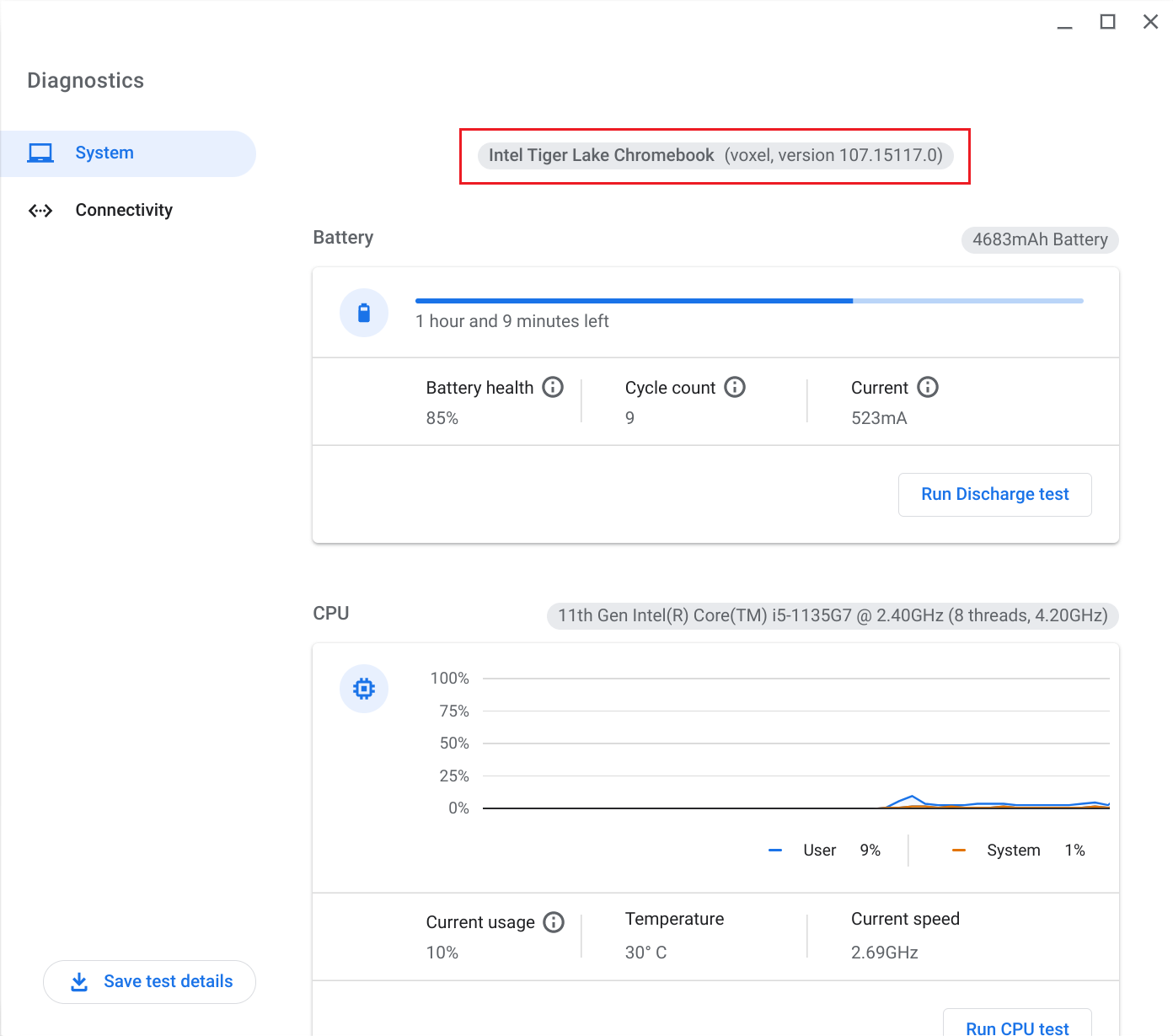
The information at the top of the window reads ‘Intel Tiger Lake Chromebook (voxel, version 107.15117.0)’ and this information is outlined in red in our example.
The ‘107.155117.0’ refers to the specific version of ChromeOS installed on the device. In this case, the major version is ‘107’.
The word ‘voxel’ is the code name for this specific model Chromebook. Google maintains a list of all ChromeOS devices and their code names here → https://www.chromium.org/chromium-os/developer-information-for-chrome-os-devices/
Using the Google list as a reference, we can see that ‘voxel’ is the code name for an ‘Acer Chromebook Spin 713’ laptop, with a model number of ‘CP713-3W’.
How to provide your ChromeOS device's model information to Plugable
For reference, there are two ways to provide your ChromeOS device's model information to Plugable, should we request It:
A. Provide a screenshot of the ‘Diagnostics’ application window. Google provides instructions for taking screenshots here → https://support.google.com/chromebook/answer/10474268
B. Click on the ‘Save test details’ button located in the bottom left-hand corner of the ‘Diagnostics’ application window.
You will be prompted to save a text file containing information from the Diagnostics utility. The default location for this file will be within the ‘Downloads’ section within the ‘Files’ application.
Once the file has been saved, provide a copy of that file to Plugable.
Alternative methods to determine your ChromeOS device's model information
If it is not possible to obtain the model information using the process described earlier, there are a few alternate ways to determine the model information.
A. If you have access to the purchase information for your ChromeOS device (such as an invoice), this information may provide you with the brand and specific model number.
An example of a different brand and specific product model number of a Chromebook (as compared to our previous example) would be ‘ASUS Chromebook C424’
B. Most ChromeOS devices have a label located on the device that provides the specific model number of the product.
For example, here is a photo from the bottom of the Chromebook we used earlier in item #1:
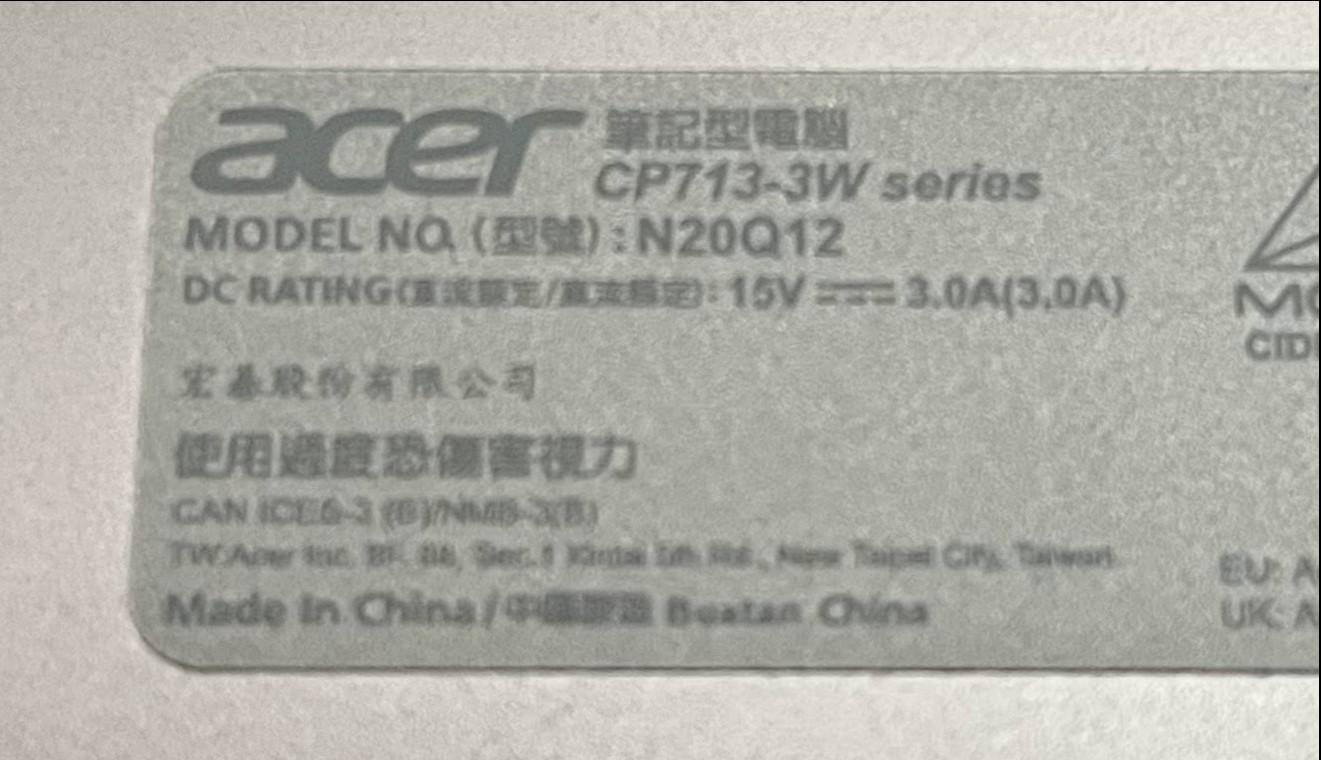
In this example, we can see that this is a Chromebook made by the company ‘Acer’, and the specific product model is ‘CP713-3W’.
Applicable To
- All ChromeOS devices
USB Port Types
USB-A

pietz, CC BY-SA 3.0 , via Wikimedia Commons
This is the standard USB connection that most computers offered prior to the introduction of USB Type-C (USB-C). Even after the introduction of USB Type-C, this is still quite common.
It can provide data transfer rates up to the USB 3.1 Gen 2 (10 gbps) specification depending on the host and device, but does not directly support video in the way that USB-C Alternate Mode does. This limitation makes DisplayLink USB graphics adapters and docking stations ideal on systems that do not have USB-C, or in instances where more displays are needed beyond available video outputs of a PC.
USB-B

Fred the Oyster, CC BY-SA 4.0 , via Wikimedia Commons

IngenieroLoco, CC BY-SA 4.0, via Wikimedia Commons
This type of connection comes in a couple different styles depending on whether USB 3.0 and higher transfer rates are supported (bottom graphic). Usually this type of connection is used to plug into USB devices that do not have a fixed cable connected, such as USB docking stations, USB hubs, printers, and others.
USB Mini-B
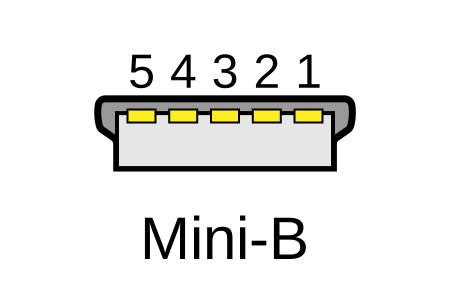
Fred the Oyster, CC BY-SA 4.0 , via Wikimedia Commons
One of the first connectors for charging a smartphone, wireless game controller (such as the Sixaxis and DualShock 3), and other small devices such as external hard drives. Not commonly used today, but is still used in some cases. Most devices using USB Mini B are using USB 2.0, though a USB 3.0 variant does exist. This specification also added USB On-The-Go (OTG) functionality, though it is more commonly implemented with Micro USB.
USB Micro-B

Fred the Oyster, CC BY-SA 4.0, via Wikimedia Commons
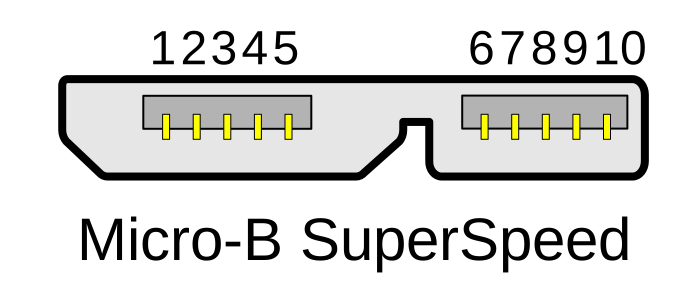
IngenieroLoco, CC BY-SA 4.0 , via Wikimedia Commons
A smaller connector that serves many of the same uses as the Mini B connector, with added optional features such as Mobile High-Definition Link (MHL) to allow devices like smartphones to output video to larger displays without requiring a dedicated port for video output.
The larger variant of USB-B is most commonly used for external hard drives for higher 5Gbps transfer rates.
USB-C, Thunderbolt™ 3, and Thunderbolt™ 4
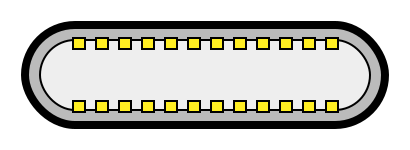
Niridya , CC0, via Wikimedia Commons
The most recent USB connection, USB Type-C (USB-C), represents a major change in what USB can do. The connector is smaller, can be connected in two orientations, is able to carry substantially more power and data, and can directly carry video signals of multiple types (HDMI, DisplayPort, etc.) Intel has also adapted the USB-C connector for use with Thunderbolt 3 and Thunderbolt 4.
It is important to note that while all Thunderbolt 3 and Thunderbolt 4 connections are USB-C, not all USB-C connections can be used with Thunderbolt 3 or Thunderbolt 4 devices.
More details regarding physical USB connections can be found on Wikipedia . The graphics depicted here are adapted from Wikimedia Commons by various artists under the Creative Commons Attribution-Share Alike 3.0 Unported license.
Is my ethernet adapter compatible with iPhone?
Our Plugable ethernet adapters are compatible with USB-C iPhone 15 and 16 / Pro / Pro Max running iOS 17 or newer. Our ethernet adapters are plug-and-play on iPhone, and ethernet connection is identified in the iOS settings app.
These following ethernet adapters from Plugable have been tested and verified to work with iPhone:
Understanding and Troubleshooting Network Performance
How Do I Benchmark and Troubleshoot Network Adapter Performance Using iPerf?
Problem Summary
Network adapter performance issues or unexpected speed throttling are commonly caused by local network bottlenecks, driver configurations, VPN services, or Wi-Fi priority settings rather than adapter hardware defects. Establishing a direct point-to-point connection and running an iPerf benchmark isolates network bottlenecks and confirms whether the adapter is achieving its rated throughput.
Isolating the Issue
We recommend starting by isolating the issue to the lowest OSI layer and working up. The Open Systems Interconnection (OSI) model is a framework for understanding network communications and is divided into seven layers:
- Physical - This is the physical adapters, wires between two points. It can be thought of as each discrete component for example a USB to Ethernet adapter, or Ethernet cable.
- Data Link Layer - This layer handles the direct communications between devices, using the hardware MAC Address. Communications at this layer are blocked by a router. (MAC address) hardware: Ethernet switch
- Network Layer - This layer includes the IP address and allows for transmitting data between routed networks. (IPv4, IPv6) hardware: Router.
- Transport Layer - This layer handles the end-to-end message delivery, and optionally error recovery and flow control, and operates in software. (TCP, UDP). For our purposes this as high as Plugable products really interact, the three next layers are independent of our products.
- Session Layer - Opens, manages, and closes sessions between applications.
- Presentation Layer - This includes SSL/TLS encryption, data formats like JPEG or PNG
- Application Layer - This is the interaction layer for most users and applications, including web pages: HTML, JavaScript etc content.
Physical
When you receive no network connection at all, try a different Ethernet cable, Ethernet switch port, or bypass any devices and connections between the computer's network port and the Ethernet switch. Intermediary devices and connections (like keystone wall sockets, IP telephony systems, etc) can cause reduced network reliability. Check for the Ethernet port Link and Activity LEDs on both the computer's Ethernet adapter, and the switch port.
Data Link and Network
For simplicity these can be combined for testing, check to see if the system is receiving an IP address with terminal commands like ipconfig /all in Windows, or ip -a -br -4 in Linux. We can also check for local network connectivity by "pinging" a local resource like the router ping 192.168.1.1 where "192.168.1.1" is the IP address of the router - this will depend on your specific network configuration.
For performance related issues testing the local network, that is devices connected by one or more Ethernet switches, or even directly connected Ethernet port to Ethernet port is the first step in narrowing down an internet slowdown, to determine if the issue is between the computer and router, or between the router and internet service provider.
Local network performance testing can take a couple of forms, the most common is a utility like iPerf3 that is specifically designed for testing or benchmark a network connection. iPerf3 is designed specifically for Linux and Unix-like operating systems, it has been ported by 3rd parties to both Windows and macOS but has some limitations.
iPerf 3 Basic Benchmark
Testing with iPerf3 requires two computers - a server and a client. Generally we recommend a Linux system for the server, this will be more stable and provide more testing options, however a Windows or macOS server may also be used for basic testing. The client computer can also be Linux, Windows, or macOS, again with some limitations for non-Linux clients that shouldn't impact this this testing.
Installing iPerf3
For Linux install iPerf3 from your package manager: for Fedora (Redhat based distributions): sudo dnf -y install iperf3, or for Ubuntu (Debian based): sudo apt update && sudo apt install iperf3.
For Windows iPerf3 has been maintained by a 3rd party on GitHub and can be downloaded by selecting the Releases on the right column.
For macOS the easiest installation is through homebrew: brew install iperf3.
Configure the Server
Connect the computer to the network - or directly to the client computer - direct connections are not covered here but you can look up how to manually set IP addresses on both computers. Then look up the IP address assigned to the server open a terminal and run the following command
- Windows:
ipconfig /all - Linux:
ip -br -4 addr - Mac: You will need to look up the IP address through the macOS Apple Menu > System Settings > Network settings menu
The server simply needs to run iPerf3 with the -s argument. Open a terminal and navigate to the iPerf3 executable (Windows - for Linux and macOS after installation iPerf3 will be in the PATH), and run the program
- Windows:
iperf3.exe -s - Linux/mac:
iperf3 -s
Running a test
The most basic tests iPerf3 offers are 10-second upload or download tests, however there are many configuration options available to us. Open a terminal and navigate to the iPerf3 executable (Windows - for Linux and macOS after installation iPerf3 will be in the PATH), and run the program:
- Windows:
iperf3.exe -c Server_IP - Linux/mac:
iperf3 -c Server_IP
This will start an upload test to the server and print the result after each second, and a summary result to the terminal.
We can similarly start a download test by adding the -R reverse direction flag with the following:
- Windows:
iperf3.exe -c Server_IP -R - Linux/mac:
iperf3 -c Server_IP -R
Here is the example output of a download test from a local server at 192.168.1.250.
Connecting to host 192.168.1.250, port 5201
Reverse mode, remote host 192.168.1.250 is sending
[  5] local 192.168.1.90 port 39982 connected to 192.168.1.250 port 5201
[ ID] Interval           Transfer     Bitrate
[  5]   0.00-1.00   sec   112 MBytes   935 Mbits/sec
[  5]   1.00-2.00   sec   112 MBytes   936 Mbits/sec
[  5]   2.00-3.00   sec   112 MBytes   937 Mbits/sec
[  5]   3.00-4.00   sec   112 MBytes   936 Mbits/sec
[  5]   4.00-5.00   sec   112 MBytes   936 Mbits/sec
[  5]   5.00-6.00   sec   112 MBytes   936 Mbits/sec
[  5]   6.00-7.00   sec   112 MBytes   937 Mbits/sec
[  5]   7.00-8.00   sec   112 MBytes   936 Mbits/sec
[  5]   8.00-9.00   sec   112 MBytes   936 Mbits/sec
[  5]   9.00-10.00  sec   112 MBytes   936 Mbits/sec
- - - - - - - - - - - - - - - - - - - - - - - - -
[ ID] Interval           Transfer     Bitrate         Retr
[  5]   0.00-10.04  sec  1.09 GBytes   935 Mbits/sec    0             sender
[  5]   0.00-10.00  sec  1.09 GBytes   936 Mbits/sec                  receiver

iperf Done.
Each line shows the amount of data and average speed within a 1-second interval, this is great for catching intermittent issues, brief or transient slowdowns etc.
The summary (below the dashed lines) shows the Bitrate at 935 or 936 Mbits/second - measured by the client and serve respectively, with zero Retr (Re-transmits) from the client. This is pretty typical for a gigabit Ethernet connection (1000Mbps) through a home network (in this case two Ethernet switches).
Longer tests can be run by specifying the number of seconds: -t SECONDS where SECONDS is the time in seconds, for example 600 for 10 minutes. Additional settings and options can be found in the iPerf3 documentation and manual.
What does iPerf3 tell us?
iPerf3 tests the network bandwidth between two computers, by default this uses TCP (up to OSI Layer 4), for a local network segment. If the network performance between the client and server meets the expected bandwidth then performance issues are most likely outside of this scope. Internet speed testing can test the performance from the local network to the internet resource, however internet speeds will generally be less stable than local network speeds, many ISPs (Internet Service Providers) use shared bandwidth for multiple customers which can create slow times of day (for example when people start getting home from school/work), and may have asynchronous upload and download speeds. When comparing internet speed test results we recommend keeping your internet service expectations in mind.
For internet speed tests there are many options from different providers, these generally all operate through the web browser, introducing potential slowdowns from browser extensions and configuration, VPN (Virtual Private Network) connections and more. Here are some of the more common internet-based speed tests we see.
If benchmark speeds remain significantly lower than expected or the test fails to run, verify that both host computers support the targeted Ethernet link rates, test with a Cat 6a or better Ethernet cable, and temporarily disable security software that may filter local network traffic. If performance issues continue, contact Plugable support at support@plugable.com with your product model, host system specifications, and iPerf test results or PlugDebug diagnostic logs.
Applicable To
- Plugable products with Ethernet ports, or Plugable Ethernet adapters
- Systems running Windows, macOS, or Linux
If you have any questions please feel free to contact us at support@plugable.com and we'll be happy to help!
No Sound? How to Change Your Default Audio Device to Your Plugable Product
If your computer is sending audio to the wrong speakers, headphones, microphone, dock, or other audio device, you can change the default audio output or input device in your operating system's sound settings. The steps below cover Windows, macOS, and Linux.
How Do I Set the Default Audio Device?
Common audio devices you may want to switch to include:
- Bluetooth headsets, headphones, and speakers
- Speakers built into a display, such as a TV or monitor
- A USB sound card, digital audio converter (DAC), or analog to digital converter (ADC)
- USB microphones
- Audio jacks on a docking station
These steps don't apply to the Plugable Performance NIX HDMI Capture Card (USBC-CAP60).
Set Audio Output Device
Set Default Playback Device in Windows
- Check that your audio device is properly connected and that any necessary drivers are installed.
- If the audio device has its own power or volume controls, make sure it is turned on and is not muted or set to the minimum volume.
- Open the Windows sound settings.
-
Windows 7/8.x: Right-click the speaker icon in the Windows taskbar and select Playback Devices. The Sound window will open with the Playback tab selected.
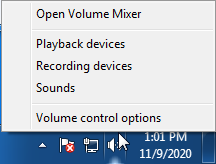
-
Windows 10/11: Right-click the speaker icon in the Windows taskbar and select Sound settings or Open Sound settings.
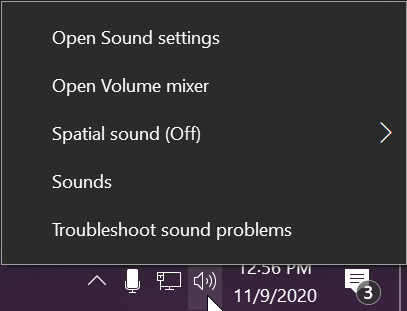
-
Windows 7/8.x: Right-click the speaker icon in the Windows taskbar and select Playback Devices. The Sound window will open with the Playback tab selected.
- In Windows 10 or Windows 11, select your preferred device under Output.
- If you need the classic Sound window, select More sound settings or Sound Control Panel, then select the Playback tab.
- Find the appropriate audio device.
- A Plugable USB 3.0 DisplayLink docking station or sound-enabled display adapter may appear as Plugable Audio.
- A Plugable Silicon Motion docking station or sound-enabled display adapter may appear as SMI USB Audio.
- A Plugable USB 2.0 docking station may appear as USB Multimedia Audio Device.
- A Plugable USB Audio adapter may appear as USB Audio Device.
- If you are using the classic Sound window, right-click the device and select Set as Default Device.
- Select OK to close the window.
Additional Configuration for Bluetooth
For Bluetooth pairing and configuration instructions:
Set Default Playback Device in macOS
- Open System Settings.
- On older versions of macOS, open System Preferences.
- Select Sound.
- Select Output.
- Select the audio device you want to use.
- A Plugable USB Audio adapter may appear as USB Audio Device.
Set Default Playback Device in Linux
- Confirm that the audio device is connected to the computer.
- If the audio device is self-powered, make sure it is powered on and is not muted or set to the minimum volume.
- Open the Settings application for your Linux distribution.
- Select Sound.
- Find the Output Device setting and select your preferred audio device.
- For additional audio controls, consider using PulseAudio Volume Control, package name pavucontrol, if supported by your Linux distribution.
Set Audio Recording Device
Set Default Recording Device in Windows
- Check that your audio device is properly connected and that any necessary drivers are installed.
- If the audio device has its own power or volume controls, make sure it is turned on and is not muted or set to the minimum volume.
- Open the Windows sound settings.
-
Windows 7/8.x: Right-click the speaker icon in the Windows taskbar and select Recording Devices. The Sound window will open with the Recording tab selected.
-
Windows 10/11: Right-click the speaker icon in the Windows taskbar and select Sound settings or Open Sound settings.
-
Windows 7/8.x: Right-click the speaker icon in the Windows taskbar and select Recording Devices. The Sound window will open with the Recording tab selected.
- In Windows 10 or Windows 11, select your preferred device under Input.
- If you need the classic Sound window, select More sound settings or Sound Control Panel, then select the Recording tab.
- Find the appropriate recording device.
- A Plugable USB 3.0 DisplayLink docking station or sound-enabled display adapter may appear as Plugable Audio.
- A Plugable USB 2.0 docking station may appear as USB Multimedia Audio Device.
- A Plugable USB Audio adapter may appear as USB Audio Device.
- If you are using the classic Sound window, right-click the device and select Set as Default Device.
- Select OK to close the window.
Additional Configuration for Bluetooth
For Bluetooth pairing and configuration instructions:
Set Default Recording Device in macOS
- Open System Settings.
- On older versions of macOS, open System Preferences.
- Select Sound.
- Select Input.
- Select the audio device you want to use.
- A Plugable USB Audio adapter may appear as USB Audio Device.
Set Default Recording Device in Linux
- Confirm that the audio device is connected to the computer.
- If the audio device is self-powered, make sure it is powered on and is not muted or set to the minimum volume.
- Open the Settings application for your Linux distribution.
- Select Sound.
- Find the Input Device setting and select your preferred recording device.
- For additional audio controls, consider using PulseAudio Volume Control, package name pavucontrol, if supported by your Linux distribution.
Applicable To
Windows, macOS, Linux, Plugable Docking Stations, USB-AUDIO, Plugable USB Audio Adapters
My Docking Station/Adapter Works Well With My Windows Laptop, but When I Close the Lid the Displays and Laptop Turn Off or Sleep. How Do I Fix This?
Windows defaults to putting the computer to sleep when the lid is closed, even if there are external displays and devices connected, we can change this setting to enable closing the lid while using a docking station.
Recommended Setup
To ensure the computer can reliably function with the lid closed there are some requirements and recommendations:
- The system should be powered: This can be from a USB Type-C Docking Station with host charging, or by connecting the laptop's original power source.
- There should be at least one external display connected, this can be through a docking station, or directly to the computer.
- There should be a keyboard and mouse connected, either through a docking station, USB Hub, or directly to the computer.
Windows 11 24H2 and Newer
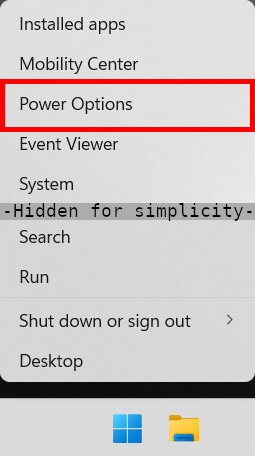
- Right-click on the Start menu and select Power Options from the context menu
- Expand the Lid, power & sleep button controls sub-section
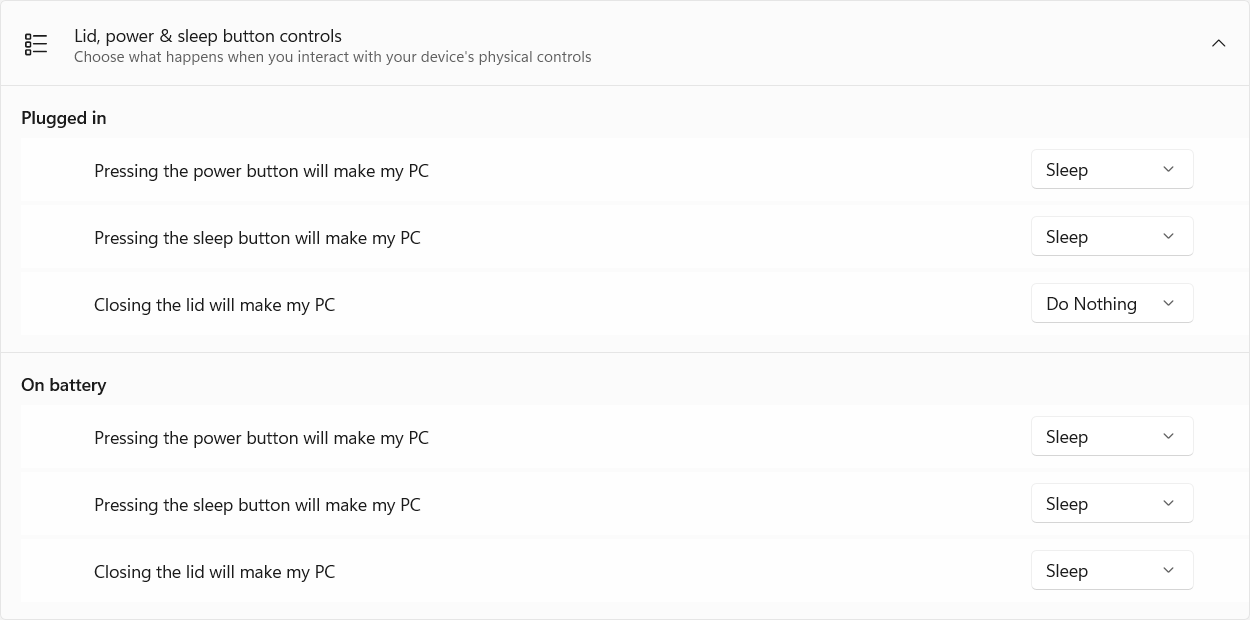
- Under Plugged in select Do Nothing from the Closing the lid will make my PC context menu
Windows 11 23H2 and Earlier
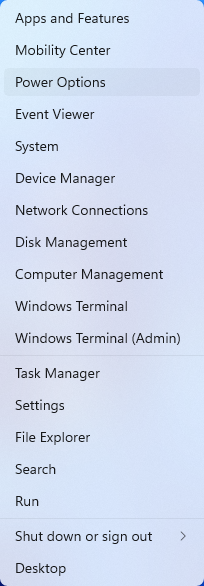
- Right-click on the Start menu and select Power Options from the context menu
- In the upper left corner of the settings window, in the search box, type "lid" then select Change what closing the lid does from the search results
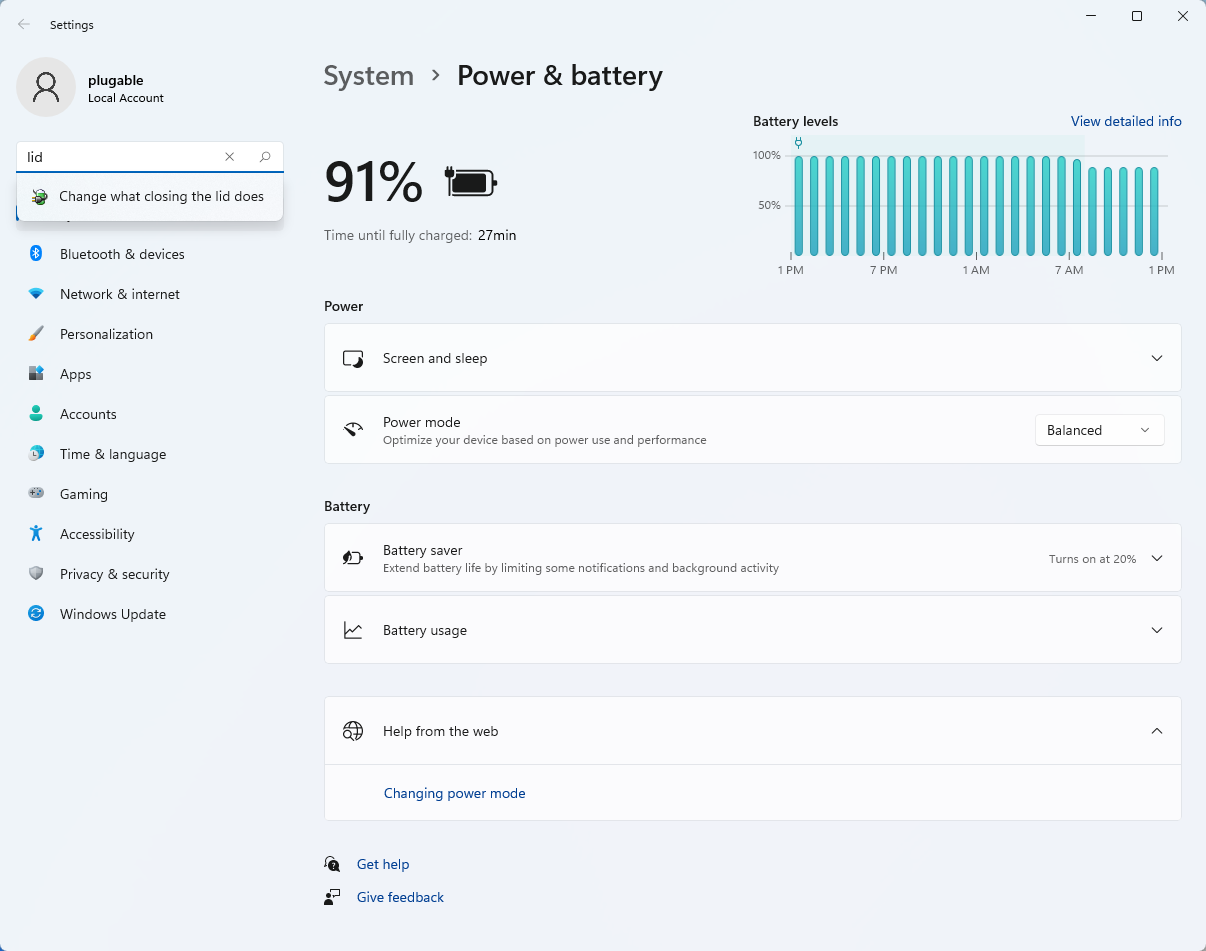
- Make sure the setting for When I close the lid under the Plugged In column is set to Do Nothing
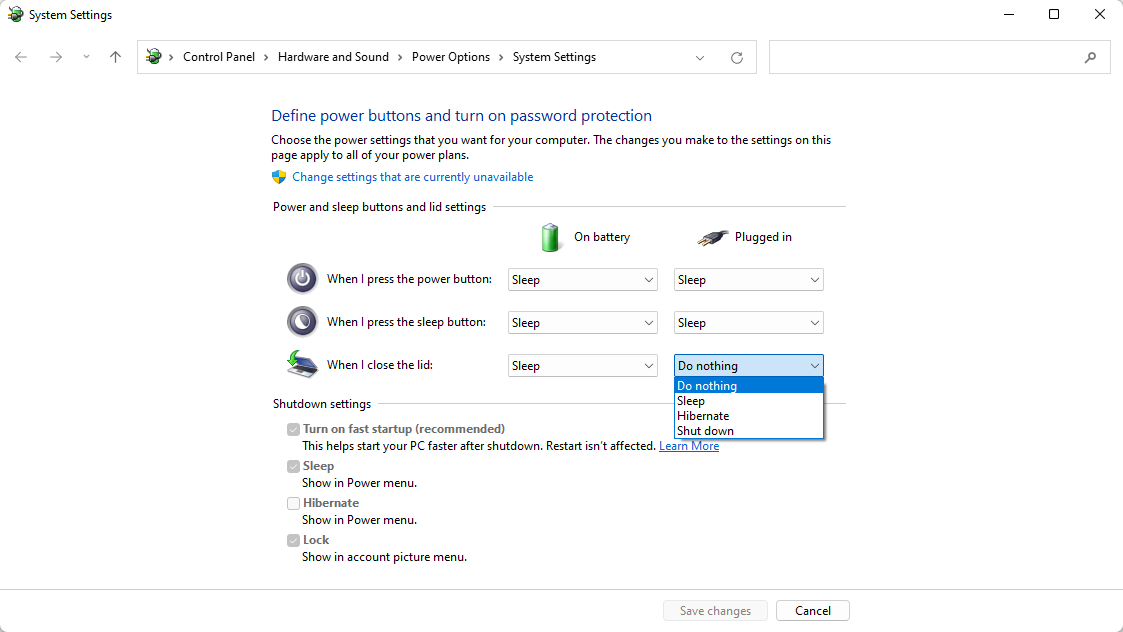
- Click the Save Changes button to apply the new settings.
Windows 10
- Start by right-clicking on the Start button and select Power Options from the menu.
- From the right side of the Power Options settings page, select the blue link for Additional power settings
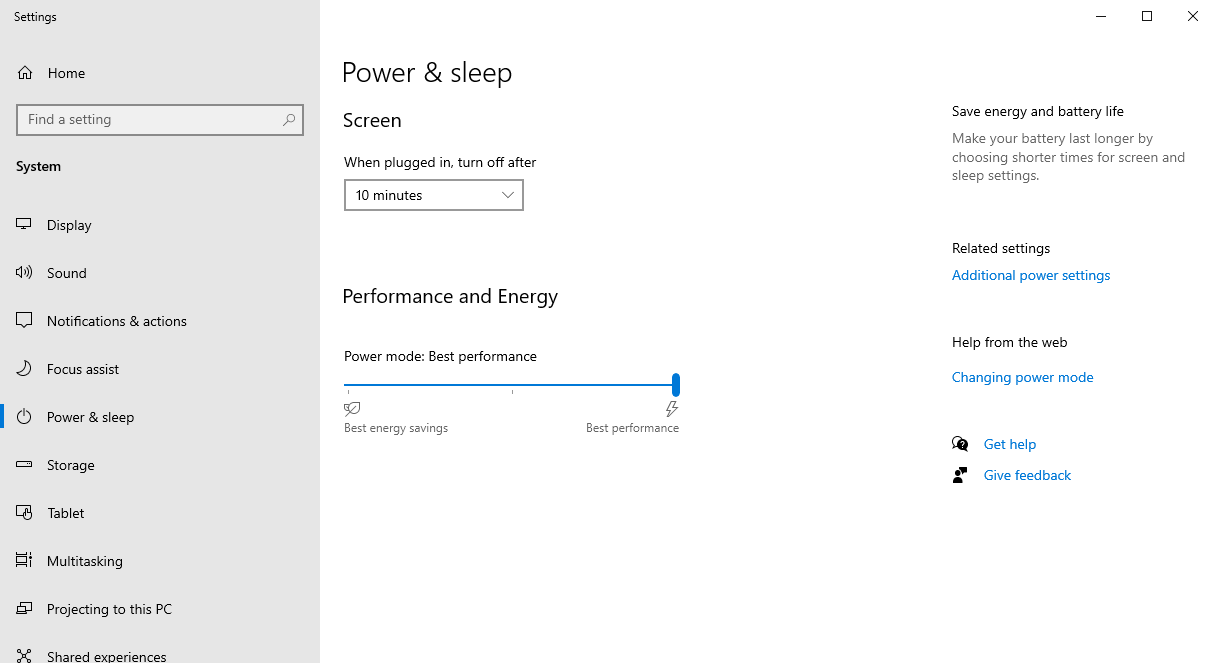
- From the choices present on the left-hand side of the Power Options window, please click on Choose what closing the lid does
- Make sure the setting for When I close the lid under the Plugged In column is set to Do Nothing
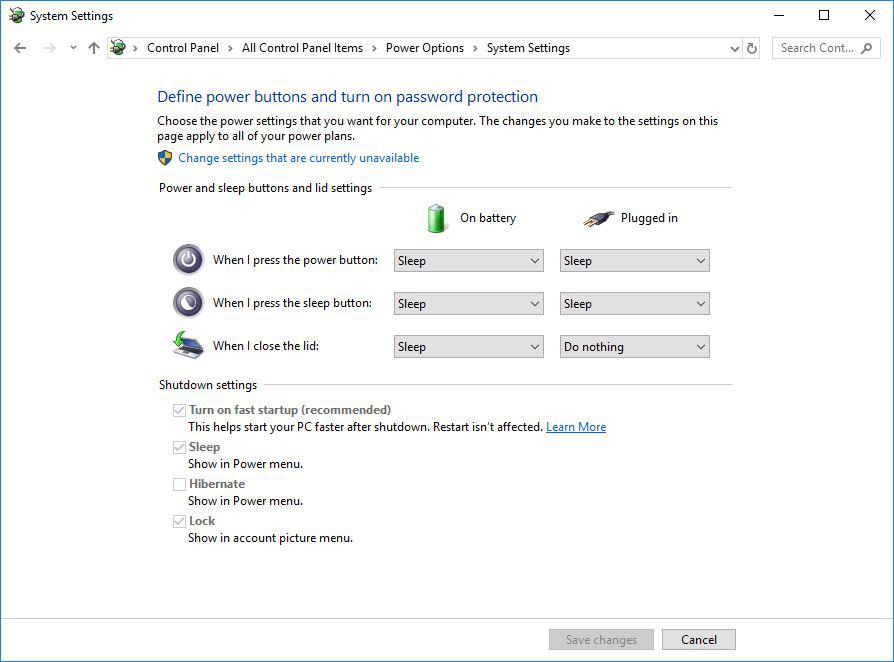
- Click the Save Changes button and restart the system (making sure that the laptop's power adapter is also connected) and test the behavior again.
Closing the lid should no longer put the computer into sleep mode when an external display and power source is connected, instead one of the external displays should now become the Primary display with the desktop icons instead of the laptop's built-in display.
When to open the lid?
The laptop lid may still need to be opened when performing any of the following:
- To power on the computer from a fully powered off state
- To log into the computer if logged out or if the computer is restarted with the lid closed
- To wake the computer from a deep sleep state (hibernation, or Windows hybrid sleep states)
If you have any questions please feel free to contact us at support@plugable.com and we'll be happy to help!
My Windows Computer Will Not Boot Properly When a Docking Station, USB Hub, USB Adapter, or USB Storage Drive Is Connected
If your Windows computer will not boot properly when a docking station, USB hub, or USB hub adapter is connected, the cause is most often an external device connected to the product rather than the product itself. In some cases, a Windows computer may mistakenly attempt to boot from a non-bootable external storage drive instead of the host computer's built-in storage drive, which can interrupt the boot process.
Instructions
-
Disconnect all external devices from the product, leaving only the product's external power source (if it has one) and the cable connecting the product to the host computer.
-
Reboot the host computer while in this simplified physical configuration in order to test the behaviour.
- Reconnect each external device to the product one at a time and reboot after each connection to test the behaviour again, assuming the host computer boots as expected in the simplified configuration.
-
Disconnect the USB storage device from the host computer and reboot to test the behaviour if only an external USB storage device is in use.
-
Access the host computer's System BIOS (UEFI firmware) and change the boot order settings to ensure the internal storage drive is the first boot option.
- Consult the host computer manual provided by the manufacturer for instructions on how to access the System BIOS and change the settings.
If the Issue Persists
After consulting your computer’s manual, contact the manufacturer directly if you are unsure how to check or change the system BIOS settings, as changing the wrong setting can cause unexpected issues. You can also reach out to us at support@plugable.com with any questions.
Applicable To
- UD-3900
- USBC-HUB7C
- USBC-7IN1E
- USBC-NVME
- External USB storage devices
Network Prioritization - How to Set Service Order on macOS
If you find that your Plugable Ethernet adapter or docking station is not connecting to the internet or is experiencing slower than expected speeds on your Mac, it may be related the macOS Network Service Order. This is a list of the network connections available to the computer setting the priority for network connections.
macOS attempts to connect to the internet using the network service at the top of your list first. If a wireless network is listed above your Plugable Ethernet adapter, this often leads to users unknowingly using a slower wireless connection when they intended to use a wired one.
To ensure you are getting the full speed and stability of your wired connection, you must prioritize the Plugable Ethernet adapter above Wi-Fi. Normally wired network connections take priority, however if priority has been modified in the past it can affect newly connected devices.
Set the order of network services
Navigate through these steps to Set Service Order:
- Click the Apple Menu in the top-left corner of your screen and select System Settings.
- In the sidebar, click Network.
- Look for the Action Menu (a circle with three dots ...) located at the bottom right of the main window area.
- Click the three dots and select Set Service Order.…
- A list will appear showing all your network interfaces. Click and drag your Ethernet Adapter (often named "USB 10/100/1G/2.5G LAN" or “Plugable Docking Station”) to the very top of the list, above Wi-Fi.
- Click OK to save your changes.
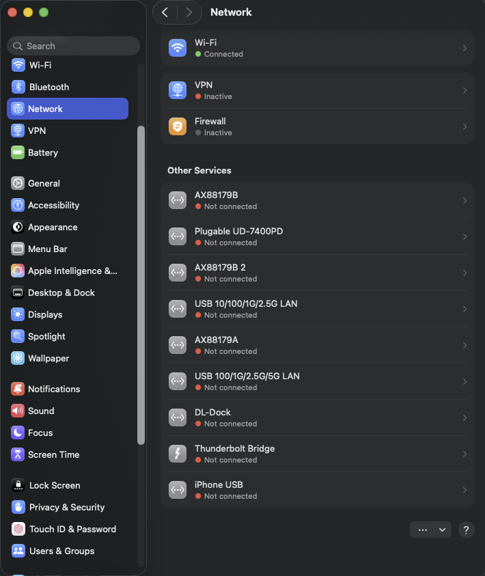
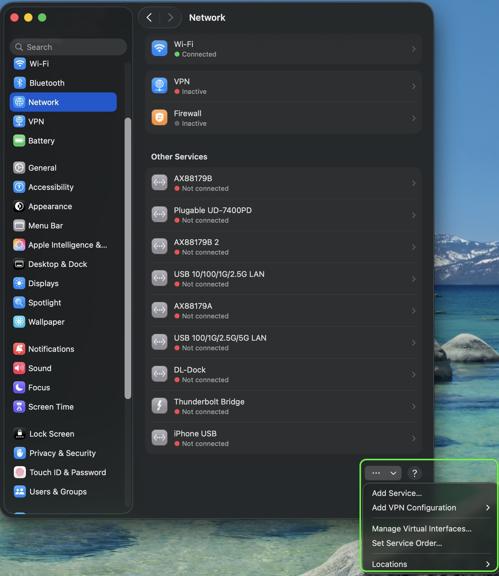
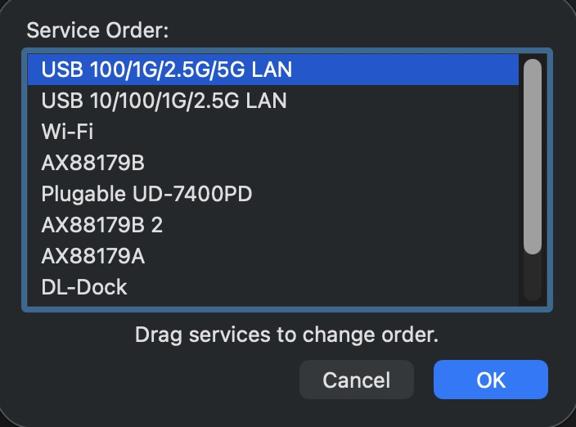
Your network traffic will now automatically prioritize the wired connection, ensuring you receive the best possible speeds and stability from your Plugable adapter.
If you have any questions please feel free to contact us at support@plugable.com and we'll be happy to help!
Docking Station Power Adapters
Below is a list of power adapter models used by Plugable docking stations. We offer refurbished replacement power adapters on eBay as they are available for purchase, however, we may not have replacement power adapters available for all of our docking stations.
If the power adapter for your docking station or region is not listed, out of stock on eBay or if you have any other questions regarding replacement power adapters for our docks please contact us at support@plugable.com and we will be happy to assist further.
We offer a 30-day return period for our replacement power adapters listed on eBay.
| Dock Models | Power Supply Model Number | Replacement Power Supply (if available) |
|---|---|---|
| USB 3.0 / USB-C Docking Stations | ||
| UD-3900 UD-3000 UD-5900 UD-PRO8 UD-3900C |
DSA-24PFS-05 |
|
| UD-3900H | P120W2000U |
|
| UD-3900PDZ - 100W (purchased from March 2025) | A18-135P1B |
|
| UD-3900Z | ADS-26SGP-12 12024E |
|
| UD-6950 | A16-045N3A |
Contact support@plugable.com |
| UD-6950H | P200W2000UG |
Contact support@plugable.com |
| UD-6950Z | ADS-40SGP-19 20040G |
|
| UD-CA1 UD-CA1A |
EA10953D-200 |
Contact support@plugable.com |
| UD-ULTCDL (MK1 original and MK2 updated version) Note: Check here to determine what version of dock you have |
A16-065N2A (MK1 model) A18-135P1B-Rev3 (MK2 model) Note: MK2 model adapters will work with MK1 docks |
|
| UD-ULTC4K (MK1 original and MK2 updated version) Note: Check here to determine what version of dock you have |
A16-100P1A (MK1 model) A18-135P1B-Rev3 (MK2 model) Note: MK2 model adapters will work with MK1 docks |
|
| UD-3900C4 |
A18-135P1B-Rev3 |
North America plug |
| UD-3900PDH UD-3900PDZ - 60W alternative power adapter |
PS200D06500G1 |
North America plug |
| UD-768PDZ |
PA-1131-72 v2 |
North America plug |
| UD-6950PDZ - 100W (purchased from February 2025) |
A18-135P1B |
North America plug |
| UD-MSTH2 |
ADS-110DL-19-1 200110E |
North America plug |
| UD-MSTHDC |
ADS-110DL-19-1 200110E |
North America plug |
| UD-CAM |
A16-100P1A |
Contact support@plugable.com |
| UD-CUBE |
EA1024CR-050 |
Contact support@plugable.com |
| UD-6950PDH |
PS200D06500G1 (v1 of dock*) F-J-SW202720006700 (v2 of dock with serial numbers 4157 or newer*) *For more details about v1 and v2 UD-6950PDH docks visit our Knowledge Base article |
North America plug (v1) North America plug (v2) |
| Thunderbolt / USB4 Docking Stations | ||
| TBT4-UDZ |
PA-1131-72 v2 |
North America plug |
| TBT3-UDC1 | PA-1131-72 v1 |
|
| TBT3-UDV | A18-135P1B-Rev1 |
Contact support@plugable.com |
| TBT3-UDZ | PA-1171-72 |
Contact support@plugable.com |
| TBT3-UDC3 | PA-1171-72 |
Contact support@plugable.com |
| TBT4-HUB3C | ADS-110DL-19-1 200110E |
|
| USB4-HUB3A |
ADS-110DL-19-1-200100E |
North America plug |
| TBT4-UD5 & TBT-UDM | FJ-SW202721006400 |
North America plug |
| TBT4-UDX1 | A18-135P1B-Rev4 A18-135P1B-Rev3 (Large Barrel) |
North America plug |
| TBT-6950PD | YW180A2-2100858 |
North America plug |
| UD-4VPD |
PA-1171-72 |
Contact support@plugable.com |
My Plugable Dock Is Missing a Component Such As the Power Supply, USB Cable, or Other Adapter.
If an item that should have been included with your Plugable dock is missing, check the packaging once more, including beneath the insert and inside the corners of the box. If you still cannot find it, contact Plugable Support so we can review what was included and help with the missing part.
Applicable To
Plugable docks or other Plugable products with a missing in-box power supply, host cable, adapter, or other included accessory.
Before You Contact Support
Check the included-items list on the product packaging or product page. Some cables and accessories pictured in setup examples may be sold separately rather than included in the box.
What to Send Us:
- Your Plugable product model and the specific component you cannot find.
- Your Amazon order ID or another proof of purchase.
- The product serial number, if present, or a photo of the product label.
- The full recipient name, shipping address, and a phone number for the shipment, if a replacement part needs to be sent.
Need Assistance?
Email the details above to support@plugable.com, and we will review the package contents and next steps with you.
Can I Connect My High Refresh Rate Monitor (e.g. 120Hz, 144Hz) to a Plugable Dock?
Most Plugable docks do not officially support monitors over 60Hz including 120Hz or 144Hz refresh rate unless otherwise specified on the Plugable product page or listing.
DisplayLink USB Graphics technology and Silicon Motion based docking stations and graphics adapters, like our USB 3.0 dual display and USB Type-C triple display docking stations, are limited to 60Hz refresh rate by the USB graphics controller hardware.
USB Type-C DisplayPort Alternate Mode docking station and ports on our USB Type-C Triple Display Docking Stations can support higher refresh rates, but may be limited by the computer's capability and available bandwidth to the docking station. Additionally, when paired with DisplayLink or Silicon Motion USB graphics, having displays at different refresh rates may reduce overall system performance. Due to this we normally recommend limiting all connected displays to 60Hz refresh rate when using DisplayLink and Silicon Motion graphics technology with directly connected, or USB Type-C DisplayPort Alternate Mode controlled displays.
Monitors with refresh rates higher then 60Hz may be connected to a docking station operating at up to 60Hz, or connected directly on the computer's HDMI or DisplayPort to ensure the display is powered by the system's native GPU.
Applicable To:
All Plugable Docking Stations
Do Plugable products support the Apple SuperDrive?
No, Plugable products do not support the Apple SuperDrive.
Why do Plugable products not support the Apple SuperDrive?
The Apple SuperDrive has stringent power requirements that can only be met by directly connecting the SuperDrive directly to the host computer. As a result at this time Apple recommends only using their USB-C adapter cables. Apple provides more information on this topic here → How to connect the Apple USB SuperDrive
Applicable To
- All Plugable brand products
My Plugable product with wired Ethernet is no longer working on macOS. What can I do?
Please Note
The below guide is an advanced troubleshooting step, and we do not recommend doing so unless you are comfortable manually altering files on your Apple product running macOS. You may not be able to perform the below troubleshooting step if you are unable to execute administrative credentials on your laptop. Please reach out to our support first if you do not wish to attempt the below instructions. You can do so at plugable.com/support
How to delete a specific Ethernet adapter from your Network devices on macOS
- Click on the Apple logo in the top left corner of your primary monitor, and select ‘System Preferences’
- Next select ‘Network’ in the ‘System Preferences' window.
- In the now visible list, please select the Plugable Ethernet, or Thunderbolt Ethernet device that may not be working as expected.
- Once selected click on the minus button in the bottom left of the network window.
- Click on Apply in the bottom right.
- Next click on the plus button in the bottom left of the network window, and add the previously removed device.
- Click on Apply in the bottom right.
- Test to see if this has resolved the unexpected behavior, and assure that your Ethernet is now working.
- If this does not resolve the problem, please proceed to the next section (As noted previously the next section is for advanced users only!)
Manually erase your macOS Network Settings to fully reset the Network configuration
(Advanced! Click to reveal)
- Open the ‘Finder’ app, then in the ‘Go’ menu at the top of your screen select ‘Computer’
- Click on ‘Macintosh HD’ then Library, Preferences, SystemConfiguration
- Copy the file named ‘NetworkInterfaces.plist’ to your desktop as a backup of your current configuration.
- Delete the original version of the ‘NetworkInterfaces.plist’ located in the SystemConfiguration directory.
- Restart your Mac
- Login to your Mac, and return to System Preferences → Network
- If the list is now empty, please re-add the Plugable or Thunderbolt network adapter by clicking on the plus button in the bottom left of the Network window. Once done click on 'Apply'.
- Test to see if this has resolved the unexpected network behavior
I am still unable to get my Ethernet connection working on my Mac
If this is the case please reach out to our support team. When you do please include a diagnostic log gathered using our PlugDebug tool (instructions are provided on the PlugDebug page). If you are not able to gather the PlugDebug diagnostics do not worry we are still here to help! Please reach out to our support team at support@plugable.com or plugable.com/support with a detailed description of your problem, and the model of Plugable product you are using.
What is USB PD Pass-Through?
USB Power Delivery (USB PD) pass-through allows a compatible USB-C hub or dock to receive power from an external USB-C charger and supply some of that power to a connected computer. The hub or dock reserves power for its own operation, so the computer may receive less than the charger's rated output.
How Pass-Through Power Works
The charger connects to the hub or dock's designated PD input, and the hub or dock connects to a computer that supports charging through its USB-C port. The devices negotiate a supported power level. How much reaches the computer depends on the charger, cable, hub or dock, computer, and connected devices.
Example
The Plugable USBC-6950PDZ accepts up to 100W from a compatible USB-C charger and can provide up to 82W to the connected computer. These are two different ratings. A lower-wattage charger leaves less power available for the dock and computer to share.
Important Notes
- A 100W PD input rating does not mean the computer receives 100W. Check the maximum host charging output for the specific product.
- If the computer requires more power than the setup can provide, charging may be slow or the battery may discharge under heavy use.
- USB PD specifications allow up to 240W with compatible equipment. That is a specification maximum, not a capability shared by every USB-C product.
Need Assistance?
If you are unsure how much power a Plugable product can supply to your computer, contact support@plugable.com with the Plugable model, computer model, and charger wattage.
Can I Leave My Notebook Computer Connected to a Charging Dock Overnight, or Should I Discharge and Recharge the Notebook Battery Regularly?
Yes. Modern notebook computers can safely remain connected to a charging dock for extended periods without damaging the battery or requiring regular discharge and recharge cycles. Leaving the laptop connected is functionally equivalent to leaving it connected to the manufacturer's original power adapter.
Why Modern Laptops Do Not Require Battery Cycling
Lithium-ion (Li-ion) batteries are used in a wide range of consumer electronics, including notebook computers, cell phones, electric vehicles, power tools, and wireless earbuds. They offer fast charging, high-current discharge, a relatively long service life, and a comparatively low cost.
The lifespan of a rechargeable battery depends on factors such as age, temperature history, charging patterns, chemical composition, and usage. For example, batteries stored at 100% charge generally degrade faster than those stored at around 50%, which is why many consumer electronics arrive with a partial charge.
Although Li-ion batteries are consumable components, they’re typically not user-serviceable in modern computers, phones, and tablets. These devices include built-in charging and protection circuits that prevent overcharging and monitor factors such as battery temperature, voltage, current draw, and overall health. Charging systems can range from simple preset charging rates to advanced software-controlled management designed to balance charging speed with battery longevity.
Modern notebook computers can remain connected to their original power adapter or a compatible docking station for extended periods and don’t benefit from regular discharge and recharge cycles. Plugable docking stations with charging capability use USB Type-C Power Delivery, a negotiated protocol that allows the computer to request only the power and voltage it requires. Together with the computer’s built-in battery management system, this helps maintain the battery appropriately while connected to power. Disconnecting power simply forces the laptop to operate from its battery, which may trigger reduced-power modes that can affect system performance and connected devices.
Legacy Laptop Battery Behavior
Older laptops from the 1990s and early 2000s, some consumer electronics, and many rechargeable AA and AAA batteries used Nickel-Cadmium (NiCad) or Nickel-Metal Hydride (NiMH) technology. These batteries generally charged and discharged more slowly than lithium-ion batteries and used relatively simple charge controllers. Some could also be trickle-charged using a continuous, very low current.
Because these older batteries often lacked smart charging controllers, manufacturers sometimes recommended “training” them by fully charging and discharging the battery periodically, including two or three full cycles when a laptop was new. Modern lithium-ion batteries don’t have this requirement and don’t benefit from periodic manual discharging.
Applicable To
Plugable docking stations with USB Power Delivery (PD)
What Can I Do If My Dock or Connected USB Devices Are Not Detected by My Computer?
Applicable To
Plugable Docking Stations
Problem Summary
The internal USB hub in a docking station may occasionally stop working correctly, leading to your computer not detecting connected USB devices or failing to recognize the dock entirely. This can often be resolved by performing a power-cycle of the dock in a specific order to fully reset its internal hub chipset.
Instructions
- Disconnect all USB peripherals connected to the dock.
- Disconnect the docking station from the host computer.
- Disconnect the dock's power adapter from power.
- Leave the dock unplugged for at least 1 minute to allow power to dissipate.
- Connect the docking station initially into power only.
- Connect the docking station to the host computer.
- Reconnect your USB peripherals and test them for functionality.
Expected Result
Your computer should successfully recognize the docking station and detect all connected USB peripherals.
If the Issue Persists
Reach out to Plugable support by email at support@plugable.com
Why Do Plugable Electronics Generate Heat During Operation?
Yes, heat generation is a normal byproduct of operation for electronic devices and Plugable products as electrical energy is consumed and transferred. Power delivery, high-speed data transfers, and active peripheral usage naturally convert electrical energy into thermal energy. Plugable designs its products with thermal safety margins to ensure operational temperatures remain within safe limits.
Why Plugable Electronics Generate Heat
Electrical components generate heat as current flows through them, with higher power usage-such as charging host laptops or conducting fast data transfers-increasing thermal output. Many Plugable products, such as the TBT3-UDZ and TBT4-UDZ docking stations, feature aluminum enclosures engineered with internal thermal pads to function as heat sinks. This design transfers internal heat outward to radiate into the room. This protects internal components, however can cause the external surface to feel warm or hot. Higher ambient room temperatures, direct sunlight, and obstructions to air currents around the device may also contribute to increased surface heat. While Underwriters Laboratories (UL) sets a thermal safety threshold of 77°C (170.6°F), Plugable targets a lower operational ceiling of approximately 71°C (160°F) under the heaviest of loads.
How to Manage Heat Generation in Plugable Products
To keep operating temperatures as low as possible, ensure Plugable devices have sufficient ventilation around them and are not placed in enclosed spaces. Avoid connecting an excessive number of power-hungry USB accessories that exceed the power limits of your dock or hub, as higher power draw causes the unit to run warmer (for example USB fans, heaters, cup warmers etc). Expect temporary increases in surface temperature during intensive workloads such as simultaneous multi-device charging and high-bandwidth data transfer.
Conclusion
Experiencing heat from Plugable products is a normal aspect of the operation of high-performance devices. Users can rest assured that we prioritize the safety and efficiency of our devices. By understanding the factors influencing heat generation and following simple usage guidelines, users can make the most of their Plugable products while ensuring a reliable and efficient user experience.
Applicable To
- Plugable docking stations, including TBT3-UDZ and TBT4-UDZ models
- Plugable USB hubs, video adapters, and electronic accessories
- Electronic devices utilizing metal heat-dissipating enclosures
If you have any questions please feel free to contact us at support@plugable.com and we'll be happy to help!
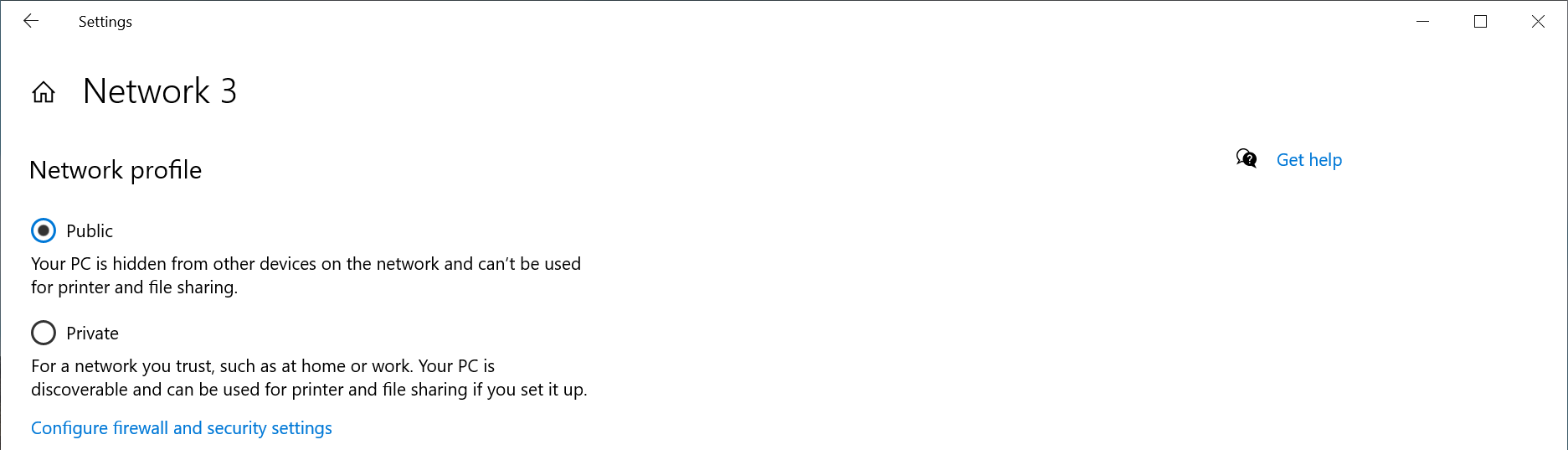
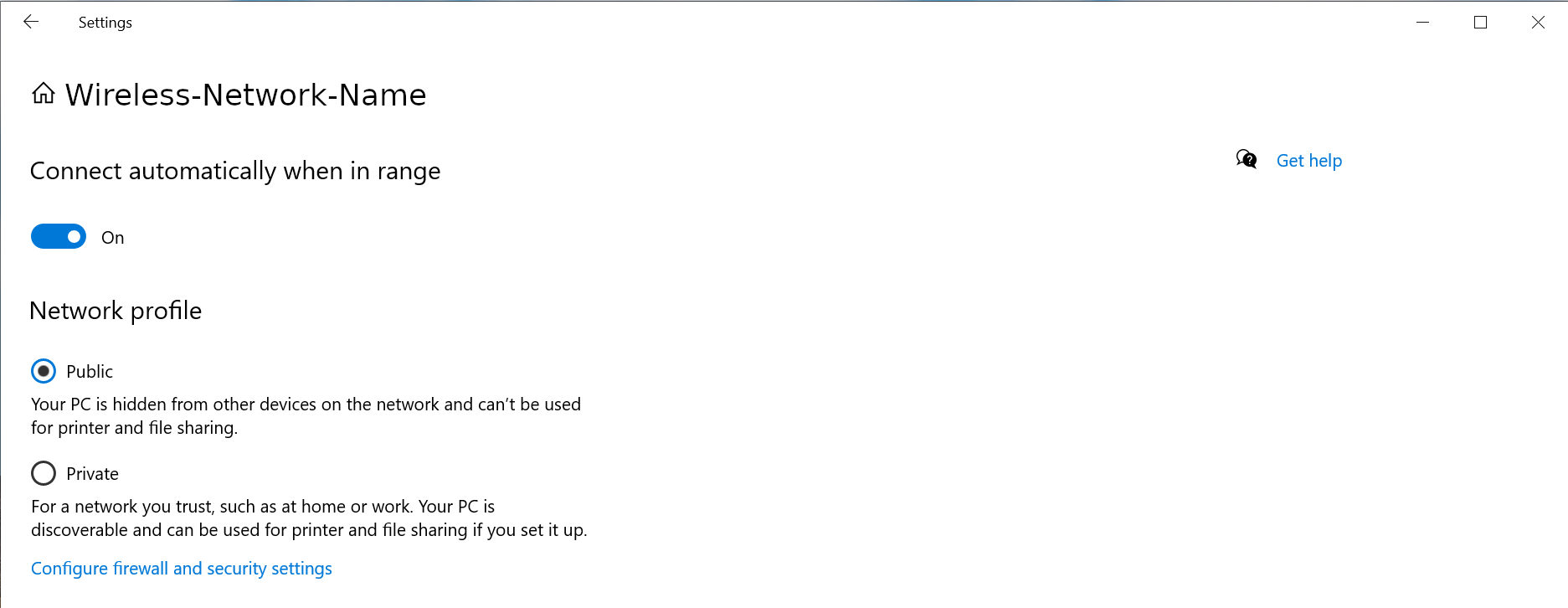
How To - Set a Network to Private or Public in Windows 10 & 11
The Windows Firewall may block some networking features when the local network is not set to Private. This article will describe the process for setting the local network, either wired Ethernet or Wi-Fi to be a Private network.
Windows 11
1 - Connect the computer to the network, either wired or wireless
2 - Open the Windows Settings: right-click on the Start Menu and select Settings from the pop-up menu
3 - On the left column select Network & internet
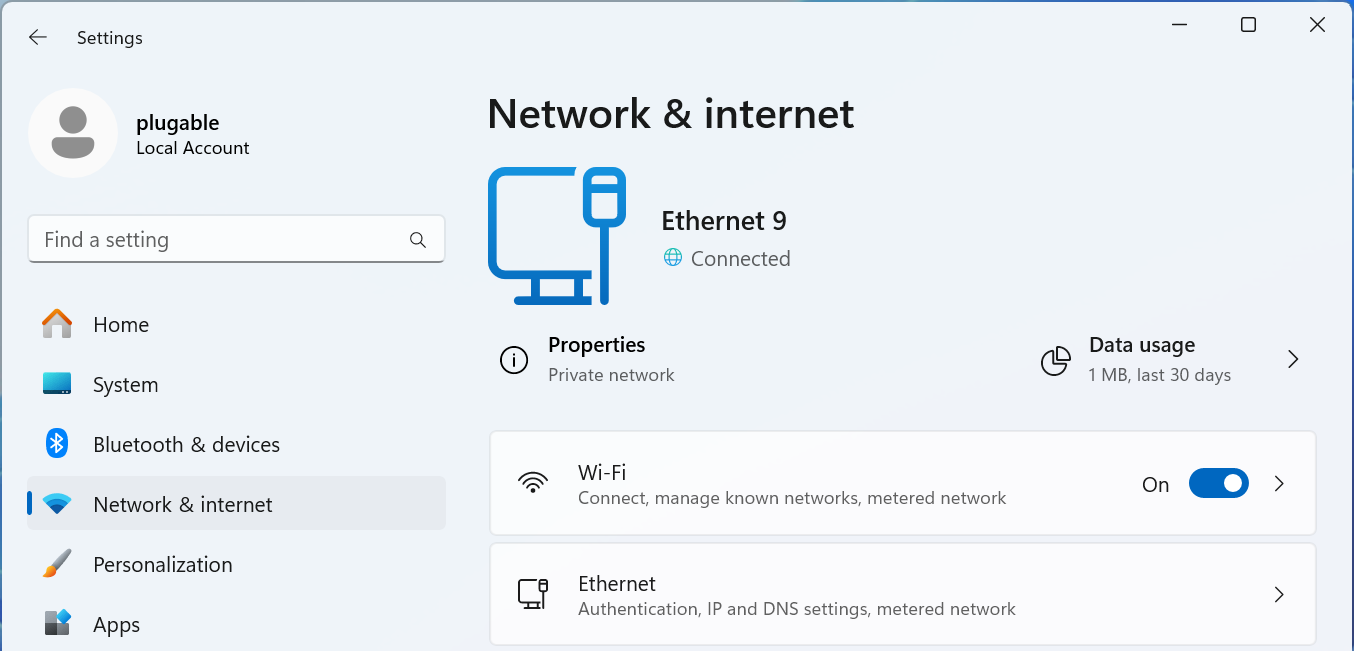
For Wired Networks
4 - Select the Ethernet option
5 - The connected network should be expanded, if not click on Network Connected to expand the section
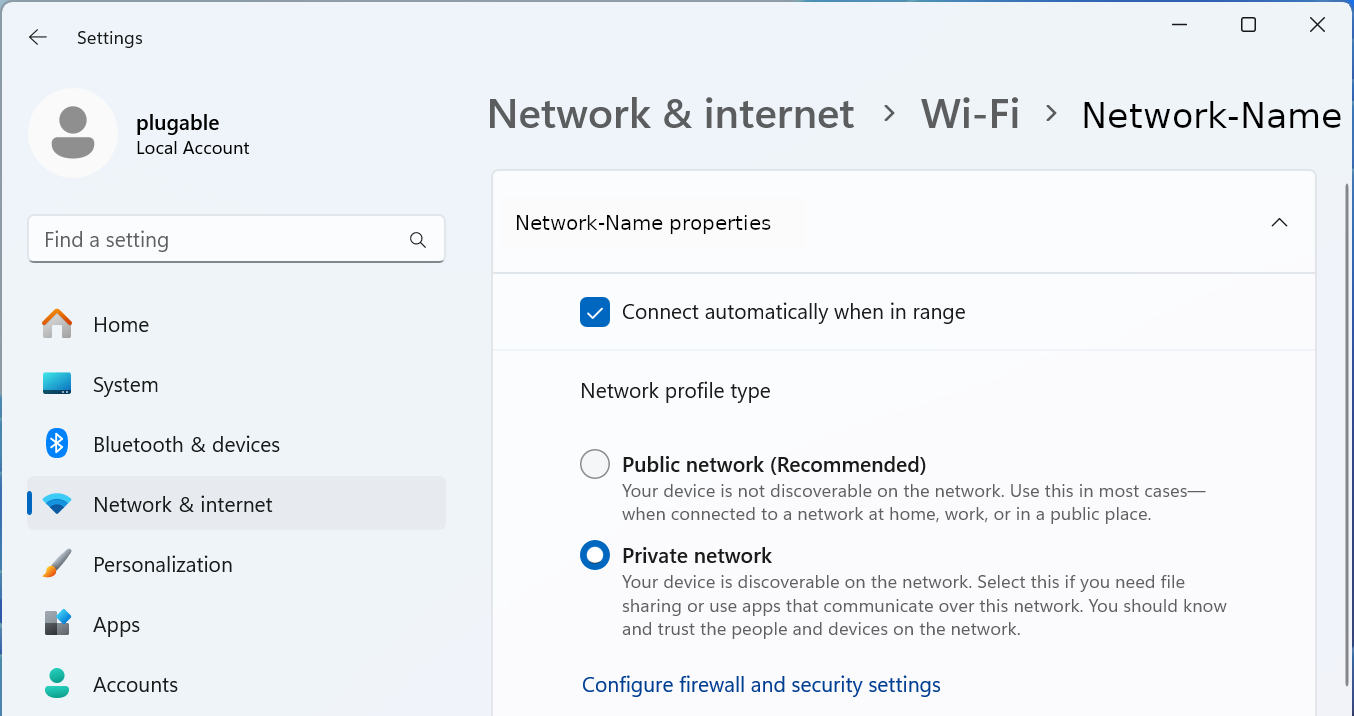
6 - Select the Network profile type either Public network or Private network to suite your needs
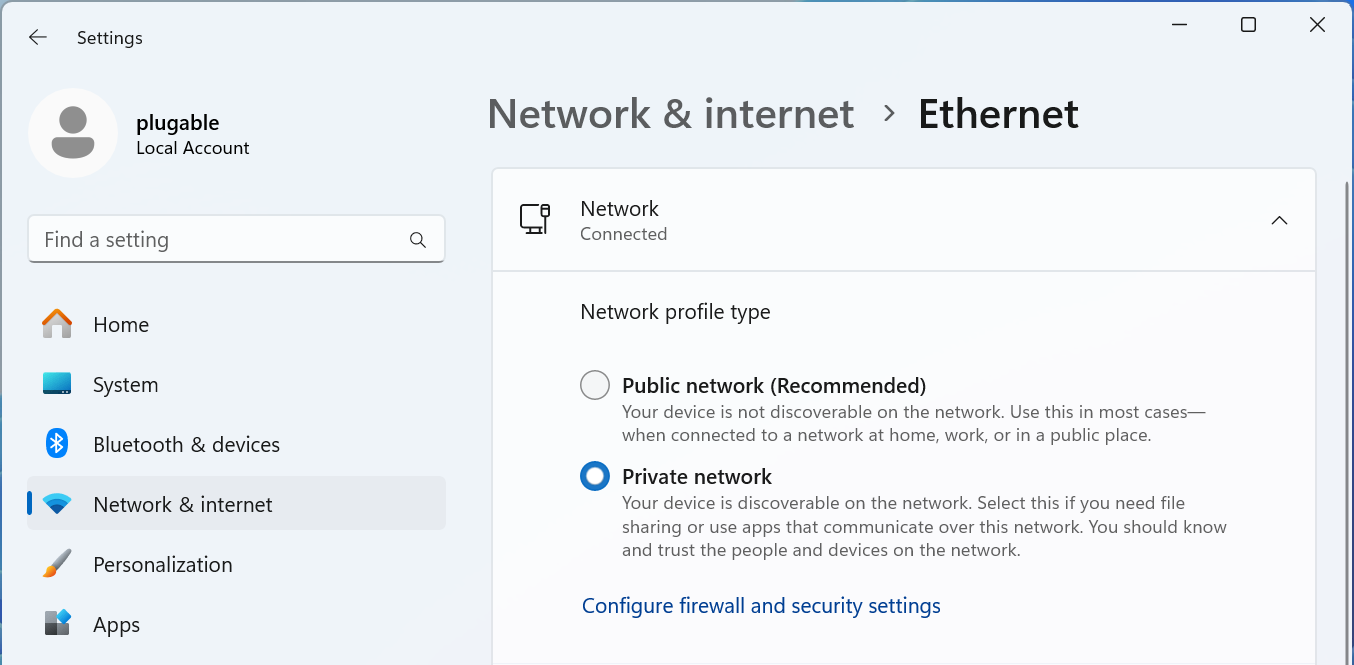
For Wi-Fi Networks
4 - Select the Wi-Fi option
5 - Select your Wi-Fi network name properties
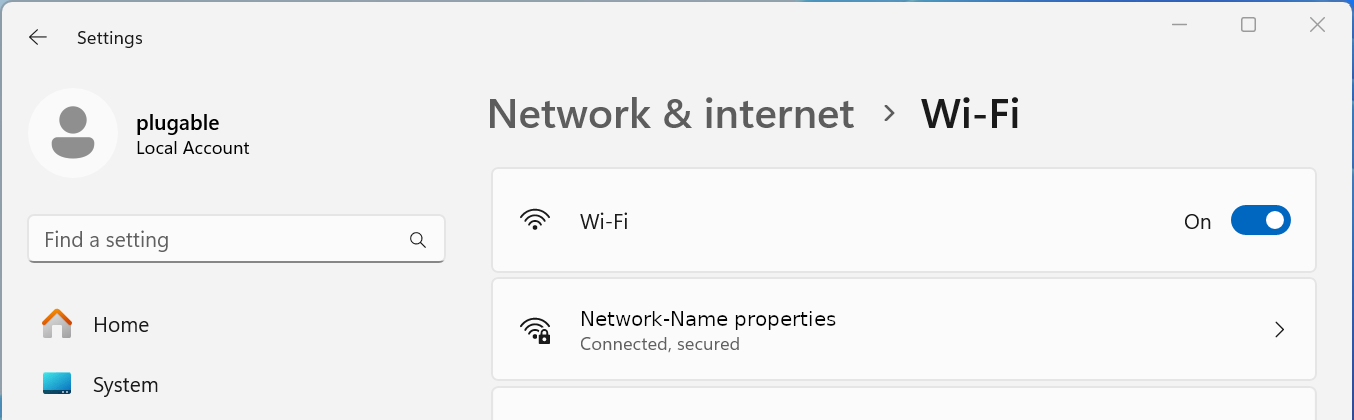
6 - Select the Network profile type either Public network or Private network to suite your needs
Windows 10
1 - Connect the computer to the network, either wired or wireless
2 - Open the Windows Settings - right-click on the Start Menu and select Settings from the pop-up menu
3 - Select Network & Internet fro the bottom section
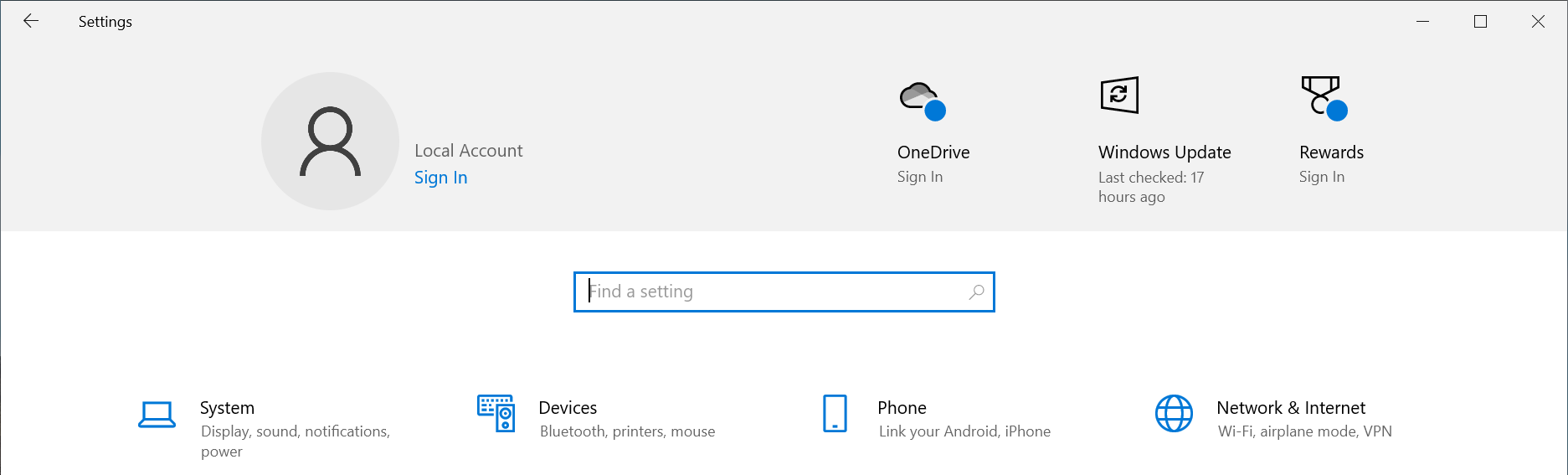
4 - Select the Ethernet option from the left pane
5 - Select the Connected network from the right pane
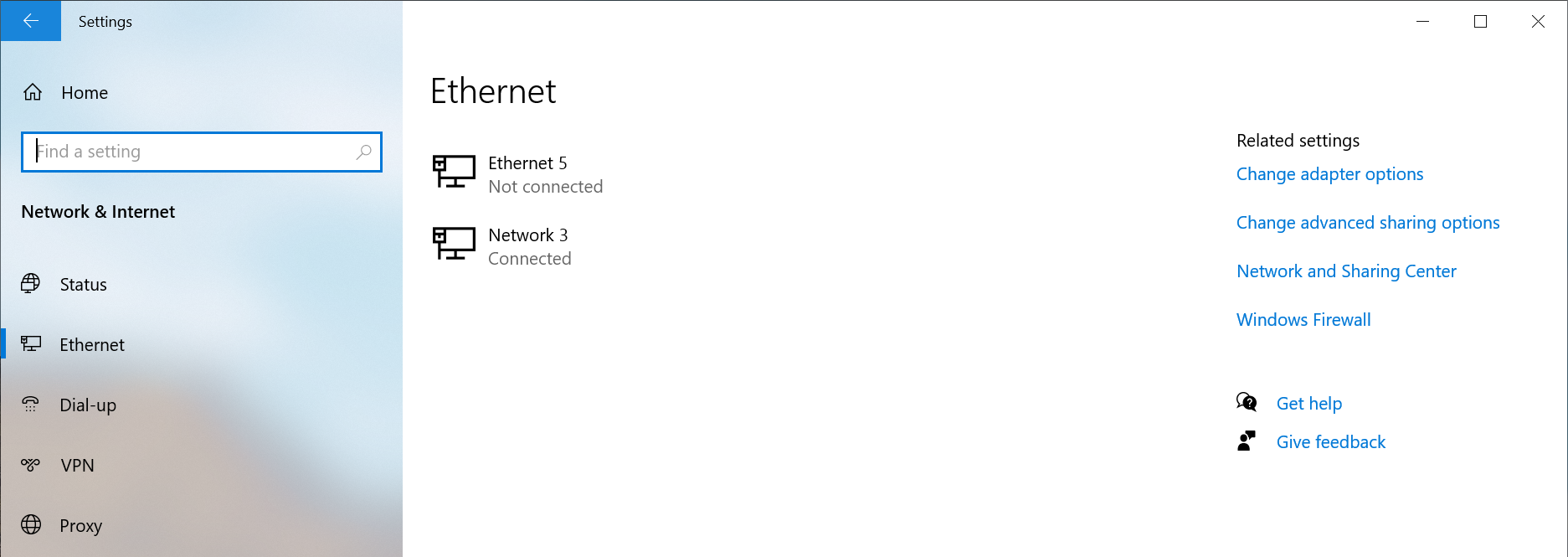
6 - Select the Network profile type either Public network or Private network to suite your needs
Windows PowerShell
If the option does not show up in the Windows Settings GUI, for example if the network is not connected to the internet, or if you prefer to use the terminal.
1 - Open a new terminal: Right-click on the Start Menu and select Terminal
2 - Run the following command to list the available networks
Get-NetConnectionProfile
PS C:\Users\plugable> Get-NetConnectionProfile
Name                     : Network
InterfaceAlias           : Ethernet Instance 0
InterfaceIndex           : 7
NetworkCategory          : Private
DomainAuthenticationKind : None
IPv4Connectivity         : Internet
IPv6Connectivity         : NoTraffic
3 - Run the following command to set the network to Private
Set-NetConnectionProfile -Name Network -NetworkCategory Private
Where Network is the network name from step #2 and Private can be either Public or Private
If you have any questions please feel free to contact us at support@plugable.com and we'll be happy to help!
Will 60W Be Enough to Charge My Laptop?
For most business and consumer laptops and typical workloads, 60W is enough to keep the laptop powered and charging. A laptop designed for a higher-wattage power adapter can usually still operate with a 60W USB-C power source, but charging may be slower or the battery may gradually discharge during demanding workloads.
Why Is 60W Enough for Most Laptops?
A laptop's included power adapter is generally designed to support the system's maximum charging and power requirements. Common laptop power adapters may provide 45W, 60W, 65W, 100W, 140W, or more.
However, modern laptops dynamically manage their power consumption and typically use only a portion of their maximum available power during everyday workloads. The required power changes based on factors such as processor and graphics usage, connected devices, battery level, and charging state.
Laptops also reduce their charging rate as the battery approaches a full charge. As a result, the difference between a 60W charger and a higher-wattage charger may become less noticeable during a typical workday when the laptop remains connected to power for long periods.
Even during demanding tasks such as video editing, rendering, or other high-performance workloads, a laptop may exceed 60W only for short periods. If the computer requires more power than the dock or charger can provide, you may notice that:
- The battery charges more slowly
- Charging temporarily stops
- The battery slowly discharges while connected
- The laptop reduces performance to match the available power
This does not necessarily indicate a problem with the dock, charger, or laptop. It can simply mean that the computer is consuming more power than the connected USB-C power source can provide.
Gaming laptops and mobile workstations often have significantly higher power requirements. Systems supplied with 180W or higher power adapters may require their original power adapter for full performance.
Why Might Windows Show a Low-Wattage Warning?
Some Windows laptops, particularly Dell, HP, and Lenovo systems, may display a notification or startup message when connected to a USB-C power source that provides less power than the adapter supplied with the computer.
Messages may indicate that:
- A lower-wattage power adapter or USB-C charging device has been connected, and system performance may be reduced
- The computer is in a weak or slow charging state
- The power adapter wattage or type cannot be determined, and the battery may not charge normally
- The connected adapter provides less power than the manufacturer's recommended adapter
- A higher-power adapter should be connected for full system performance
These warnings do not necessarily mean that the Plugable dock, hub, or charger is malfunctioning. Most business and consumer laptops can continue operating and charging from a lower-wattage USB-C power source, although charging speed and system performance can vary.
Some computers may also offer options in their BIOS or system settings to control low-wattage power notifications. Refer to the computer manufacturer's documentation before changing these settings.
What Should I Do if 60W Is Not Enough?
If your laptop consistently loses battery charge during normal use, charges too slowly for your needs, displays persistent low-power warnings, or reduces performance while connected to a 60W power source, consider using a dock or charger that provides power closer to the wattage recommended by the laptop manufacturer.
For laptops with power requirements higher than the dock can provide, you may still be able to use the Plugable product for displays, USB devices, networking, and other connectivity while connecting the laptop's original power adapter separately.
Check your laptop manufacturer's specifications to confirm its recommended charging wattage and whether the computer supports USB-C Power Delivery.
Applicable To
- TBT4-HUB3C, USB4-HUB3A, UD-MSTHDC, USBC-PS-60W, UD-MSTH2
Understanding USB-C Alt Mode
What Is USB-C Alt Mode, and Does My Computer Support It?
USB-C Alt Mode allows a compatible USB-C port to carry native video, such as DisplayPort, in addition to data and power. To use it, both the host USB-C port and the connected device must support Alt Mode; the best way to confirm support is to check the system specifications or user manual for DisplayPort, DP, or Alt Mode support.
How Does USB-C Alt Mode Work?
USB-C is a truly versatile connection that supports a range of functions, including power delivery, data transfer, and video. Alt Mode leverages this versatility by repurposing high-speed data pins to enable alternative video data protocols. Many of our docking stations support this protocol, but there is a catch! To take advantage of this feature, your host system must support Alt Mode via the host USB-C port and controller. If the host system and device support Alt Mode, the USB-C ports automatically switch from its default data protocol to the required Alt Mode protocol for video.
How Do I Determine if My System Supports USB-C Alt Mode?
Reviewing your manufacturer's system specifications or user manual is the easiest way to determine if your system supports Alt Mode via the USB-C port, but unfortunately, it’s not always consistent or straightforward. Below, we have included examples of how some system manufacturers mention the capabilities of the USB-C ports on their laptops. This information will usually be included in the user manuals or system specification sheets.
Please note that mention of DisplayPort or DP 1.2, 1,4, and 2.1 indicates Alt Mode support.
Lenovo
HP
Dell
Additionally, some manufacturers, but not all, will also include a DP symbol next to the port to illustrate its ability to support video. If your USB-C port is unmarked, check your user manual or consult the system specifications.
What About Thunderbolt 4 and USB4?
Unlike earlier iterations of USB-C, which use Alt Mode for video support, USB4 and Thunderbolt 4 primarily use video tunnelling to transmit video over the USB-C connection. Video tunnelling dynamically allocates bandwidth for video and data to ensure optimized performance. If a device does not fully support video tunnelling, your Thunderbolt 4 or USB4-capable system can fall back to Alt Mode, ensuring compatibility with devices that support Alt Mode for video. So you don’t have to worry about a Thunderbolt or USB4 connection supporting USB-C Alt Mode!
How Can I Troubleshoot USB-C Alt Mode?
When using a USB-C video cable, adapter, docking station, or hub, it's important to ensure that your laptop supports Alt Mode. If you encounter any issues, the following steps can help you troubleshoot and determine why video may not be working through your USB-C Alt Mode cable or device.
-
First and foremost, check to ensure that your system supports Alt Mode. This is vital as Alt Mode is an optional feature that not all manufacturers include on their systems.
- If your system does not support Alt Mode, unfortunately, this is a hardware limitation, and there is no workaround for achieving Alt Mode compatibility. However, it’s possible to still drive external monitors through DisplayLink.
- Reboot your system and perform a power reset on your docking station or hub (if applicable)
-
If you are using a docking station, ensure that you are using a USB-C cable that supports Alt Mode.
- Not all cables are created equal—USB-C cables that support USB 2.0 only or “charging only” cables are not built to support video. To ensure compatibility, all of our Alt Mode-capable products will come with a USB-C cable that supports this feature.
- Do not use USB-C to USB-A adapters, as they are not designed to support video transmission.
- Be sure to check your operating system's display settings. The connected display can sometimes be disabled within the display settings, or the resolution and refresh may need to be adjusted to match what your device or display can support.
- Check if your Alt Mode-capable device has any firmware updates listed specifically for Alt Mode.
- Ensure that your system is up to date with all its latest drivers, firmware, and BIOS, especially your USB and internal graphics controller. Outdated drivers can often lead to connectivity issues, and at times, a BIOS update is needed, which the system manufacturer will generally mention on their official support page.
- Check BIOS and UEFI settings; some manufacturers add settings that control USB-C functionality. Ensure that your settings are enabled and correctly configured for Alt Mode.
- Test out another USB-C port on your system if you have more than one. This is beneficial in determining if the issues are related to the specific port.
What Are the Benefits of USB-C Alt Mode?
Alt Mode over USB-C provides a direct connection to the GPU, allowing you to take advantage of the capabilities of your built-in GPU. This ensures native-level performance without the need for extra software or drivers. As a result, your USB-C Alt Mode-connected display will have reduced latency compared to other methods of adding additional displays, making it perfect for users who require sharp and detailed visuals at optimal refresh rates. Unlike traditional video connectors like HDMI or DisplayPort, which only support video, a USB-C connection with Alt Mode is more flexible and multifunctional, allowing a single connection to carry video, data, and power delivery.
Which Plugable Devices Support USB-C Alt Mode?
If your system supports Alt Mode or if you are looking to get more out of your laptop, especially Apple M1, M2, or M3 base chipsets (which are limited to one external display), we have compiled some options below that utilize Alt Mode or a combination of Alt Mode and DisplayLink for even more monitor expandability.
Plugable USB-C Docking Station with HDMI, 60W Laptop Charging
SKU: UD-CA1A
The UD-CA1A is a versatile docking station that enables you to connect a 4K HDMI display via Alt Mode. In addition, it comes equipped with high-speed Gigabit Ethernet, USB 3.0 ports, 3.5mm jacks for headphones and microphone, and will provide 60W of power delivery to your host device—all via a single USB-C port. It is compatible with macOS, Windows, ChromeOS, Linux, iOS, and iPadOS, making it the ideal solution for any setup. You can enjoy seamless plug-and-play functionality and save space with its sleek vertical design or lay it flat for a more subtle look.
Plugable USB-C 7-in-1 Hub with Ethernet
SKU: USBC-7IN1E
The USBC-7IN1E instantly transforms a single USB-C with Alt Mode or Thunderbolt port into a versatile hub featuring 2x USB 3.0 ports, a 4K HDMI output, Gigabit Ethernet, and SD and microSD card readers. For hosts that support Power Delivery over USB-C, this hub also supports 100W PD passthrough, allowing you to plug in your included USB-C power adapter to further simplify your setup for greater portable productivity.
The products mentioned above demonstrate the versatility of a single USB-C connection. Plugable offers a wide range of solutions to meet your needs. Whether you are looking for a full-featured docking station that utilizes DisplayLink and USB-C Alt mode, such as our UD-ULTC4K, or a USB-C cable that supports video, data, and charging, like our USBC-240W-1M, you can rest assured that we have you covered. If you have any questions or need help building a solution that takes full advantage of your laptop's USB-C connection, please reach out to us at support@plugable.com.
Applicable To
- USB-C host systems that support DisplayPort Alt Mode
- Thunderbolt, and USB4 systems used with compatible USB-C video devices
- Plugable USB-C video adapters, hubs, docking stations, and cables that rely on DisplayPort Alt Mode
- UD-3900PDZ, UD-4VPD, UD-6950PDZ, UD-MSTH2, UD-MSTH3, UD-ULTC4K, UD-ULTCDL, USBC-10IN1E, USBC-4IN1, USBC-MD101, USBC-MD103, USBC-MSTH2, USBC-MSTH3, USBC-DP, USBC-DVI, USBC-HDMI, USBC-HDMI-CABLE, USBC-HDMI8K, USBC-TDP, USBC-THDMI, USBC-TVGA, USBC-VGA, USBC-VGA-CABLE
What is the Works With Chromebook (WWCB) program, and what Plugable products are included?
WWCB stands for Works With Chromebook. It's a certification program where Google collaborates with leading accessory and peripheral partners to ensure certified products, like docking stations, mice, cables, power adapters and more work seamlessly to help you get the most from your Chromebook.
In order for products to be WWCB certified, they must go through rigorous interoperability testing by Google. This helps to ensure external devices operate smoothly with Chromebooks, and helps to add confidence in purchasing products knowing the devices have been verified to meet Google’s standards.
Another benefit of this program is that participating products can utilize Google’s Secure Firmware update mechanism, offering ease and peace of mind for IT departments and users alike. This allows device firmware updates containing security and bug fixes to automatically be pushed by Google via native OS update mechanisms to securely update your WWCB devices via your Chromebook.
WWCB products can be identified with the following Works With Chromebook badge or logo:
More information about the WWCB program can be found on Google’s WWCB page:
Plugable offers many products that are compatible with Chromebooks, and our Plugable UD-MSTHDC USB-C Dual Display Docking Station is a device that has received Google’s WWCB certification. The dock has the following supported features for a Chromebook:
- 1 x USB-C Port (10Gbps)
- 2 x USB-A Ports (10Gbps)
- 4 x USB-A Ports (5Gbps)
- 1 x Gigabit Ethernet Port
- 1 x 3.5mm Audio Port
- 2x DisplayPort 1.4 or 2 x HDMI 2.0 Video Ports supporting up to 4K @ 60Hz
- Up to 60W Host Power Delivery via USB-C
- Secure firmware update via ChromeOS
How Can I Use Two External Displays With the Lid Closed on MacBook Air and MacBook Pro M3?
Base MacBook Air and MacBook Pro systems with M3 chips can natively host two external displays in clamshell mode when running macOS Sonoma 14.3 or 14.6 respectively. Connect your external displays, a power source, and an external keyboard and mouse, then close the laptop lid to switch to this mode. Plugable Thunderbolt docks can also be used to expand connectivity with dual displays, USB ports, audio, and ethernet without requiring additional software.
Requirements
Before getting started, ensure you have the following:
- MacBook Air or MacBook Pro with an Apple M3 chip.
- macOS Sonoma 14.3 or later for an M3 MacBook Air or macOS Sonoma 14.6 or later for an M3 MacBook Pro.
- Two external displays with compatible video inputs (e.g., HDMI, DisplayPort, USB-C).
- A dock or graphics adapter can be used as well.
- External keyboard and mouse (wired or wireless).
- Power adapter or power source for your MacBook
- A docking station that provides adequate charge can be used in place of the native power adapter, be sure to check the wattage your dock provides.
How to Set Up Dual External Displays With the Lid Closed
- Set Up Your External Keyboard and Mouse
- If you’re using a wired keyboard and mouse, connect them directly to your MacBook or Plugable dock.
- For wireless peripherals, ensure they are paired with your MacBook and functioning properly.
- Ensure the MacBook is charging from an external power source to prevent it from entering sleep mode.
- A docking station that provides adequate charge can be used in place of the native power adapter, be sure to check the wattage your dock provides.
- A docking station that provides adequate charge can be used in place of the native power adapter, be sure to check the wattage your dock provides.
- Connect your displays through the Plugable dock using the appropriate cable (e.g., HDMI, DisplayPort, USB-C, etc.)
- Ensure both displays are powered on and set to the correct input source.
- Enable "Clamshell Mode" (Lid Closed Mode)
- With your external displays connected and set up, close the lid of your MacBook.
- Your MacBook will automatically switch to "Clamshell Mode," where the internal display turns off, and the external displays become your primary screens.
- Configure Display Settings
- Open System Settings on your MacBook.
- Go to Displays.
- You should see both external displays listed. Arrange them according to your preference by dragging the display icons.
- Adjust the resolution, refresh rate, and other settings as needed.
5. Check the Display Arrangement
- With the lid closed, check that the external displays are functioning as expected.
- If necessary, re-open the Displays settings to adjust the arrangement, resolution, or other preferences.
Troubleshooting Tips
- No Display on External Monitors: If the external displays are not showing anything, open the lid of your MacBook and check the connections.
- MacBook Sleeps When Lid Is Closed: Make sure your MacBook is connected to a power adapter. Clamshell Mode requires the MacBook to be plugged into an external power source.
- Performance Issues: If you experience lag or performance drops, try lowering the resolution or refresh rate of the external displays.
Applicable To
- Plugable Thunderbolt Docking Stations
How Do I Know if My Computer Supports Multi-stream Transport (MST)?
Most modern laptops that support USB-C DisplayPort 1.2 Alt Mode should support two displays. You may need to research your laptop's technical specifications to determine exactly which version of DisplayPort it supports. If you are unsure or cannot find the appropriate technical specifications, you may want to contact the computer manufacturer's support team for more detailed information.
How DisplayPort Versions Affect Display Support
- DisplayPort 1.2 should allow for two 1080p@60Hz displays to be connected.
- DisplayPort 1.4 should allow for two 4K@60Hz displays to be connected.
- DisplayPort 1.4 with DSC 1.2 support should allow you to connect 8K@60Hz displays.
- Display Stream Compression (DSC) 1.2 enables visually lossless compression for ultra-high-definition (UHD) displays and supports High Dynamic Range (HDR).
Applicable To:
- Laptops supporting USB-C DisplayPort 1.2 Alt Mode or higher
- UD-MSTH2, UD-3900C4,UD-MSTHDC, USBC-MSTH2, USBC-MSTH3
How To: Set the Display Refresh Rate in Windows 11
Summary
Many modern displays support refresh rates higher than 60Hz. In some cases, the desired refresh rate may need to be selected manually in Windows 11. The resolutions and refresh rates available depend on the capabilities of the display, computer, graphics hardware, docking station or adapter, and the connection between them.
Applicable To
Windows 11 computers using built-in or external displays, including displays connected through compatible Plugable docking stations, video adapters, and cables.
Setting the Display Refresh Rate in Windows 11
1. Right-click on the desktop and select Display Settings from the drop-down menu
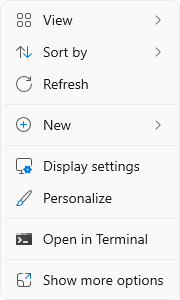
2. Scroll down to the Related settings subsection and select Advanced display

3. At the top of the Advanced display window, select the display you want to configure from the drop-down menu.

4. From the Choose a refresh rate drop-down menu select the desired refresh rate
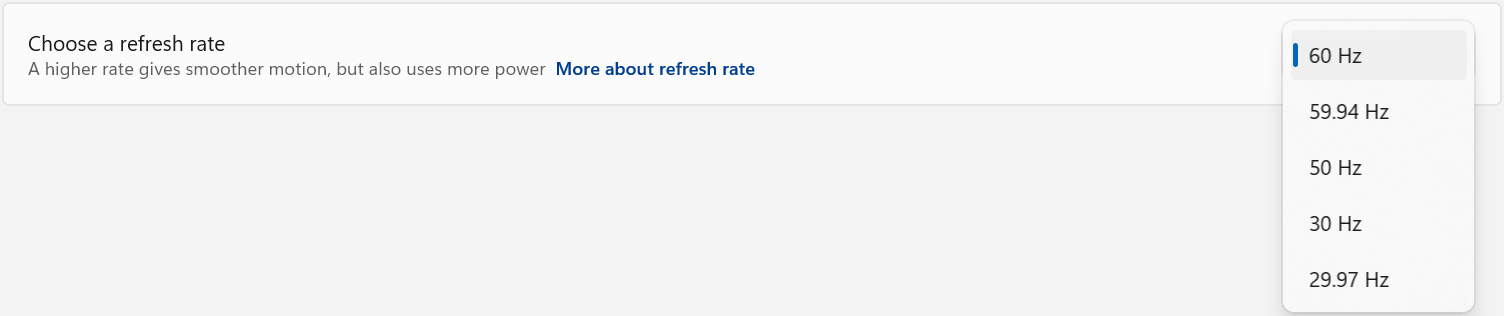
If the Desired Refresh Rate Is Not Listed
If the desired refresh rate is not available, confirm that the display, computer or graphics hardware, docking station or adapter, and video cable all support the desired resolution and refresh rate combination.
Some devices may support a higher refresh rate only at a lower display resolution. Check the specifications for each component in the display connection to confirm the supported resolution and refresh rate combinations.
Refresh Rate Limitations
Windows 11 may display an asterisk (*) next to certain refresh rates in Settings > System > Display > Advanced display. The asterisk indicates that the selected refresh rate is not supported at the display's current resolution. Selecting one of these refresh rates will cause Windows to change the display resolution in order to achieve the selected refresh rate.
In the example below, the display supports 3840 × 2160 (4K UHD) at 60Hz and 2560 × 1440 (1440p) at 120Hz through the connected hardware. After selecting “120 Hz*”, Windows changes the display resolution from 3840 × 2160 to 2560 × 1440 so that the higher refresh rate can be used. Because the display is now operating at a lower resolution, the image may appear less sharp than when using the display's native 4K resolution. After selecting a lower refresh rate, Windows may retain the reduced display resolution. If the original resolution is not restored automatically, return to Settings > System > Display and manually select the desired resolution.
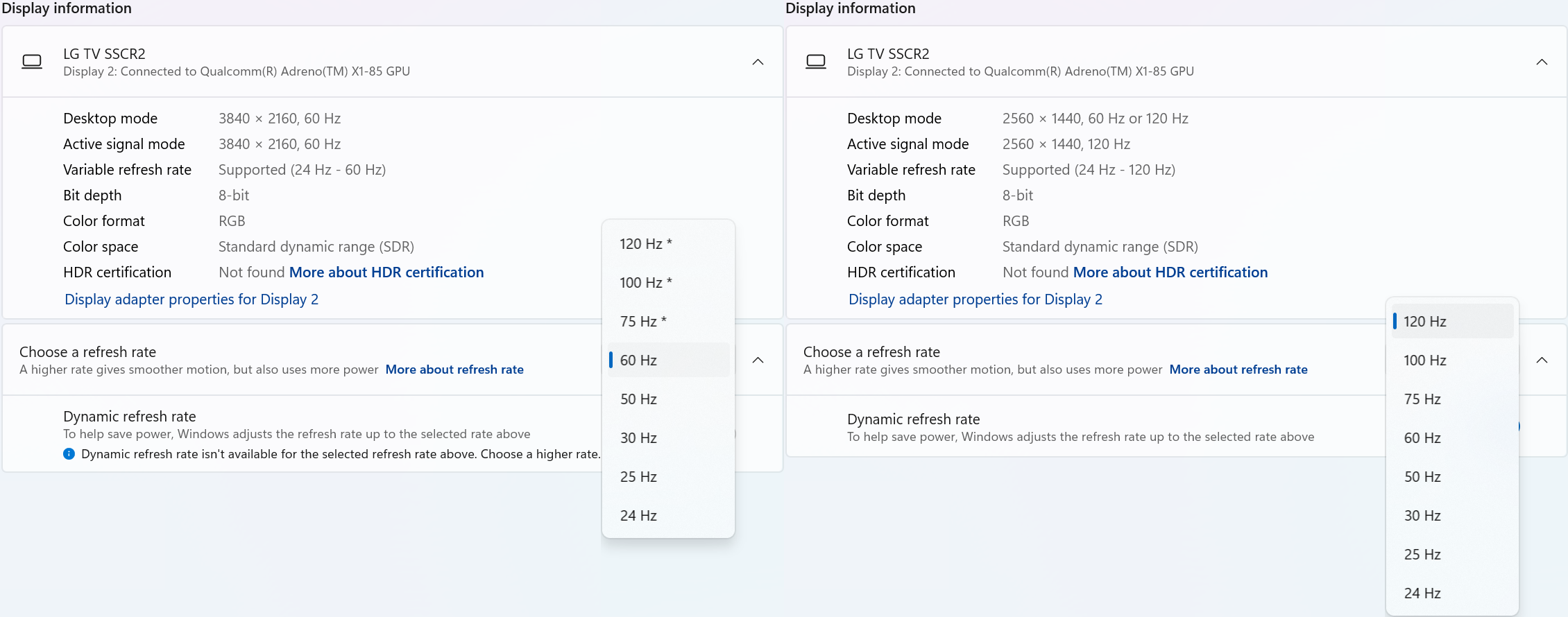
Dynamic Refresh Rate
Windows 11 also supports Dynamic Refresh Rate (DRR) on compatible hardware. When enabled, Windows can automatically adjust the display refresh rate based on what you are doing to provide smoother motion when needed while helping reduce power consumption at other times.
DRR requires a display that supports Variable Refresh Rate (VRR) and a refresh rate of at least 120Hz. If supported by the computer and display, DRR can be enabled or disabled under Settings > System > Display > Advanced display.
Need Assistance?
If the desired refresh rate is still unavailable after following the steps above, please contact Plugable Support at support@plugable.com.
When contacting support, please include:
- The Plugable product model
- Your computer model
- Your display model
- The resolution and refresh rate you are trying to use
- How the display is connected to the Plugable product
- The output from Plugable's diagnostic tool, PlugDebug
Is this safe to use if my computer doesn't support USB-C Power Delivery?
Summary
Yes. Connecting a compatible Plugable USB-C docking station or hub that supports Power Delivery (PD) to a computer that does not support USB-C charging is generally safe.
USB-C Power Delivery uses a negotiation process between the dock and the connected computer to determine whether the computer can accept power for charging.
If the computer does not support USB-C PD charging, the dock will not force unsupported higher-voltage charging onto the computer.
You may still be able to use the dock's other features, such as USB data connections, Ethernet, and external displays, provided your computer supports the necessary capabilities.
Applicable To
- Plugable USB-C docking stations with Power Delivery
- Plugable USB-C hubs with Power Delivery passthrough
- Computers with USB-C ports that do not support USB-C PD charging
Note: Available features vary by Plugable product and computer. Check the compatibility requirements for your specific docking station or hub.
How USB-C Power Delivery Works
USB-C Power Delivery is designed to allow compatible devices to negotiate their power requirements before higher-voltage charging is enabled.
When a USB-C dock or hub that supports Power Delivery is connected to a computer:
- The dock communicates its available USB PD power capabilities.
- A compatible computer negotiates the voltage and power level it can accept.
- Power Delivery charging is established only when the connected devices support the required negotiation.
If the computer does not support USB-C Power Delivery charging, the dock will not establish an unsupported higher-voltage charging connection.
USB-C connections can still provide standard 5V power without a USB PD contract. However, this should not be confused with the negotiated higher-power charging used by many laptops.
What Happens If My Computer Doesn't Support USB-C Charging?
If your computer has a compatible USB-C port but cannot charge through that port:
- Laptop charging: The dock will not charge the computer using USB-C PD.
- USB data: Compatible USB peripherals connected to the dock may still function.
- External displays: Video output may still work if the computer supports the display technology required by the dock.
- Ethernet and other peripherals: These features may remain available, depending on the dock's requirements.
In this situation, you will typically need to continue using your computer's original power adapter to charge or power the laptop.
A USB-C connector does not guarantee that a computer supports charging, video output, or every feature of a USB-C docking station.
Keep the following in mind:
- The computer must support the data and video capabilities required by the dock.
- Some docking stations require DisplayPort Alternate Mode, USB4, Thunderbolt, or DisplayLink software for specific functions.
- A computer that does not support USB-C PD charging will generally require a separate power source.
- Use the recommended power adapter and host cable for your Plugable docking station or hub.
USB-C Power Delivery compatibility and overall docking station compatibility are separate considerations. A dock can be safe to connect without necessarily supporting every feature on your computer.
Need Assistance?
If you are unsure whether your computer can safely use a particular Plugable USB-C docking station or hub, please contact Plugable Support at support@plugable.com.
When contacting support, please include:
- Your Plugable product model
- Your computer manufacturer and model
- Whether your computer supports charging through its USB-C port
- The features you intend to use, such as external displays, USB devices, or Ethernet
- Any compatibility concerns or unexpected behavior you have experienced
This information will help our support team verify your setup and determine which docking station features your computer can support.
Is there a way to add more displays to my dock?
Extra displays can be added to your docking station by using USB graphics adapters. This allows you to expand your workspace beyond the number of displays natively supported by your dock or computer.
Here’s how it works:
- Ensure your dock has open USB-A or USB-C ports to connect the USB graphics adapter(s).
- Select a Plugable USB graphics adapter compatible with your operating system and monitor specifications. Feel free to contact Plugable support (support@plugable.com) for assistance in selecting the appropriate adapter for your setup.
- Download and install the driver from the "Downloads" section of the product page for the USB graphics adapter on Plugable's website.
- Plug the adapter into an available USB port on your docking station.
- Use an appropriate video cable (e.g., HDMI, DisplayPort) to connect the adapter to your monitor.
Important Considerations:
- Windows supports up to 8 DisplayLink/SiliconMotion-based monitors.
- macOS has a hard limit of 4 DisplayLink/SiliconMotion-based monitors.
- USB graphics adapters use bandwidth and system resources. Connecting multiple adapters can reduce performance.
Why is the Alt Mode video output on my dock not working?
Alt Mode video works by creating a direct pipeline from the host device's graphics processor through USB-C to the dock to output video to connected displays. This relies on the host device's graphics processor, the host device's USB-C port, and the cable used to connect the dock supporting this specific functionality.
It's recommended to check these possible causes if the Alt Mode video output on your dock is not working:
- USB-C Port Limitations: Not all USB-C ports support video output (Alt Mode). Check your host device's specifications to confirm it supports Alt Mode video output.
- Incompatible USB-C Cable: Some USB-C cables support power and data, but not Alt Mode video. Use the USB-C cable that was originally included in the box with your dock to ensure it supports Alt Mode video output.
- Incorrect Host Connection: Ensure you’re connecting to the correct USB-C port on the dock, typically labeled a laptop icon. Other USB-C ports on the dock may not function for connecting the dock to a host device, and using them could result in no function.
- Outdated Drivers: Ensure your operating system and graphics drivers are up to date. USB-C Alt Mode primarily relies on the laptops graphics processor to produce video, so outdated drivers can often cause issues.
Why the Alt Mode Video Output Requires Specific Hardware
For many Plugable docking stations that utilize Alt Mode, the video output port is etched with "Alt Mode" to indicate this specific requirement. This connection type is not a standard USB data stream and requires the host laptop's USB-C port to be wired internally for DisplayPort Alternate Mode.
Workaround or Alternative Options
If your laptop does not support Alt Mode, consider using a DisplayLink docking station or USB graphics adapters to add additional monitors. These solutions use a driver-based approach that does not rely on the host's physical Alt Mode capabilities.
Applicable To
UD-768PDZ, UDS-7IN1, UD-CUBE, UD-CAM, UD-CA1A, UD-MSTHDC, UD-MSTH2, UD-6950PDZ, UD-ULTC4K, UD-ULTCDL, UD-3900PDZ, UD-3900PDH, UD-3900C4, UD-4VPD, TBT3-UDZ, TBT3-UDC3, UD-7400PD, TBT4-UDX1, TBT4-UD5, TBT-UDM, TBT-UDT3, TBT-6950PD, TBT4-UDZ
Can I replace the original power adapter included in the box with my Plugable product with a different, 3rd-party power adapter?
Barrel-Type Power Supplies for Hubs and Docks
Plugable recommends and supports using only the external power adapter originally included in the box with a Plugable product to power the device.
Plugable does NOT normally recommend or support using any type of alternate or 3rd-party power adapters in conjunction with our products that originally included a power adapter in the box.
This is because 3rd-party power adapters may not work as expected, and in some cases can potentially cause damage to the Plugable product if they do not match the specifications of the original power adapter. Counterfeit and incorrectly labeled power supplies are also a concern as these may not meet the specifications on their labels or may have inferior safety features.
Should you require a replacement for an original Plugable provided power adapter, Plugable offers a multitude of power adapters for purchase separately → https://kb.plugable.com/question/1081115
USB Type-C Powered Devices
Please also note, this provision does not apply to Plugable products that rely on a computer's original power supply or recommend using a separate USB Type-C power source.
For example, the PS-10CC → https://plugable.com/products/ps-10cc does not include a power adapter in the box with the product. The intention with the PS-10CC (and other similar products like the USBC-9IN1E → https://plugable.com/products/usbc-9in1e) is to use a USB Type-C power adapter that supports USB Power Delivery that you already have in conjunction with the product most often these are included with a computer and provided by a reputable brand.
This works because USB Power Delivery is an industry standard while barrel-type power adapters are not well standardized. Products that support USB Power Delivery are intended to work with a variety of different USB Type-C power adapters that support the USB Power Delivery standard.
If you have any questions please feel free to contact us at support@plugable.com and we'll be happy to help!
How Can I Check the Ethernet Adapter Link Rate on my Mac?
Apple's macOS Network Settings can identify the network link rate - this isn't necessarily the Internet speed, but the link rate negotiated between the computer's Ethernet adapter and the first network switch.
How is the link rate helpful?
When troubleshooting a network performance issue, or when purchasing new network equipment it can help to ensure the computer, Ethernet adapter, and Ethernet switch are negotiating the correct data rate.
In this example, we will be analyzing our USBC-E2500, which is a 2.5Gbps Ethernet adapter. This method applies to all of our Ethernet adapters, such as:
Open the Apple Menu and select System Settings from the drop-down menu, then Network from the left column. Select the entry named “USB 10/100/1G/2.5G LAN” with the Green - Connected icon. Expand the Details button, and go to Hardware.
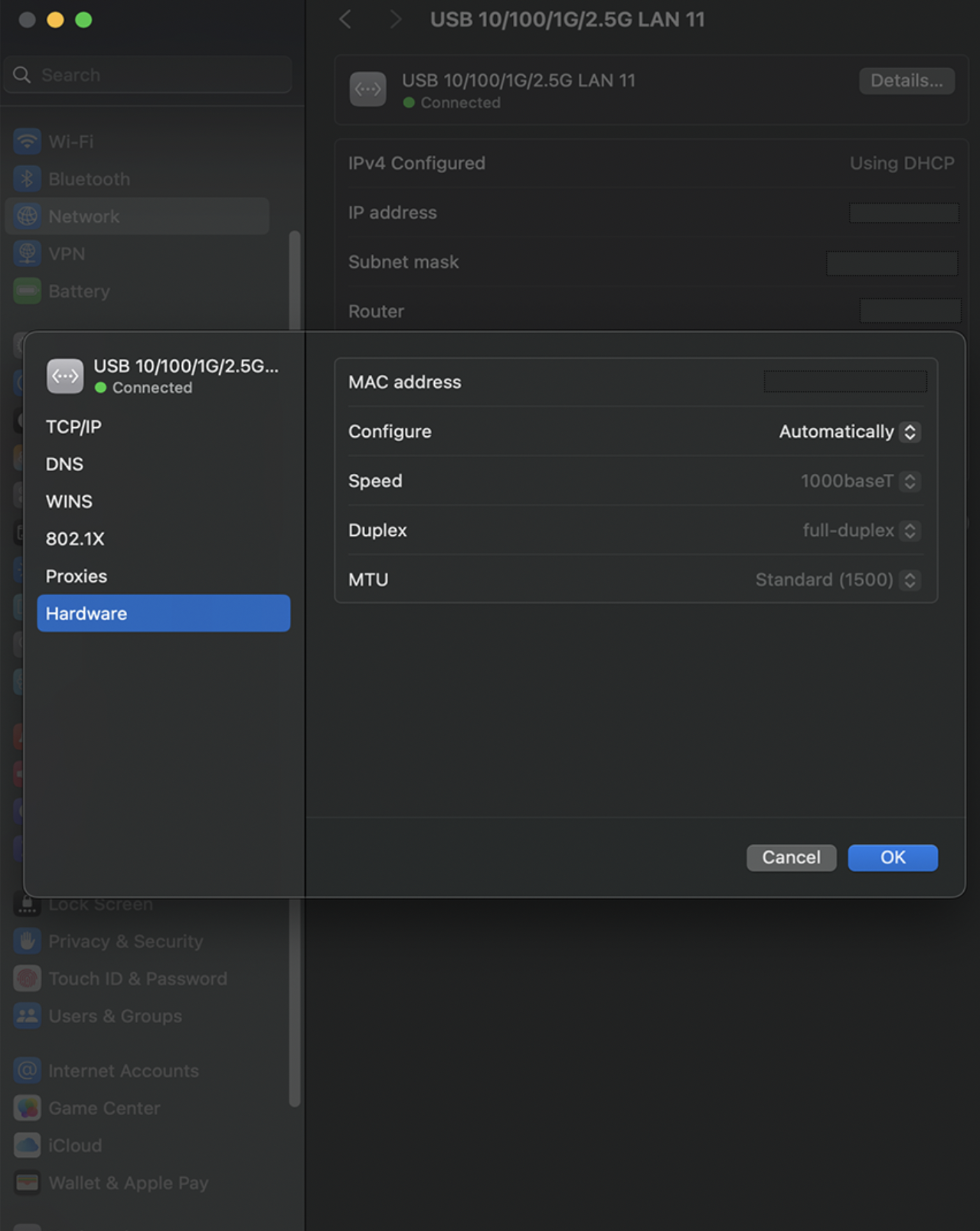
In the field that says Speed, you should see 2500Base-T if the Ethernet adapter is connected to a 2.5G Ethernet LAN port on your router. If you see 1000Base-T, this means the adapter is connected to a 1G Ethernet LAN port. If you are expecting faster network speeds, please see your router's documentation on its multi-gig LAN port.
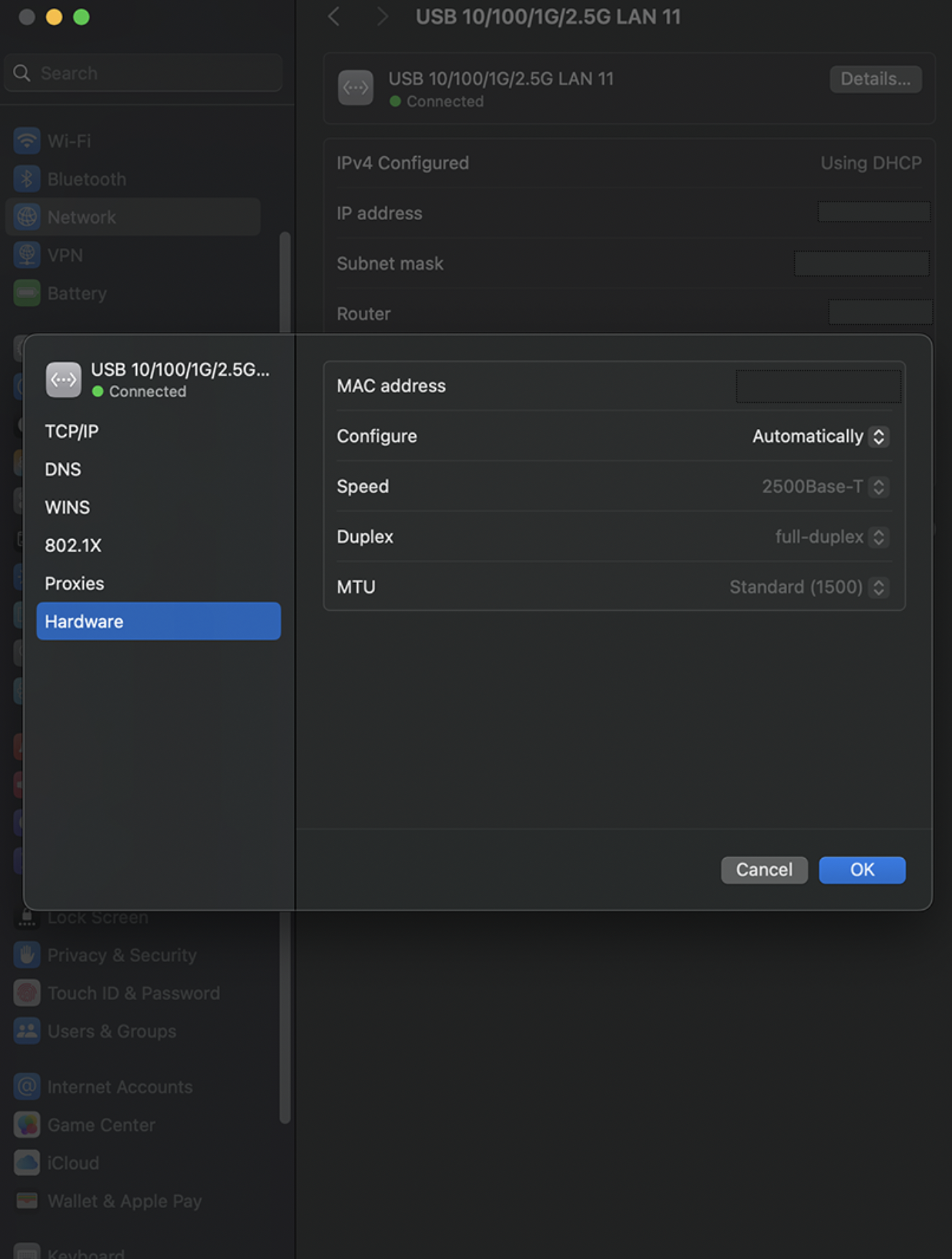
If you have any questions please feel free to contact us at support@plugable.com and we'll be happy to help!
Choosing the Right USB Type-C Cable for Your Docking Station
Applicable To
Plugable USB 3.1/3.2 Type-C, Thunderbolt, and USB4 docking stations.
Using an incorrect USB Type-C cable, such as a charging-only cable, can prevent your docking station from transmitting high-speed data or outputting video. Replacing an incompatible cable with a fully featured data cable or the original cable included with your Plugable dock typically resolves these functionality issues.
Instructions
Inspect your current cable to determine if it is a charging cable, which is generally thinner, lacks electronic markers, and is advertised for 480Mbps data rates rather than for laptops.
Identify a fully featured data cable or Thunderbolt cable by looking for thicker wiring and labels such as "USB 3.0/3.1", "USB4", "5Gbps", or a Thunderbolt logo.
Verify the length of your fully featured data cable is 1 meter (3.3 feet) or less, as they are typically limited to this length to comply with USB Type-C specifications.
Connect your docking station to the host system using the original USB Type-C or Thunderbolt cable that came in the box with your Plugable dock.
Replace your cable with a certified USB Type-C 10Gbps 1m cable or a Thunderbolt 4 40Gbps 1m cable if you require a longer or replacement cable.
Expected Result
Your docking station will be fully enabled to support high-speed data transfer, Power Delivery for charging, and video output to external displays.
If the Issue Persists
If you are unsure what type of cable you have and if there are potential cable issues with your setup, please reach out to us directly via support@plugable.com with the output of our PlugDebug diagnostic utility and we will be happy to help.
Do Plugable Docking Stations Support Automatic Ethernet Hardware Address (also known as Media Access Control or MAC address) Pass Through from the Host Computer?
Plugable does not officially support automatic or automated MAC address pass-through functionality from the host computer. As of this writing, the only exception is the UD-7400PD docking station which natively supports this capability and is discussed in more detail here → LINK
How to Approximate MAC Address Pass-Through in Windows
When our docking station products are used within a Windows environment, MAC address pass-through behavior can be approximated, though Plugable does not officially support these solutions. The specific method depends on the Ethernet network chipset used within the product, which is listed in the 'Specifications' tab of the docking station's product page.
For DisplayLink-based Ethernet network adapters, you can manually enter a hexadecimal value in the 'MAC Address' field within the adapter's 'Advanced' settings tab within Windows Device Manager will override the MAC address stored in the Ethernet chipset (in so far as it is presented to the Windows operating system).
For products based on Realtek, Intel, and ASIX Ethernet network chipsets, a virtual MAC address can be manually configured in a similar manner within Device Manager, but the option name will vary. For Intel Ethernet chipsets, the option is called 'Locally Administered Address', and for Realtek Ethernet chipsets, the option is called 'Network Address'.
Manually entering this value overrides the MAC address presented to the Windows operating system but does not change the physical MAC address stored within the dock itself.
Alternative Options for DisplayLink Docks
Synaptics, the creator of DisplayLink technology, offers additional options for configuring a DisplayLink-based MAC address. Some of these options provide a certain level of automation, while others require manual inputs. The available options are outlined within the DisplayLink Corporate Deployment knowledge base → LINK and the article specific to the topic is here → LINK
Because Synaptics develops the DisplayLink technology and software, it is Synaptics that supports these Corporate Deployment options directly, and you should contact DisplayLink directly for further assistance regarding these methods.
Applicable To
- Plugable DisplayLink-based docking stations
- Plugable docking stations with Realtek, Intel, or ASIX Ethernet chipsets
Understanding Power Delivery vs. Pass-Through Power Delivery
Power Delivery (PD) docking stations use their own included power adapter to directly charge your connected laptop while simultaneously powering peripherals. In contrast, Pass-Through Power Delivery hubs do not generate their own power; they require you to plug a separate charger (like your laptop's original power adapter) into the hub, which then passes the power through to your computer.
How Power Delivery (PD) Works
USB Power Delivery (PD) is a fast-charging standard that allows devices to dynamically negotiate power levels to ensure efficient charging. Docking stations with dedicated PD support come with their own AC to DC power adapter, enabling high power transfer directly to laptops, tablets, and smartphones. An example is the Plugable UD-7400PD, which provides its own power to deliver up to 140W of charge to the host while supporting five external displays.
How Pass-Through Power Delivery Works
A hub with pass-through charging relies entirely on an external USB-C power adapter (such as your laptop's original USB-C PD charger) being plugged directly into it. The hub allocates a portion of this incoming power (typically around 7.5W to 15W) to run its own functionality (like data transfer and peripheral connections) and sends the remaining power to the connected laptop. Because of this operating requirement, the total wattage reaching the laptop will be slightly reduced compared to plugging the charger directly into the computer. Examples include the Plugable USBC-9IN1E (up to 140W pass-through) and the USBC-4IN1 (up to 100W pass-through).
How to Choose the Right Option
If you need an all-in-one docking station that can directly charge your laptop without needing extra cables, look for one with dedicated Power Delivery support. If your laptop already has a high-wattage charger and you want to maintain power while expanding connectivity (often ideal for portable setups), a pass-through PD hub may be a better choice. If you have any questions or would like a recommendation for your specific setup, feel free to reach out to our support team at support@plugable.com.
Applicable To
USB-C and Thunderbolt docking stations or hubs with PD
USB-C vs. Thunderbolt: Understanding the Differences
While USB-C and Thunderbolt share the same physical rounded rectangle connector they operate in fundamentally different ways.
The Main Differences Aren't Physical
USB 3 at 5Gbps and 10Gbps with Type-C - often simplified to USB-C - is both the hardware connector standard, and the included data types: USB 5Gbps or 10Gbps data rates, as well as optionally DisplayPort Alternate Mode video and USB Power Delivery for powering and charging both host computers, and downstream devices.
Thunderbolt, specifically Thunderbolt 3 and newer and USB4 use the same physical USB Type-C port, and support a backwards compatibility with USB-C devices, however the signaling and data structure is completely different. Both Thunderbolt and USB4 operate at between four to sixteen times the speed of USB 3. While USB offers optional display and charging, these are mandatory for Thunderbolt hosts. The way display data is transmitted is also different.
DisplayPort Alternate Mode for USB 3 occupies two or four of the physical data lanes in the USB Type-C connector and cable. Tunneled DisplayPort video in Thunderbolt (and USB4) packetizes the DisplayPort video data and transmits it within Thunderbolt/USB4 data packets. Tunneled DisplayPort allows for more native DisplayPort streams enabling multiple external displays at higher resolutions and refresh rates.
Power Delivery is the USB Type-C (as in the port) charging and power standard - this allows a power source and device to negotiate a voltage and maximum amperage both devices can support. For example a phone might negotiate a 9V 3A charge rate which is close to optimal for a phone size battery, while a notebook computer is more likely to negotiate 20V 5A both for improved battery charging and to power the system under moderate to heavy workloads.
Why USB-C and Thunderbolt Capabilities Differ
USB Type-C is a connector standard where features such as video output (DisplayPort Alt Mode) and USB Power Delivery (PD) are optional and depend on the host device manufacturer. In contrast, Thunderbolt sets mandatory performance and hardware requirements across data, video, and power protocols.
- USB 3.0 / 3.1 Gen 1: Up to 5Gbps data transfer speed.
- USB 3.2 Gen 2: Up to 10Gbps data transfer speed.
- USB 3.2 Gen 2x2: Up to 20Gbps data transfer speed. This is very rarely implemented and most computers do not support it.
- Thunderbolt 3: Up to 40Gbps data transfer speed, supports dual DisplayPort 1.2 enabling two 4K or a single 5K displays, USB, DisplayPort, PCIe over a single cable, and up to 100W Power Delivery.
- USB4: Up to 40Gbps data transfer speed, supports DisplayPort 1.4 either one or two external displays, PCIe, and optional Thunderbolt 3 compatibility, USB 3.2 Gen 2 10Gbps, and Power Delivery.
- Thunderbolt 4: Up to 40Gbps data transfer speed, supports dual 4K or single 8K displays, USB4 compatibility, USB 3.2 Gen 2 10Gbps, and Power Delivery.
- Thunderbolt 5: Up to 80Gbps bi-directional bandwidth (DisplayPort up to 120Gbps using Bandwidth Boost), supports dual 6K or single high-refresh-rate 8K displays, PCIe, and backward compatibility with Thunderbolt 4 and USB4, USB 3.2 Gen 2 10Gbps.
Effectively each tier from this list supports all of the features of the tier above as well as some new features. Thunderbolt 4 is Intel's implementation of USB4 with all optional features enabled.
How to Identify Ports and Ensure Compatibility
- Port Identification: Thunderbolt ports are usually marked with a lightning bolt symbol with a downward pointing triangle at the bottom point, this should be next to the port, while USB-C ports may be unmarked or feature symbols indicating power delivery (a simple lightning bolt is common) or DisplayPort capabilities ("DP" logo is often used). Always refer to device technical specifications for confirmation.
- Connecting Thunderbolt Devices to USB-C Ports: Thunderbolt 3, 4, or 5 devices connected to standard USB-C ports typically operate at reduced capabilities, such as lower speeds or fewer display outputs.
- Connecting USB-C Devices to Thunderbolt Ports: USB-C devices connected to Thunderbolt ports function normally, but cannot take advantage of full Thunderbolt features.
Applicable To
- Plugable docking stations, hubs, and video adapters
- USB-C standards (USB 3.0, 3.1 Gen 1, 3.2 Gen 2, 3.2 Gen 2x2, USB4)
- Thunderbolt standards (Thunderbolt 3, Thunderbolt 4, Thunderbolt 5)
If you have any questions please feel free to contact us at support@plugable.com and we'll be happy to help!
What Information Is Helpful to Provide When Contacting Plugable Support for Assistance?
When you contact Plugable Support, a few key details can help us better understand the issue and reduce back-and-forth during troubleshooting.
You do not need to provide everything listed below before contacting us. If you are unsure what information is relevant, please reach out, and we will be happy to help.
What Information Should I Provide?
- A clear description of the issue
Describe what is happening, what you expected to happen, and when the issue occurs.
If the problem is repeatable, please include the steps necessary to reproduce it. This helps our support engineers understand the situation without making assumptions about your setup.
- The model number of your Plugable product
All Plugable products have a model number, also known as a stock keeping unit or SKU, printed or etched somewhere on the product. Examples include UD-3900 and TBT4-UDZ.
Providing the model number helps us identify the exact product and route your request appropriately.
For help locating the model number or serial number:
https://kb.plugable.com/3597472
- Your purchase information
If available, include the order number or other purchase information for your Plugable product.
This helps us confirm exactly which product you purchased and, when necessary, verify its warranty status.
- A PlugDebug diagnostic file
PlugDebug is Plugable's diagnostic utility for Windows and macOS. It automatically collects system and device information that can help our support team troubleshoot hardware, driver, display, networking, and other issues.
When possible, run PlugDebug while the issue is actively occurring or shortly after it occurs, with the affected Plugable device connected to the computer.
Download PlugDebug and review the instructions here:
https://plugable.com/pages/plugdebug
- Photos or video of the issue, if helpful
Photos or video aren't always necessary, but they can help with issues involving display behaviour, physical connections, indicator lights, error messages, or other problems that are easier to understand visually.
Do I Need to Provide All of This Information?
No. You are not required to provide all of the information above before contacting Plugable Support.
However, providing as much relevant information as possible helps us understand the issue faster and may reduce the number of troubleshooting steps or follow-up questions needed.
How Do I Contact Plugable Support?
You can contact Plugable Support at:
Additional support options are available here:
What kind of power adapters come with Plugable products, and how can they be used in different parts of the world?
Introduction
At Plugable, we make a lot of different products that can help make your computing efforts more efficient and productive.
Many of those products (such as our extensive line of docking stations → LINK) require an external power adapter in order to function.
In the course of helping our customers, we often receive questions in regard to what type of power adapter is included with the product and how those power adapters can be used in different parts of the world.
This knowledge base article will help answer those questions.
Power Adapter Types
To put it simply, in general there are two types of power adapters included with a Plugable product.
WALL PLUG
The first type is typically referred to as a ‘wall plug’ or in some cases as a ‘wall wart’ due to its size being larger than that of a standard electrical plug.
This is a small AC to DC power adapter that is completely self contained and plugs directly into an electrical power outlet.
For example, here are photos of the ‘wall plug’ included in the box with the Plugable UD-6950Z docking station.
UD-6950Z U.S. Style Wall Plug Power Adapter:
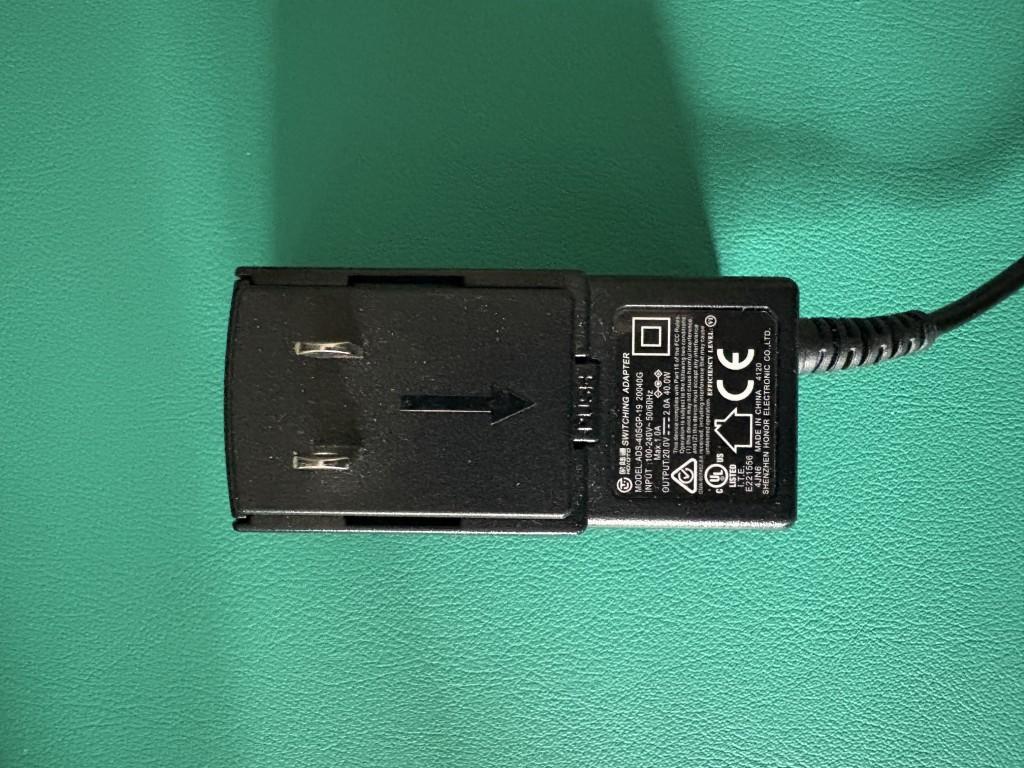
UD-6950Z U.S Style Wall Plug Power Adapter with Prong removed:
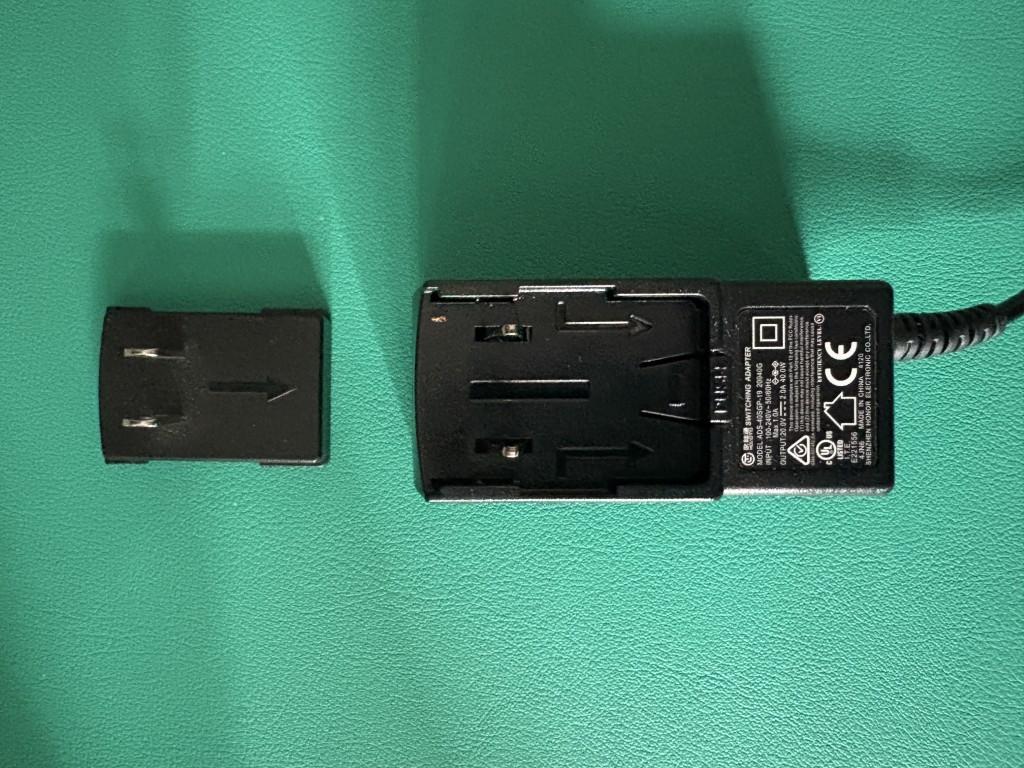
Most ‘wall plug’ style power adapters included with Plugable products support all of the electrical voltages and electrical frequencies used throughout the world.
Note, you can double-check the specifications by looking at the label printed on the wall plug power adapter, or by reviewing the ‘Power’ specifications located on each Plugable product page.
However, the electrical ‘prong’ (the small plastic piece that provides the blades that insert into the electrical power outlet) included with the wall plug will only be for the country in which the product was sold.
To put that another way and using the aforementioned UD-6950Z as an example, if the UD-6950Z is purchased from Amazon.com within the United States, the electrical prong included with the wall plug power adapter will be for a United States style power outlet only.
If the wall plug power adapter needs to be used in a different part of the world, a small inexpensive ‘travel style’ adapter that converts the United States style plug to the local plug type is required.
POWER ADAPTER BRICK
The second type is typically referred to simply as a ‘power adapter’ or by some as a ‘power adapter brick’.
The power adapter is a combination of two separate components. One component is the power adapter itself, which is typically rectangular in shape and why some people refer to it as a ‘brick’.
The second component is the power cable that connects to the power brick. This cable has an electrical wall plug on one end and an industry standard connector on the opposite end.
Looking at two different example power adapters will allow us to expand further.
Let’s look at the power adapter and power cable for our TBT4-UDZ Thunderbolt 4 docking station:
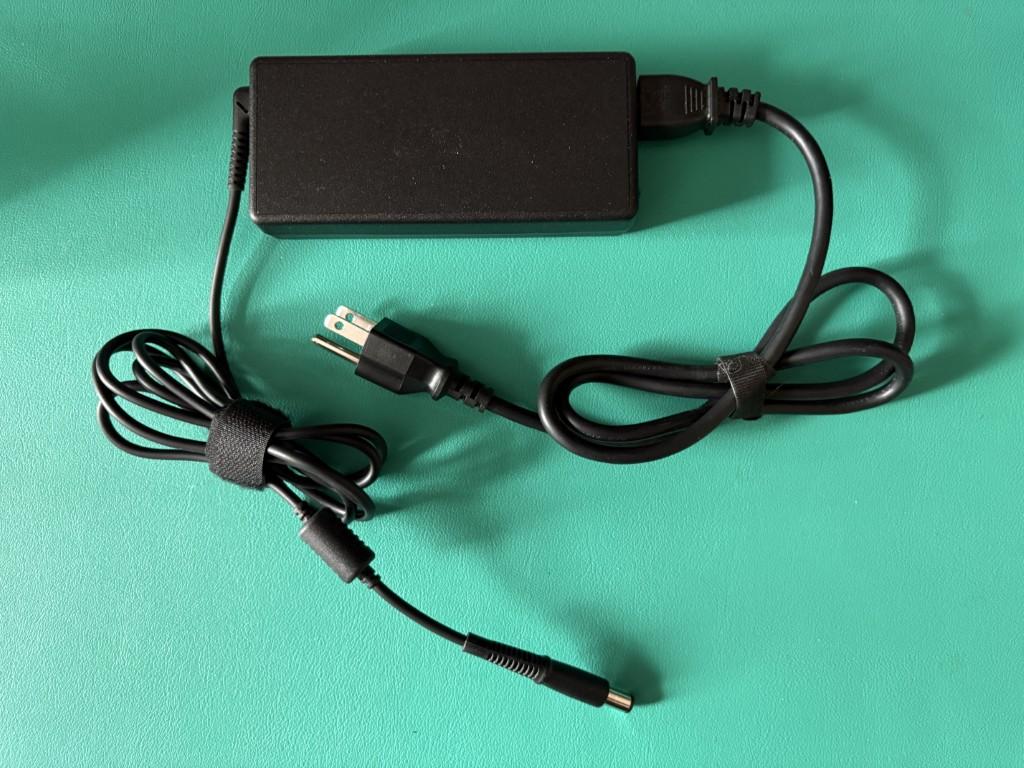
Within the power adapter brick, there is a female inlet:
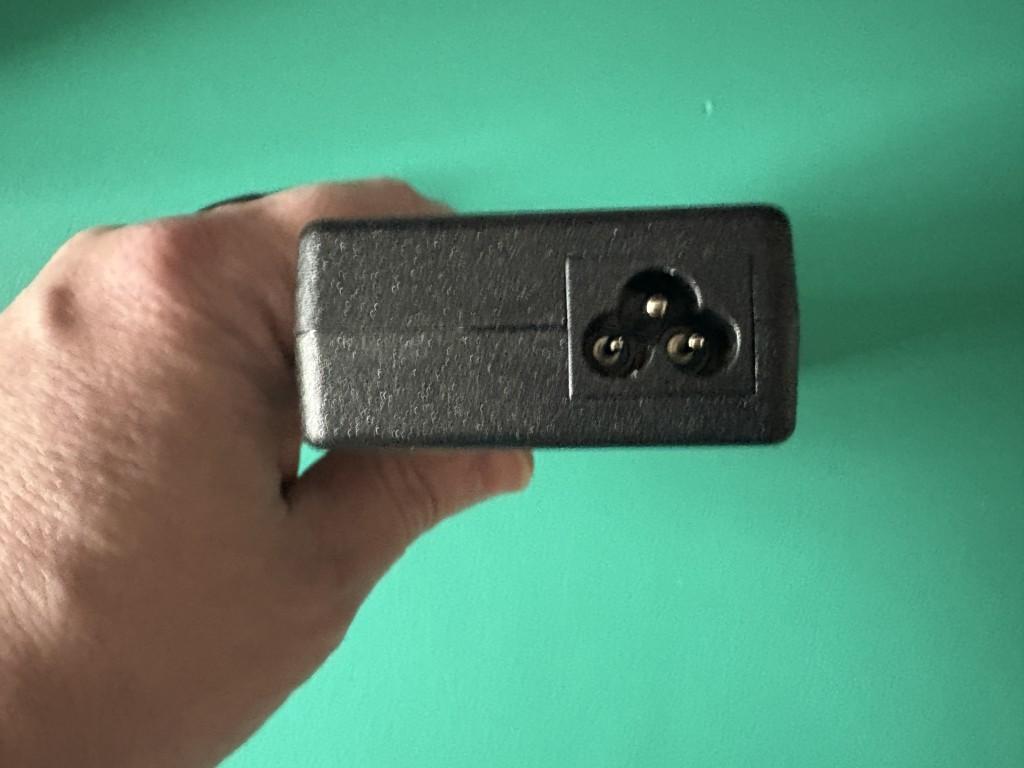
On one end of the power cable, there is an electrical wall plug.
On the opposite end of the power cable, there is a male connector. This connector will be inserted into the power brick.
There is an international standard that governs the shapes and sizes of the connectors in use, specifically IEC 60320 → LINK
In this example, the male connector on the end of the power cable is known as a ‘C5’ connector:
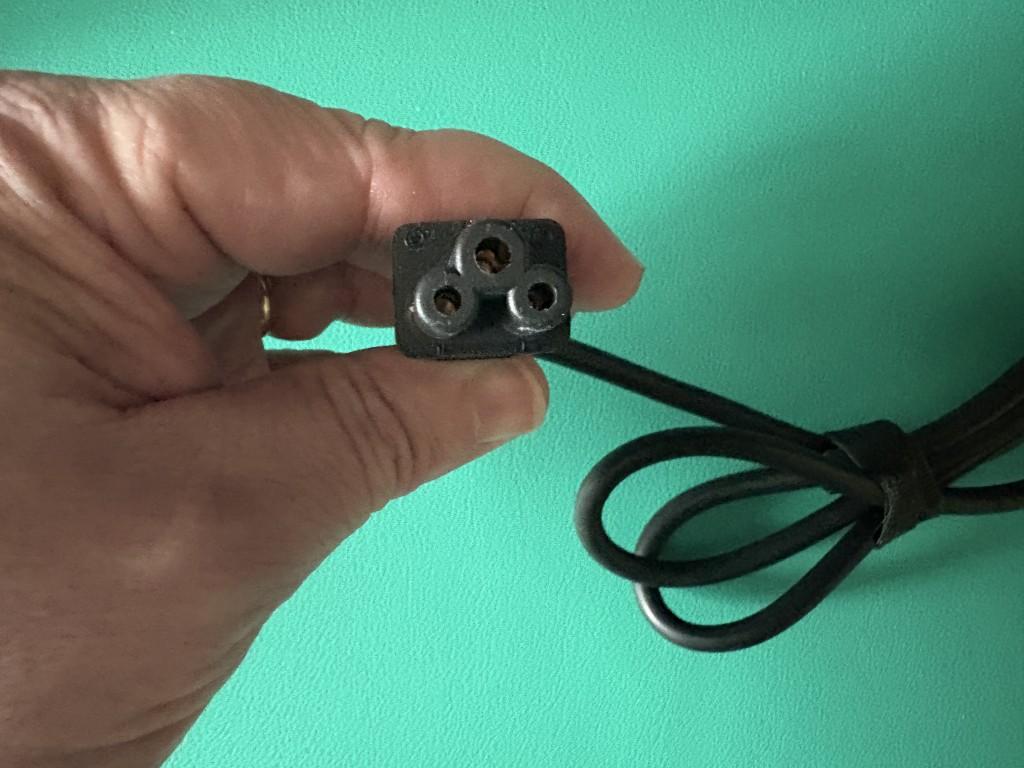
In this example, the female inlet is known as a ‘C6’ connector.
Some refer to this type of connection as a ‘Mickey Mouse’ connection, because the overall shape of the connector visually resembles the outline of a silhouette of the cartoon character Mickey Mouse.
Now, let’s look at the power adapter and power cable for our USB4-HUB3A Thunderbolt 4 hub.
Within the power adapter brick, there is a female inlet:
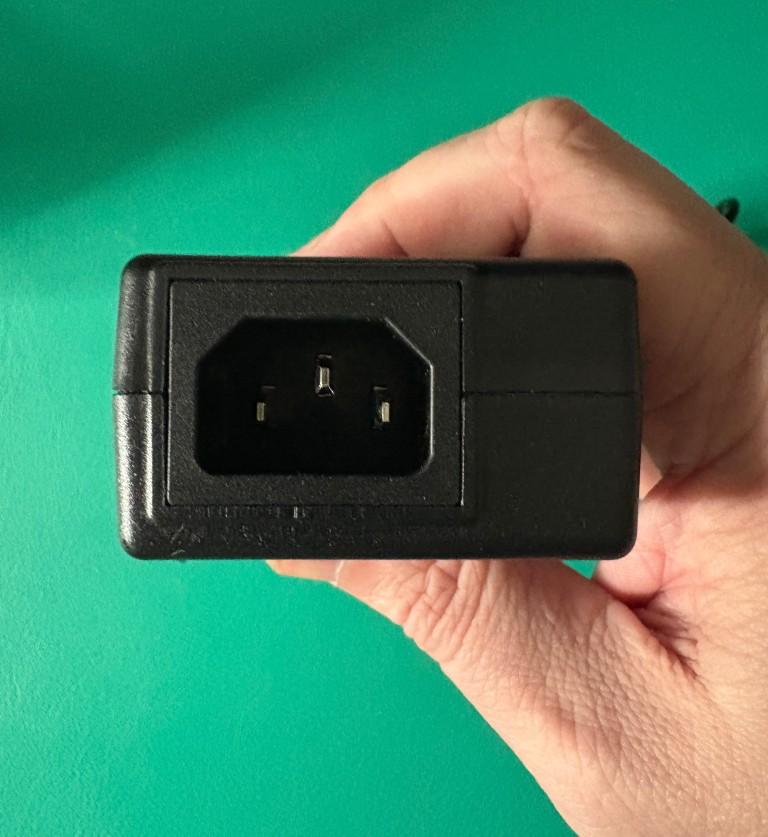
On one end of the power cable, there is an electrical wall plug.
On the opposite end of the power cable, there is a male connector. This connector will be inserted into the power brick.
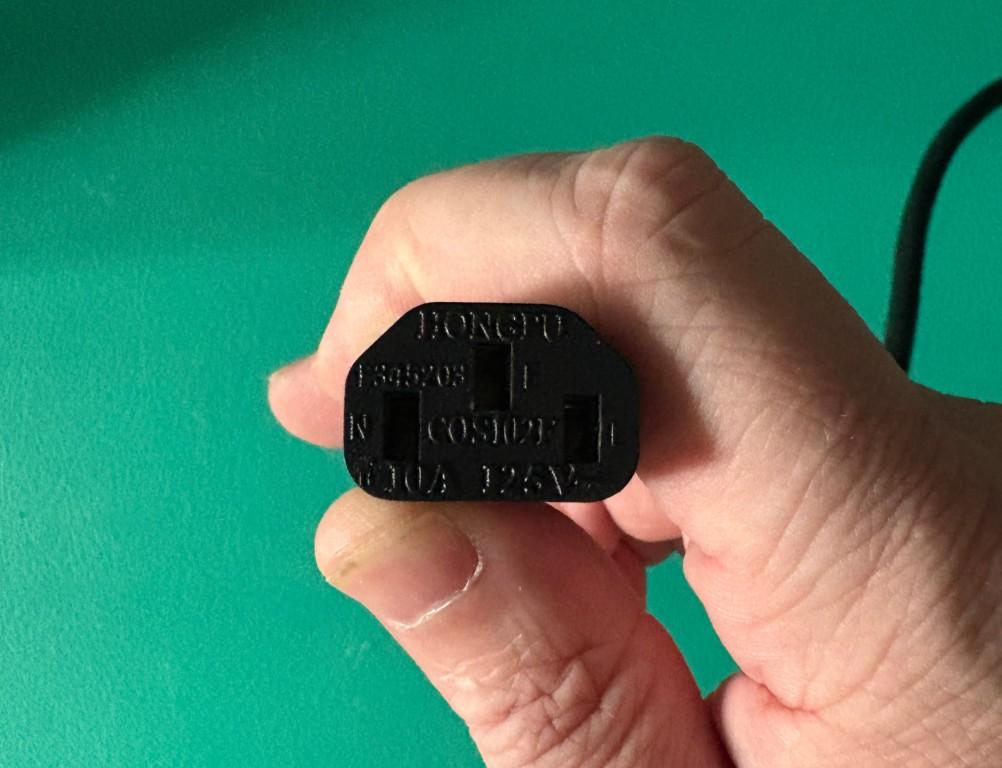
Note that the shapes on the inlet and connector are different as compared to the TBT4-UDZ example we looked at previously, however as was the case before the IEC 60320 standard governs the design.
In this example, the male connector on the end of the power cable is known as a ‘C13’ connector.
In this example, the female inlet is known as a ‘C14’ connector.
While the cables are different, the benefit of both cables being based on a common standard is that replacement cables for use in different parts of the world can typically be sourced locally.
Most Plugable power adapters support the electrical frequency and electrical voltages used throughout the world.
Note, you can double-check the specifications by looking at the label printed on the wall plug power adapter, or by reviewing the ‘Power’ specifications located on each Plugable product page.
If necessary, the power cable can be replaced with a different one with the necessary wall plug in order to use the product in different parts of the world.
Note, when replacing the cable with a different one please be sure to purchase a cable from a reputable brand and that also meets the electrical specifications printed on the power adapter.
Summary
In summary, there are two different types of power adapters included with Plugable products and the power adapters support the electrical voltage and frequency used throughout the world.
However, the plug that inserts into the power outlet will be specific to the region in which the product was sold.
If a wall plug type power adapter is in use, then a ‘travel style’ adapter is needed to convert the power adapter for use in a different part of the world.
If a power adapter brick is in use, then an industry standard replacement power cable can be used to convert the power adapter brick for use in a different part of the world.
Should you have any additional questions, please reach out to us via support@plugable.com and we will be happy to assist you further.
Can I connect this product to a computer's Thunderbolt/Thunderbolt 2 port?
Many users assume that USB-C devices can work with older Thunderbolt 2 Macs if they use a Thunderbolt 3 to Thunderbolt 2 adapter, such as the one made by Apple. However, this is not the case. These adapters are specifically designed to support Thunderbolt devices only - not standard USB-C peripherals.
While Thunderbolt 3 and USB-C share the same connector type, they use different underlying data protocols. Non-Thunderbolt USB-C devices, rely on USB standards for data and power. The Thunderbolt 3 to Thunderbolt 2 adapter does not carry USB signals; it only passes Thunderbolt data. Because of this, plugging a USB-C device into a Thunderbolt 2 Mac using this adapter will not work - the computer will not detect or communicate with the device.
If you need to connect peripherals to a Thunderbolt 2 system, we recommend using a USB-A dock or hub (if available on your system). This ensures compatibility without relying on unsupported adapter chains.
In short, even though the connectors may fit, USB-C devices are not compatible with Thunderbolt 2 Macs via Thunderbolt adapters - only Thunderbolt devices will work in that setup.
Why Isn’t My Plugable Dock Charging My Laptop?
If your Plugable docking station isn’t charging your laptop, it’s usually due to one of a few common causes. This guide offers some diagnostic checks you can perform to help pinpoint the issue.
Check if Your Dock Supports USB-C Power Delivery
Not all docks charge laptops. Docks fall into three categories:
- Built-in Power Delivery (PD): These include an AC power adapter and can provide 60W, 85W, or 100W to your laptop. A list of Plugable docking stations with built-in Power Delivery can be found here.
- PD Passthrough: These compact docks require a separate USB-C charger plugged into the dock to pass power through to your laptop. A list of Plugable docking stations with PD Passthrough can be found here.
- Host Charging Unsupported: Some docks do not offer any host charging functionality. These are designed solely for display expansion, data, or peripherals.
Tip: Check your Plugable dock’s product specifications for Power Delivery or charging support. If no charging is listed, the dock may not charge your laptop, and the system would need to be powered separately.
Verify the Dock’s Power Source
For your dock to charge your laptop, it needs to be adequately powered itself.
Check:
- Are you using the original Plugable AC adapter for a built-in PD dock?
- For PD passthrough docks, is your USB-C charger powerful enough for your laptop?
- Are you using a reputable, certified charger - not a low-wattage third-party adapter?
Use a Compatible USB-C to USB-C Host Cable
Cable issues can be a common cause of charging problems.
Check:
- Are you using the USB-C to USB-C cable that came with your Plugable dock? This can be identified through its included cable tag.
- If not, does your replacement cable explicitly support USB PD or Thunderbolt?
- Are you accidentally using a USB-C to USB-A cable, which cannot deliver charging to laptops?
- Could the cable be data-only or rated for lower wattage?
Confirm Your Laptop Supports USB-C or Thunderbolt Charging
Even with a PD-capable dock and cable, your laptop must support charging over the USB-C or Thunderbolt port in use.
Common compatibility issues:
- Some USB-C ports are data/video-only.
- Some laptops support charging only through a specific USB-C port.
- Gaming and enterprise laptops often use proprietary power adapters.
Tip: Check your laptop’s specifications or user manual for “USB-C charging” or “Power Delivery (PD) input” support.
Try a Hard Reset
Sometimes, a failed handshake between the dock and laptop prevents charging.
To reset the connection:
- Disconnect the dock from both your laptop and its power source.
- Wait 30–60 seconds.
- Reconnect power to the dock first, then reconnect it to your laptop.
This often resolves temporary communication issues that block charging.
Update Drivers and Firmware
System-level software can directly impact charging behavior - especially on newer laptops and docks.
Update:
- Your laptop’s BIOS or UEFI
- USB-C and Thunderbolt controller firmware and drivers
Tip: Visit your laptop manufacturer’s support site and search by model for the latest system updates.
Compare Power Requirements
If your laptop demands more power than the dock can supply, it may not charge - or may charge very slowly.
Check:
- What wattage does your original laptop charger provide? (Usually printed on the power adapter.)
- What is the maximum PD output your Plugable dock can provide?
- Does your laptop still slowly discharge while docked under heavy use?
Tip: For especially power-hungry laptops (like gaming or workstation models), consider connecting the laptop’s original charger along with the dock to ensure the laptop charges at full speed
Related: Overcoming Power Challenges: Efficiently Charging High-Demand Laptops While Docking
Can I connect my laptop charger to my laptop at the same time as my Plugable USB-C or Thunderbolt dock?
Summary
Yes. You can safely connect your laptop's original power adapter and a Plugable USB-C or Thunderbolt docking station at the same time, even if both are capable of charging your laptop.
USB Power Delivery (USB PD) uses a negotiation process to determine how much power a compatible device can receive. When multiple charging sources are connected, the laptop's internal power-management system determines which source to use.
This means you can use a Plugable docking station for external displays and peripherals while continuing to power your laptop with its original charger.
Applicable To
- Plugable USB-C docking stations that support USB Power Delivery charging
- Plugable Thunderbolt docking stations that support USB Power Delivery charging
- Compatible laptops that support charging from multiple possible power sources
The charging behavior may vary depending on the laptop model, docking station, and manufacturer-specific power-management features.
How Does USB-C Power Delivery Manage Multiple Chargers?
USB Power Delivery is a standard that allows compatible devices to negotiate the amount of power supplied over a USB-C connection.
When a Plugable docking station with USB PD charging is connected to a laptop, the docking station and laptop communicate to establish an appropriate power level.
If the laptop's original charger is also connected, the computer determines which power source to use based on its internal charging and power-management design.
In many cases, the laptop may prioritize the source offering more available power. However, this behavior is not universal and can vary by manufacturer and model.
The charging wattages from the two connections are not simply added together. For example, connecting a 96W docking station and a 140W laptop charger does not mean the laptop receives 236W of charging power.
Example: A 96W Docking Station and a 140W Laptop Charger
Consider a laptop connected to two possible charging sources:
- Plugable docking station: Supports up to 96W of charging power to the host computer.
- Original laptop charger: Rated to provide up to 140W.
On a laptop that prioritizes its higher-wattage power source, the computer may choose the original 140W charger rather than drawing charging power from the docking station.
In this situation, the docking station can continue to provide its supported connectivity features while the laptop receives charging power from its original adapter.
However, the exact behavior depends on the laptop's charging capabilities and power-management implementation.
When Should I Use Both the Dock and My Laptop Charger?
Using both connections can be helpful when your laptop requires more power than the docking station can supply.
For example, some high-performance laptops, gaming systems, and mobile workstations require substantial power during demanding workloads.
If the docking station provides less power than the laptop requires, you may experience:
- Slower battery charging
- Battery discharge during intensive workloads
- Power-related warnings from the laptop
- Reduced performance on systems that limit operation when insufficient power is available
Connecting the laptop's original charger directly can help ensure adequate power is available while the docking station continues to provide access to connected peripherals.
For additional information, see Plugable's article:
Overcoming Power Challenges: Efficiently Charging High-Demand Laptops While Docking
Important Notes
- Charging source selection varies: Not every laptop automatically prioritizes the charger with the highest wattage.
- Power does not combine: Connecting two charging sources does not add their available charging wattages together.
- Laptop charging requirements matter: A docking station with USB PD may provide less power than your laptop's original charger.
- Use compatible power accessories: Plugable recommends using the original laptop charger and the appropriate power adapter and cables for your docking station.
- Docking functionality is separate from charging: A compatible docking station can continue providing display, USB, Ethernet, and other supported functions while the laptop uses its original charger.
If your computer does not support USB-C charging, it may still be able to use compatible docking station functions while receiving power from its original charger.
Need Assistance?
If you are unsure whether your laptop can safely use its original charger alongside a Plugable USB-C or Thunderbolt docking station, please contact Plugable Support at support@plugable.com.
When contacting support, please include:
- Your Plugable docking station model
- Your laptop manufacturer and model
- The wattage of your original laptop charger
- Whether your laptop supports USB-C charging
- Any charging warnings, battery drain, or unexpected behavior you are experiencing
This information will help our support team evaluate your power requirements and recommend the best configuration for your setup.
Why Higher Voltage Power Supplies Are Included with USB 5V Hubs and Docks
Maybe you are looking for a replacement power supply, or maybe you are just curious, but why would a USB hub - which provides 5V to USB devices - would include a power adapter rated at 12V or potentially higher?
Improved Voltage Regulation Under Load
When multiple USB devices are connected - especially high-draw peripherals like external drives or charging phones - the demand on the dock’s internal power can spike. If the power supply were delivering only 5V, any load increase might cause voltage "sag," potentially leading to unstable or unreliable performance.
By starting with a higher voltage like 12V or 20V, the internal voltage regulators within the dock or hub can more reliably and efficiently step down that voltage to a consistent 5V, even under heavy load. It’s similar to having a reservoir or water tower above a village - you’ll have more reliable water pressure regardless of demand.
Greater Power Efficiency Over Distance
Transmitting power at higher voltage and lower current reduces energy loss due to resistance in the wires (which causes heat). By increasing the voltage we can decrease the amperage for the same power, and power loss in the line is directly proportional to amperage squared so even a small decrease in the amperage adds up quickly. Once the power reaches the dock, it's stepped down to the voltages needed for USB ports. This not only enhances efficiency but also makes compact, cooler-running designs possible.
Special Consideration for USB-C Docks
USB-C docks commonly include 20V power supplies, which serve a dual purpose:
- Supplying 5V for downstream USB devices
- Delivering up to 100W (or more) to host laptops via USB-C Power Delivery
With USB Power Delivery 3.1 (EPR), even higher voltages (up to 48V) are supported, enabling future docks and laptops to handle even more powerful devices like desktop replacement laptops or external GPUs.
Will Future Docks Use 48V Power Supplies?
It's likely. While 20V is common now (especially for consumer devices), 24V+ power supplies are widespread in industrial and telecom applications. As high-performance laptops and workstations demand more power, consumer docks may start including 24V, 36V, or even 48V adapters. These would align with USB PD 3.1 specs and simplify designs that support extended power ranges.
However, for now, 12V and 20V remains as sweet spots for cost, availability, and compatibility across a wide range of devices.
In Summary
Higher voltages like 12V or 20V are used for better regulation and more efficient power delivery.
USB-C docks use 20V to support Power Delivery charging host computers or downstream devices (up to 100W).
USB PD 3.1 EPR opens the door to 48V systems, and while uncommon now, future docking stations may shift to 48V as demand grows.
If you have any questions please feel free to contact us at support@plugable.com and we'll be happy to help!
How To - Set a Custom MAC Address in Windows
What is the MAC address?
The MAC address (Medium Access Control address) is a unique network address for each Network Interface Controller to identify the hardware on the network segment. The address is generally expressed as six hexadecimal digits, sometimes separated by a '-', ':', or without a separator.
The MAC address is assigned by the hardware manufacturer during production, however many network controllers allow the operating system (via the drivers) to override the MAC address, this is handled at the operating system level and does not change the address stored in the adapter.
The first three octets (first three hexadecimal values, six characters) identify the network hardware manufacturer while the last three octets should be unique within each hardware manufacturer's product line. For example Plugable's MAC addresses all begin with "8CAE4C", with lower values typically representing older companies, "000000" belongs to Xerox for example, some companies have multiple ranges of MAC addresses.
Why it can be useful to override the manufacturer's address?
Setting a custom MAC address can provide anonymity when connecting to public networks. It can also be used by an IT Network Administrator to provide specific access rights to computers based on the connection.
It can also be useful for Network Administrators for testing, troubleshooting, and maintenance to simulate different devices without having access to that specific device.
Changing the Mac Address in Windows
The MAC address can be manually set from the Device Manager:
1. Right-click on the Start Menu and select Device Manager from the pop-up window
2. Expand the Network adapters section and double-click on the network adapter to be modified
3. From the network adapter properties pop-up window, select the Advanced tab
4. Under the Property: category, scroll down to and select "Network Address"
5. In the Value: field, enter the new MAC Address in hexadecimal format, the field has a maximum of 12 characters so do not use any separators between octets
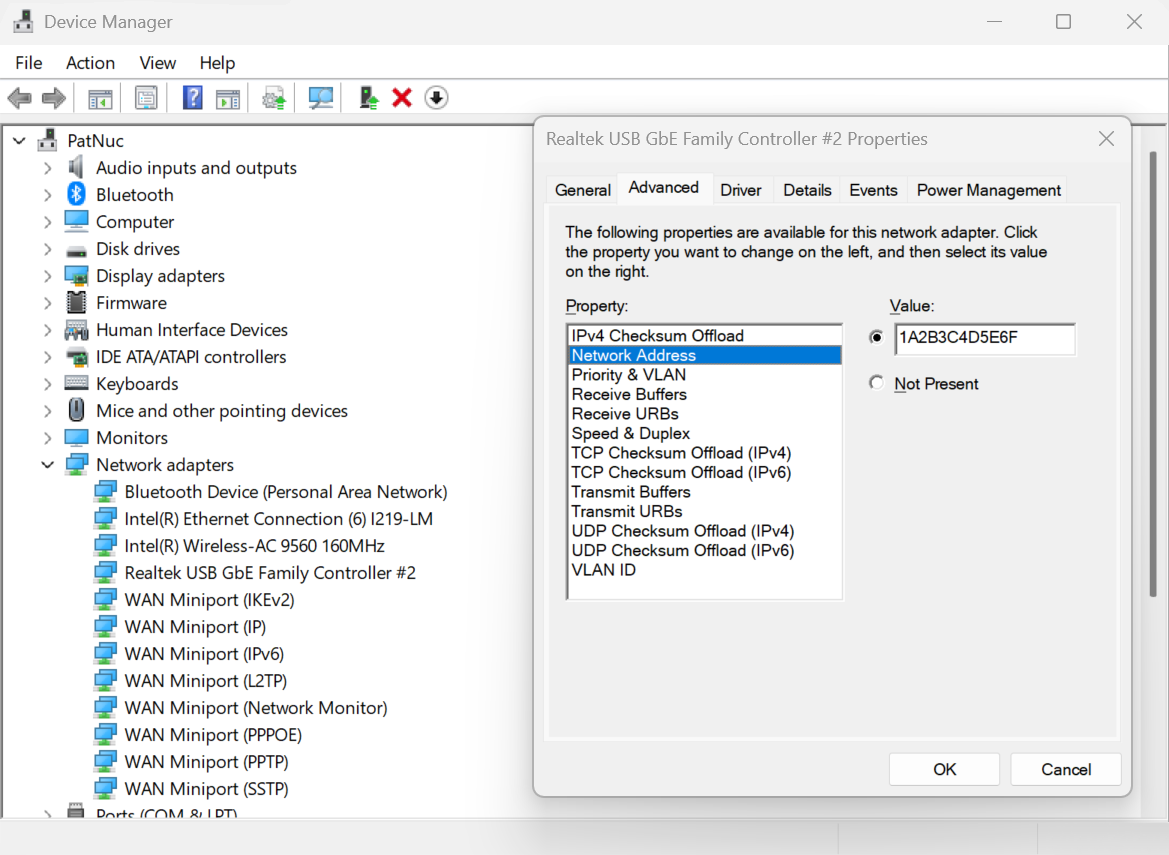
6. Select the OK button to proceed
You can also check the MAC Address from the command line
1. Right-click on the Start Menu and select Terminal or Windows PowerShell
2. Type in the following command ipconfig /all or ipconfig /all | findstr C:/"Physical Address" to filter just the Physical Address lines.
3. Scroll through the output to find the target network adapter and Physical Address
If you have any questions, please feel free to contact our support team via email at support@plugable.com and we will be happy to help!
How To - Set a Custom MAC Address in Linux
What is the MAC address?
The MAC address (Medium Access Control address) is a unique network address for each Network Interface Controller to identify the hardware on the network segment. The address is generally expressed as six hexadecimal digits, sometimes separated by a '-', ':', or without a separator.
The MAC address is assigned by the hardware manufacturer during production, however many network controllers allow the operating system (via the drivers) to override the MAC address, this is handled at the operating system level and does not change the address stored in the adapter.
The first three octets (first three hexadecimal values, six characters) identify the network hardware manufacturer while the last three octets should be unique within each hardware manufacturer's product line. For example Plugable's MAC addresses all begin with "8CAE4C", with lower values typically representing older companies, "000000" belongs to Xerox for example, some companies have multiple ranges of MAC addresses.
Why it can be useful to override the manufacturer's address?
Setting a custom MAC address can provide anonymity when connecting to public networks. It can also be used by an IT Network Administrator to provide specific access rights to computers based on the connection.
It can also be useful for Network Administrators for testing, troubleshooting, and maintenance to simulate different devices without having access to that specific device.
Checking the MAC Address in Linux
The MAC Address can be checked from the terminal:
1. Open a bash shell
2. Read the address from the /sys directory:
cat /sys/class/net//address
or from the ip command to print out all of the hardware MAC Addresses
ip -o link | awk '$2 != "lo:" {print $2, $17}'Changing the MAC Address in Linux
Temporary change until system reboot
1. Open a bash shell
2. Run the following command to set the MAC Address for a specific network device.
sudo ip link set dev <devicename> down
sudo ip link set dev <devicename> address <mac address>
sudo ip link set dev <devicename> up
3. Confirm the new MAC address
Permanently change the MAC Address
This can depend on your distribution specific network services and settings. This example will create a new systemd unit file to change the MAC Address on startup.
1. Open a bash shell
2. Create a new systemd unit file "/etc/systemd/system/changemac@.service with the following contents the mac address should be colon separated:
[Unit]
Description=Change MAC Address %i
Wants=network-pre.target
Before=network-pre.target

[Service]
Type=oneshot
ExecStart=/usr/bin/ip link set dev %i down
ExecStart=/usr/bin/ip link set dev %i address <mac address>
ExecStart=/usr/bin/ip link set dev %i up
RemainAfterExit=yes
User=root

[Install]
wantedBy=multi-user.target
3. Enable the service with the following command
sudo systemctl enable --now changemac@<interface_name>
4. Reboot the computer, the MAC address should be set to the new address
If you have any questions, please feel free to contact our support team via email at support@plugable.com and we will be happy to help!
Update Graphics Drivers in Windows
Up to date graphics drivers are necessary for ensuring the best performance of your computer's built-in display, as well as the capability and compatibility with external displays and docking stations.
Windows has a built-in system update service: Windows Update, however this may not provide up to date drivers or timely updates. We often see systems with out of date drivers, in some cases systems may not receive updated graphics drivers for months or even years, leaving the computer with drivers incompatible with the installed version of Windows 11.
However, we can manually update the graphics drivers to ensure the best possible performance, reliability, and compatibility.
The first step is to identify the graphics hardware, then downloading, and installing the latest drivers.
Identifying Graphics Controller
For notebooks and many desktop computers, the primary graphics controller is embedded in the processor, both AMD and Intel provide graphics driver updates based on the processor model, as well as for discrete graphics controllers. Our first step is to identify up the processor or graphics hardware model details:
- Right-click on the Start Menu and select Settings from the pop-up menu
- From the left column select System and from the bottom of the right side select About
- From the top of the about page the processor details will be on the right side, and duplicated lower down on the page.

- In this example the processor is a 12th Gen Intel(R) Core(TM) i7-1260P, we'll keep that detail for the next step.
If your computer has two graphics controllers (it may show "Multiple GPUs Installed" under Graphics Card) then we can get the graphics card model details from the Windows System Information Utility.
- Open the Start menu and search for "msinfo32"
- Select the first result
- From the left-column expand the Components section, then select Display

- In this example the Intel Iris(R) Xe Graphics is enabled by the processor, while the Intel(R) Arc(TM) Pro B60 Graphics is a discrete graphics controller.
Downloading the Drivers
Intel Graphics
- In a web browser navigate to the Intel Driver Download Page
- In the "Search Drivers & Software" field, search for the Intel graphics card model or CPU model, "Arc Pro B60" in this example

- Select the appropriate "Intel Arc Pro Graphics - Windows" or similar entry from the search results, for modern hardware Intel will normally have at least one release per month, the list should return recent results within the last month
- Select the Download button to save the installer to your Downloads folder or selected location
AMD Graphics
AMD provides an Auto-Detect utility, this works relatively well and can be used to update the system available from the AMD Drivers and Support page.
This page also provides a search and browse option for finding drivers and specific compatibility details, we'll look up the drivers for an AMD Ryzen Pro 5650U processor with Radeon Graphics:
- Navigate to AMD Drivers and Support page
- From the Browse section, fill out the processor details and click the Submit button
- Expand the "Windows 11 - 64-Bit Edition" section and select the Download button for the latest graphics drivers
NVIDIA Graphics
Like AMD, NVIDIA provides an automatic installation utility, as well as a Manual Driver Search on the NVIDIA Drivers support page. We will look up the drivers for an NVIDIA RTX 5080 graphics card.
- Navigate to NVIDIA Drivers support page
- Fill out the Manual Driver Search drop-downs and select the "Find" button when complete
- From the search results, select the "View" button for the GeForce Game Ready Driver or NVIDIA Studio Driver (if you need the studio driver features)
- Select the green Download button for the latest graphics drivers
Installing the Graphics Drivers
For the most part this is relatively simple, we recommend disconnecting any external docking stations or devices that are not necessary for the driver installation, and for notebook computers connecting the system's original power supply.
Double-click on the downloaded driver installation executable and follow the on screen steps.
For more in-depth details on Intel, AMD, and NVIDIA's driver installation processes check out our step-by-step guides here:
- Intel Driver Installation In Detail
- AMD Driver Installation In Detail
- NVIDIA Driver Installation In Detail
If you have any questions or would like a recommendation, feel free to reach out to our support at support@plugable.com
How-To: Install the latest Intel Graphics Drivers
For a step-by-step guide to identify your graphics hardware and download the appropriate drivers, check out our KB article here
Download the drivers for your GPU or Processor Graphics
- In a web browser navigate to the Intel Driver Download Page
- In the Search Drivers & Software field, search for the Intel graphics card model or CPU model, "Arc Pro B60" in this example
- Select the appropriate Intel Arc Pro Graphics - Windows or similar entry from the search results, for modern hardware Intel will normally have at least one release per month, the list should return recent results within the last month
- Select the Download button to save the installer to your Downloads folder or selected location
Install the Intel Graphics Driver
To update the Intel Graphics Drivers to the latest version from Intel's website:
- Save and close any open applications
- Navigate to the downloaded graphics driver, then right-click on the saved driver installation file and select Run as administrator to start the installation process
- Allow the Intel driver installation through the User account control window, the drivers will be extracted
- When the extraction is complete select the Begin installation button

- Agree to the Intel Software License Agreement by selecting the I agree button
- Ensure all applications are saved and closed before selecting the I agree button
- For most installations, we recommend not selecting the Execute a clean installation checkbox. This option will remove previous driver versions and can lead to Windows Update reverting to an even older graphics driver. Select the Start button to proceed
- The installation process will proceed, but can take some time to complete
- When the installation has completed, deselect the Launch Intel Graphics Software checkbox - we don't need that right now, select the Reboot Now button to restart the computer applying the new graphics drivers
Windows should now detect the Intel Graphics Controller in the Device Manager and show the latest drivers.
If you have any questions or would like a recommendation, feel free to reach out to our support at support@plugable.com
How-To: Install the latest AMD Graphics Drivers
For a step-by-step guide to identify your graphics hardware and download the appropriate drivers, check out our KB article here
Download the drivers for your GPU or Processor Graphics
- In a web browser navigate to the AMD Drivers and Support page
- In the Search for your AMD product field, type in the model name, for example “RX 5600XT” for the AMD Radeon RX 5600 XT graphics controller, or a processor model like "AI 9 365", then select the best fitting result and select the Search button - note: Searching for a processor the "™" is required, so I recommend searching for the text after that symbol.
- On the results page, expand the section for Windows 11 64-bit then select the Download button for the latest AMD Software: Adrenalin Edition drivers, AMD may not provide a direct download for all hardware, in that case use the Auto-Detect and Install option
- Save the installer to your Downloads folder or selected location
Install the AMD Graphics Driver
To update the AMD Graphics Drivers to the latest version from AMD’s website:
- Save and close any open applications
- Navigate to the downloaded graphics driver, then right-click on the saved driver installation file and select Run as administrator to start the installation process
- Allow the Intel driver installation through the User account control window, the drivers will be extracted

- For most users the express installation is fine, ensure all applications are saved and closed selecting the Accept & Express Install button. If you have been having issues with older graphics drivers causing crashes or errors the Factory Reset (Optional) checkbox may be selected, but it isn’t necessary for most installations.

- The installation will proceed, the displays may flicker or flash off/on while the drivers are installing.
- When complete you will be prompted to Launch AMD Software: Adrenalin Edition and Keep AMD software up to date, you can uncheck the Launch AMD Software option
- Restart the computer to ensure the latest drivers are loaded from boot Start Menu > Power Icon > Restart
Windows should now detect the Intel Graphics Controller in the Device Manager and show the latest drivers.
If you have any questions or would like a recommendation, feel free to reach out to our support at support@plugable.com
How-To: Install the latest NVIDIA Graphics Drivers
For a step-by-step guide to identify your graphics hardware and download the appropriate drivers, check out our KB article here
Download the drivers for your GPU
Check your invoice for the specific model of NVIDIA graphics card, for this example we will use the RTX 5080 (the manufacturer is not relevant).
- In a web browser navigate to the NVIDIA Driver Download Page
- In the Manual Driver Search field, search for the NVIDIA graphics card model, "RTX 5080" in this example
- Select the GeForce RTX 50 Series | NVIDIA GeForce RTX 5080 | Windows 11 entry from the list
- Left-click the Find button
- Select either View buttons from the GeForce Game Ready Driver or NVIDIA Studio Driver
- Select the Download button to save the installer to your Downloads folder or selected location
Install the NVIDIA Graphics Driver
To update the NVIDIA Graphics Drivers to the latest version from NVIDIA's website:
- Save and close any open applications
- Navigate to the downloaded graphics driver, then right-click on the saved driver installation file and select Run as administrator to start the installation process
- Allow the NVIDIA driver installation through the User account control window
- Click OK to extract the NVIDIA Display Driver package contents
- At the System Check step, select either the NVIDIA Graphics Driver with NVIDIA App or the NVIDIA Graphics Driver alone, the NVIDIA App is gaming oriented and unnecessary for most users. Select AGREE AND CONTINUE
- At the License Agreement step, select the Express (Recommended) radio button then select NEXT to continue

- The installation will take some time to complete
- When complete please restart the computer Start > Power > Restart
Windows should now detect the NVIDIA Graphics Controller in the Device Manager and show the latest drivers.
If you have any questions or would like a recommendation, feel free to reach out to our support at support@plugable.com
Is Target Display Mode Available With Plugable Docks and Adapters?
No, target display mode generally requires a direct Thunderbolt connection from a compatible MacBook or Mac Mini to a compatible iMac. Graphics adapters and docking stations do not pass the required Thunderbolt video data.
Why Target Display Mode Is Not Compatible With Docks or Adapters
Target Display Mode is a legacy feature that allows certain older Mac systems to use an older model iMac as an external display via a Mini DisplayPort or Thunderbolt data cable. Most Plugable docking stations and graphics adapters are USB devices that do not meet the specific Thunderbolt data requirements for 2011 through mid-2014 iMac systems. While Thunderbolt 3 or newer docks may provide video capability, they are generally recommended for Apple M-Series systems which do not support this feature.
iMac Models as Display
Apple provides system compatibility here but we can summarize it in the following:
24-inch and 27-inch iMac (2009 and 2010)
- macOS 10.13 “High Sierra” or earlier
- Compatible with Macs from 2019 or earlier with macOS 10.15 “Catalina” or earlier
- NOTE: some MacBooks in this range do not include a Mini DisplayPort output and may not be compatible
- Connected with a Mini DisplayPort cable
iMac models (2011 through mid-2014)
- macOS 10.13 “High Sierra” or earlier
- Compatible with Macs from 2019 or earlier with macOS 10.15 “Catalina” or earlier
- NOTE: some MacBooks in this range do not include a Mini DisplayPort output and may not be compatible
- Connected with a Thunderbolt or Thunderbolt 2 cable - these use the Mini DisplayPort connector
- NOTE: This is not compatible with Thunderbolt 3 (USB Type-C) cables
Alternative Options
For earlier 2009-2010 iMacs, it may be possible to use a USB Type-C to DisplayPort adapter paired with a DisplayPort to Mini DisplayPort cable. However, this configuration is untested and we do not support this configuration.
Our research has shown mixed results using these early model iMac systems with adapters, modern unsupported Apple hosts, or Windows computers. Because Target Display Mode is no longer supported by modern Apple hardware and software, there is no guaranteed workaround for newer systems.
Modern displays offer higher resolutions, multiple connection options: both DisplayPort and HDMI, and newer features like High Dynamic Range (HDR) and higher refresh rates than iMac systems. Many modern displays can support multiple host computers either by switching between inputs or with picture-by-picture or picture-in-picture modes.
Applicable To
- 24-inch and 27-inch iMac (2009 and 2010)
- iMac models (2011 through mid-2014)
- macOS 10.13 “High Sierra” or earlier
If you have any questions please feel free to contact us at support@plugable.com and we'll be happy to help!
Why does my MacBook battery only charge to 80 percent?
If you routinely discharge your MacBook battery and fully recharge the battery often, macOS may set a battery charge limit to 80% to "reduce battery aging". In most cases this is a good option to have, however if you need the battery to be fully charged this setting can be disabled.
Disable the battery charge limiter
- Select System Settings the Apple menu
- Select Battery from the left column in System Settings
- Select the Info button ("I" inside a circle) on the Charging line near the top of the right panel
- Toggle off the Optimize Battery Charging option
A bit more detail
Time
Lithium-Ion batteries used in modern notebook computers are significantly more reliable and predictable than previous battery technologies, however like all batteries they both degrade over time regardless of use.
All battery technologies will begin to degrade after production, when in storage, or in active use. When storing a Lithium-Ion battery normally it is recommended to partially discharge the battery to help minimize degradation in storage.
Cycles
Battery life spans are often described in discharge/charge cycles, by limiting the top-end charge (often limiting the charge to 80%) system manufacturers seek to reduce the degradation with each charge cycle. One method is to simply over-spec the battery and set the operating system's 100% threshold to 80% of the battery's maximum capacity, this has the added benefit that over time as the battery degrades the charge controller could allocate more of the top-end charge potential to shift the reported 100% capacity maintaining the same power capacity over a longer period of time. Apple doesn't seem to use this approach, instead using the full capacity of the battery and implementing the battery charge limiter to help maintain that full capacity.
Apple macOS has a battery health report in the System Settings > Battery panel there is an info button for Battery Health which shows the Battery Condition and Maximum Capacity.
Our recommendation
We recommend sticking with the system's default battery charge settings, unless you specifically need to charge the battery to 100%.
The default setting helps to maintain the battery lifespan of the system, however could cause reduced work time while on battery. Batteries are no longer a user serviceable component of MacBook or most modern notebook computers, increasing the cost of battery replacement in both time and labor fees compared to older systems where batteries could easily be removed with one or two locking latches/levers.
If you have any questions please feel free to contact us at support@plugable.com and we'll be happy to help!
What do the LEDs Indicate?
Many of Plugable's products have LED indicators, some are common across many devices like Ethernet port LEDs, while others may be specific to an individual product.
Common LED behaviors
Ethernet port LEDs
Ethernet ports generally have two LEDs, one (generally green) indicates a "Link" while the other (generally amber) flashes off indicating network transfer or "Activity".
Power LEDs
Many of our products have a single power LED indicating the device is powered on or receiving power, however in some cases this LED may only illuminate when the device also has a data connection to the host computer.
More Details
For all of our products we are updating our Specifications page to include additional details. For example with the Plugable USB Type-C Triple HDMI Docking Station UD-3900PDZ under the "LEDs" section we provide the following details:

Additionally, any products with more advanced LED behavior will be documented in the Get Started tab.
Legacy Products
For many of our legacy products the LED behavior was documented in separate KB articles, we are in the process of updating these to link here to provide additional details and context, so even if you found this from a different product hopefully this will help to answer your questions about our products!
If you have any questions please feel free to contact us at support@plugable.com and we'll be happy to help!


